

Table of Contents
- Why Heart Surgery Families Need Emotional Support
- Managing Post-Op Anxiety and Depression
- How to Support a Spouse After Heart Surgery
- Caregiver Burnout Symptoms: What to Watch For
- Post-Cardiac Surgery Emotional Recovery Timeline
- PTSD in Caregivers and Long-Term Emotional Health
- Building Your Heart Surgery Family Support Network
- Frequently Asked Questions
Last Updated: September 11, 2026
Why Heart Surgery Families Need Emotional Support
When a loved one goes through open heart surgery, the entire family enters a kind of emotional freefall. The surgery itself is terrifying, but what many families don't expect is how disorienting the weeks and months afterward can feel. This guide from The Zipper covers emotional support for heart surgery families, drawing on what survivors and caregivers actually experience rather than what pamphlets tend to say.
Heart surgery doesn't just affect the patient. It reshapes routines, roles, and relationships. One spouse becomes a full-time caregiver overnight. Adult children rearrange work schedules. Siblings who live far away feel guilty for not being there. And everyone is quietly terrified.
The emotional weight of cardiac surgery on families is real, and it doesn't disappear the moment the patient is discharged. Understanding that reality is the first step toward managing it.
Managing Post-Op Anxiety and Depression
Post-op anxiety and depression are among the most common emotional challenges heart surgery families face, and they often catch people off guard. The patient may feel irritable, withdrawn, or tearful. Family members may feel the same.
A common mistake is treating these feelings as a personal failing rather than a predictable response to a traumatic event. Many hospitals now include mental health screening as part of post-operative recovery, and it's worth asking the care team whether this is available (peer-reviewed research). If it isn't, a primary care physician or social worker can point families toward mental health resources.
What most guides miss is that anxiety after heart surgery often peaks not in the hospital but in the first few weeks at home. The monitoring stops. The reassurance stops. And that silence can feel louder than any alarm.
How to Support a Spouse After Heart Surgery
Supporting a spouse after heart surgery starts with one shift in mindset: your job is not to fix their fear, it's to sit with them in it. Emotional validation, simply acknowledging that recovery is hard and scary, does more than reassurance ever will.
Practical ways to support a spouse:
- Attend follow-up appointments together and take notes
- Handle logistics like medications and meal prep so they can rest
- Ask "What do you need right now?" instead of guessing
- Give them space to be frustrated without taking it personally
- Watch for signs of cardiac depression, which can look like withdrawal rather than sadness
Family dynamics shift during recovery. The person who was always the strong one may now need help with basic tasks. That role reversal is hard on both partners, and naming it out loud helps.
Caregiver Burnout Symptoms: What to Watch For
Caregiver burnout symptoms tend to creep in quietly before they become obvious. The most common signs include exhaustion that sleep doesn't fix, irritability over small things, losing interest in activities you used to enjoy, and a growing sense of resentment you feel guilty about.
What most guides skip is that burnout is not a single event, it moves through recognizable stages, and the intervention that works at each stage is different. Naming the stage is often more useful than naming the symptom.
| Stage | What It Looks Like | What Actually Helps |
|---|---|---|
| Strain | Sleep gets shorter, patience gets thinner, but you still feel in control | Protect one non-negotiable block of rest per day; ask one person for one specific task |
| Overwhelm | Crying easily, snapping at the patient, dread when the phone rings | Bring in scheduled respite, a family member or paid aide takes a full shift |
| Withdrawal | Avoiding friends, skipping meals, letting calls go to voicemail | Re-establish one social contact per week; tell your primary care physician what's happening |
| Depletion | Numbness, hopelessness, resentment you can't shake, thoughts of walking away | Talk to a mental health professional; this stage rarely resolves on its own |
A common pattern is that caregivers wait until the depletion stage to ask for help, because the earlier stages still feel manageable. The earlier you intervene, the less recovery time you need.
For a structured self-check, the Zarit Burden Interview is a widely used caregiver screening questionnaire that primary care physicians, hospital social workers, and many insurance-covered behavioral health providers can administer (PubMed). It's short, it's validated, and it gives a clinician something concrete to work with instead of a vague "I'm exhausted." You can also ask the hospital's social work department whether they offer caregiver assessments, many cardiac programs do, and it's usually free.
Stress reduction techniques that actually work for caregivers tend to be small and repeatable: a ten-minute walk, a phone call with a friend, an hour away from the house each week. Big gestures rarely happen. Small ones add up.
One more thing worth saying out loud: caregiver wellness is not a luxury, it's a requirement for sustainable care. A caregiver who collapses at month three cannot help anyone at month six.
Post-Cardiac Surgery Emotional Recovery Timeline
There is no single post-cardiac surgery emotional recovery timeline, but most families move through recognizable phases. Knowing them in advance makes each one less frightening when it arrives.
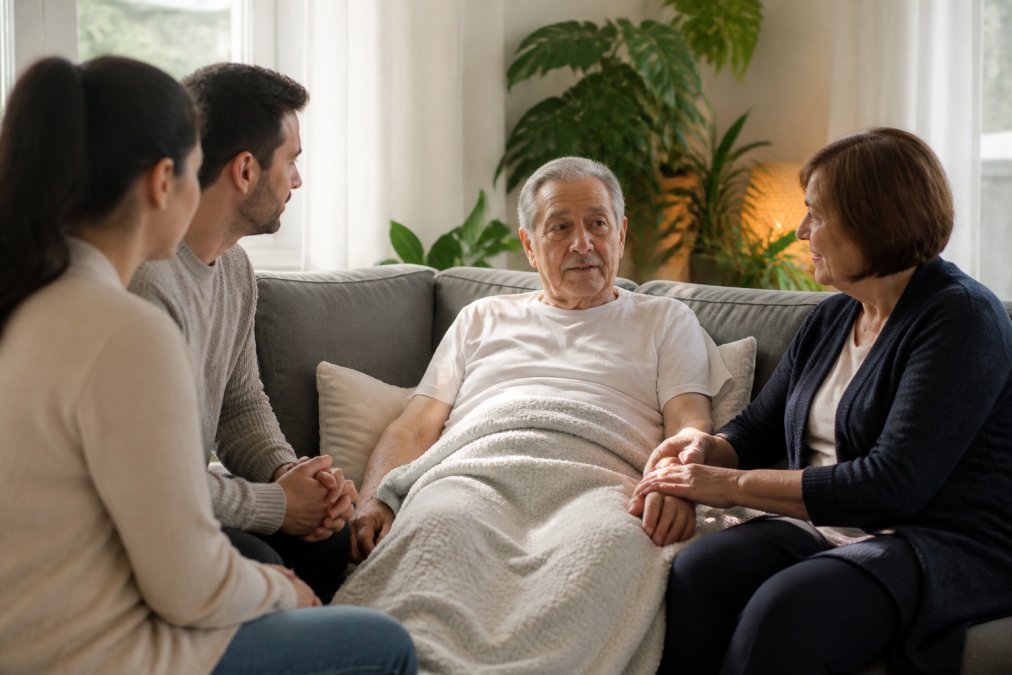
The first two weeks at home are often the hardest emotionally. Relief mixes with fear, and every twinge feels like a warning sign. Weeks three through eight tend to bring a slow settling as routines form. Somewhere around three to six months, many patients and caregivers hit a second wave of anxiety, particularly around returning to exercise or work (peer-reviewed research). Long-term emotional recovery can stretch well past a year, and that's normal.
PTSD in Caregivers and Long-Term Emotional Health
Post-traumatic stress symptoms in caregivers are one of the least discussed parts of heart surgery recovery. Watching someone you love go through a life-threatening procedure can leave its own kind of scar.
Caregivers may experience flashbacks to the ICU, intrusive thoughts about the surgery, hypervigilance about the patient's health, and difficulty sleeping. These aren't signs of weakness. They're signs that something genuinely overwhelming happened.
Long-term emotional health for families means checking in on the caregiver, not just the patient. Crisis intervention resources exist, and reaching out early is far easier than waiting until things unravel.
Building Your Heart Surgery Family Support Network
A strong support network is the single most protective factor for heart surgery families, and it rarely builds itself. It has to be assembled, sometimes deliberately, and the three pieces most guides gloss over are the ones that actually hold up over a six-to-twelve month recovery.
Peer support networks. Talking to someone who has already walked a spouse or parent through cardiac surgery does something that general reassurance cannot. Mended Hearts, a national peer-support organization, runs hospital-based visiting programs and local chapters where survivors and family members meet in person or online. Hospital social workers can usually connect you with a chapter before discharge. The value is not advice, it's the specific relief of hearing "we went through this, and here is what the third month felt like."
Digital tools for family coordination. This is the piece most articles skip entirely, and it's the one that saves the most mental energy. The goal is to stop being the family's switchboard. A few concrete setups that work:
- CaringBridge or a shared Google Doc for daily updates, so you write the status once and everyone reads it, instead of answering the same text eleven times.
- A shared calendar (Google Calendar, Apple Calendar, or a paper wall calendar) with follow-up appointments, medication refill dates, and who is covering which shift.
- A group chat (GroupMe, WhatsApp, or Signal) for the inner circle, kept separate from the wider update channel so logistics don't drown out encouragement.
- A medication tracker, the free Medisafe app or a simple paper chart on the refrigerator, because cardiac medication schedules are unforgiving and one missed dose is a real concern.
- A meal train (MealTrain.com or TakeThemAMeal.com) so food arrives without anyone having to coordinate it in real time.
Pick two or three of these, not all of them. A coordination system nobody uses is worse than no system at all.
Cultural considerations in caregiving. Different families process illness, caregiving, and asking for help in very different ways, and a support network that ignores this will quietly fail. In some families, the expectation is that a spouse or eldest daughter takes on caregiving without discussion, and offering outside help can feel like an insult. In others, extended family and faith community are the default first responders, and formal respite care is unfamiliar or mistrusted. Language access matters too, hospital interpreters and translated discharge instructions are available by law at most facilities, and asking for them is not an imposition. The practical move is to ask the family, directly, who they want in the room and who they want making decisions. Then build the network around that answer instead of around a default template.
The Zipper was built for exactly this stage of recovery, offering a peer community of survivors and families alongside practical tools.
If a small, tangible reminder of community helps, The Zipper's Unisex Hoodie is a soft, everyday piece designed for recovery days at home.

Frequently Asked Questions
How can families support a loved one after open heart surgery?
Families can help most by showing up consistently, listening without judgment, and handling practical tasks like meals and rides. Emotional validation matters more than advice. Ask what they need instead of assuming. Encourage them to join a peer support network where they can talk to others who have been through open heart surgery. Small gestures like a shared meal or a short walk together can reduce isolation and support the healing process.
What are the common emotional challenges for families during heart surgery recovery?
Families often face fear, anxiety, grief over lost normalcy, and role shifts. Spouses may feel overwhelmed by caregiving duties. Children might act out or withdraw. Siblings can feel ignored. Many family members experience caregiver burnout symptoms like exhaustion, irritability, and trouble sleeping. Recognizing these challenges early helps families seek mental health resources and peer support before stress becomes overwhelming.
How do I manage caregiver burnout after a family member's heart surgery?
Start by naming what you feel. Caregiver burnout symptoms include fatigue, resentment, and losing interest in activities you once enjoyed. Set small boundaries: ask one friend to bring dinner, take a 15-minute walk alone, or join a virtual caregiver support group. The Zipper's community offers peer support and resources designed for heart surgery families. You cannot pour from an empty cup, so protecting your own psychological well-being is part of caregiving.
Are there support groups for families of heart surgery patients?
Yes. Hospital social workers often run discharge planning groups, and nonprofits offer peer support networks for heart surgery families. Online communities like The Zipper connect you with other families who understand the fear and exhaustion. You can also ask your hospital for mental health screening resources or a list of local support groups. Joining one reduces isolation and gives you practical tips from people who have lived through it.
Heart surgery changes a family, and the emotional weight doesn't lift on its own. At The Zipper, we built a founder-led community around what survivors and caregivers actually go through, with peer support, a recovery nutrition tracker, and resources that address both the physical and emotional sides of healing. Get started with The Zipper and rebuild strength of body and soul alongside people who understand.


