

Table of Contents
- Yes, You Can Exercise After Heart Surgery, Here's What That Looks Like
- Post-Surgery Heart Recovery Timeline: What to Expect Week by Week
- Cardiac Rehabilitation Phases: Your Roadmap Back to Fitness
- Safe Exercises After Open Heart Surgery: What Actually Works
- Warning Signs During Cardiac Exercise You Should Never Ignore
- Managing Exercise Anxiety and Mental Health After Heart Surgery
- Nutrition, Hydration, and Return to Daily Life
- Frequently Asked Questions
Last Updated: August 30, 2026
Yes, You Can Exercise After Heart Surgery, Here's What That Looks Like
Exercise after heart surgery is not only possible, for most patients, it is one of the most important things you can do for your long-term recovery. According to American Heart Association guidance on cardiac rehabilitation, structured physical activity after cardiac procedures significantly reduces the risk of future cardiac events and improves quality of life. At The Zipper, we've walked alongside heart surgery survivors who asked this exact question, wondering if their active life was behind them.
It isn't.
The honest answer is that exercise after heart surgery looks very different in week two than it does in month six. The pace is slower, the stakes feel higher, and the fear is real. But the path forward is well-mapped. Below, we'll walk you through exactly what recovery exercise looks like, week by week, phase by phase, including the warning signs to watch for and the mental hurdles nobody talks about enough.
Cardiac rehabilitation is the formal term for the supervised, structured exercise and education program prescribed after heart surgery. It is the clinical framework that turns "you should be more active" into an actual plan. The key insight most guides miss: exercise after heart surgery isn't a single thing. It's a progression, and where you are in that progression determines everything, what you do, how long, how hard, and who should be watching.
Post-Surgery Heart Recovery Timeline: What to Expect Week by Week
The recovery timeline after open heart surgery follows a predictable arc. Understanding that arc helps you set realistic expectations and avoid the two most common mistakes: doing too much too soon, or doing so little that deconditioning sets in.
Weeks 1-2: Rest, Breathing, and Gentle Movement
The first two weeks are about protection, not performance. Your sternum needs time to begin healing, and sternal precautions govern almost every movement you make. Most patients are advised to avoid lifting anything heavier than a few pounds, to brace when coughing, and to avoid pushing or pulling.
That said, complete bed rest is counterproductive. Short, slow walks around the house are typically encouraged from day one post-discharge. The goal is circulation, not cardio. Breathing exercises are critical during this window. Incentive spirometry helps prevent post-operative pneumonia and keeps lung capacity from declining.
Weeks 3-6: Building Stamina Slowly
Fatigue and shortness of breath on mild exertion are normal during this phase. Walking remains the primary exercise, gradually extending from five minutes to fifteen or twenty. Flat, even surfaces are safer than hills. A slow, steady pace matters more than distance.
Rate of perceived exertion is a useful guide: on a scale of one to ten, you should be working at a three or four, able to hold a conversation. Heart rate monitoring becomes practical: many surgical teams provide a target pulse rate range, typically keeping exertion well below maximum heart rate.
Weeks 7-12 and Beyond: Structured Activity
By weeks seven through twelve, most patients who have received medical clearance are entering Phase II cardiac rehabilitation. Exercise tolerance improves noticeably. Walks get longer and brisker. Some patients begin using a stationary bike or elliptical trainer under supervision. The psychological shift happens here: accumulated positive experience builds confidence that is earned, not given.
Cardiac Rehabilitation Phases: Your Roadmap Back to Fitness
Cardiac rehabilitation phases provide the structural framework that turns post-surgical recovery from guesswork into a guided process. Most programs follow a four-phase model, each building on the last.
Phase I: In-Hospital Mobility
Phase I begins in the hospital, often within twenty-four to forty-eight hours of surgery. A physical therapist guides patients through basic mobility: sitting up, standing, short walks down the hallway. Blood pressure control and pulse rate are tracked closely. Any abnormal response stops the session immediately.
Phase II: Supervised Outpatient Rehab
Phase II is the cornerstone of cardiac rehabilitation. Patients attend sessions at an outpatient facility, typically three times per week for six to twelve weeks, where exercise is supervised and heart rate monitoring is continuous. According to National Heart, Lung, and Blood Institute overview of cardiac rehabilitation, Phase II programs combine aerobic activity, education about coronary artery disease, and support for lifestyle changes including diet and stress management.
Exercise usually includes aerobic activity on a stationary bike, treadmill, or elliptical trainer, progressing in intensity as tolerance improves. Warm-up and cool-down periods are non-negotiable.
Phase III and IV: Independent Maintenance
Phase III transitions patients toward independent exercise, often in a community gym with less direct supervision. Phase IV is lifelong maintenance, the habits built in earlier phases sustained independently. Many survivors struggle without community support when clinical structure disappears. Having a peer group who understands the experience makes a measurable difference in adherence.
Safe Exercises After Open Heart Surgery: What Actually Works
The best exercises after open heart surgery are low-impact, controllable, and easy to scale. The goal in early recovery is cardiovascular conditioning without placing excessive strain on a healing sternum or an adapting heart.
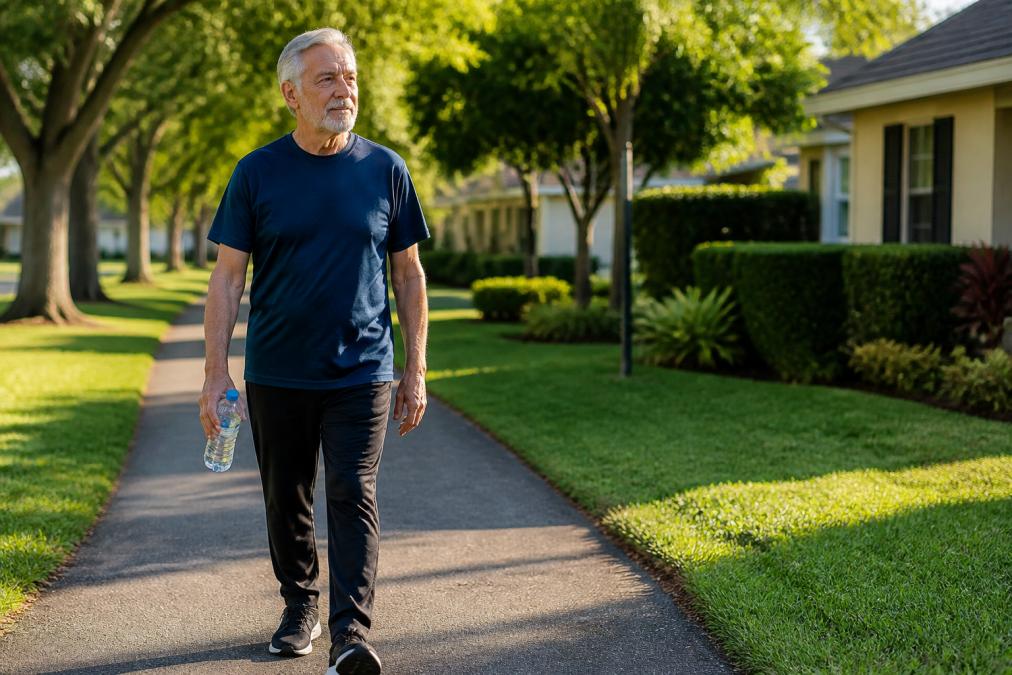
Aerobic Activity: Walking, Stationary Bike, and Elliptical
Walking is the gold standard of post-surgical aerobic activity. It requires no equipment, can be done anywhere, and scales naturally from a shuffle around the living room to a brisk thirty-minute neighborhood walk.
The stationary bike is the preferred alternative for patients with balance concerns or joint pain. It offers consistent, low-impact aerobic activity with easily adjustable resistance and allows you to stop immediately if something feels wrong.
The elliptical trainer becomes appropriate later in recovery, typically after medical clearance around the twelve-week mark, because it involves arm movement that can stress the sternum if introduced too early.
Exercise |
When to Start |
Intensity Level |
Sternal Risk |
|---|---|---|---|
Short indoor walks |
Weeks 1-2 |
Very low |
Minimal |
Outdoor flat walks |
Weeks 3-6 |
Low to moderate |
Minimal |
Stationary bike |
Weeks 6-8 (with clearance) |
Low to moderate |
Low |
Elliptical trainer |
Weeks 10-12 (with clearance) |
Moderate |
Low-moderate |
Swimming |
After 12 weeks (wound healed) |
Moderate |
Low |
Breathing Exercises and Sternal Precautions
Breathing exercises maintain lung function during the period when deep breathing is uncomfortable and activate the parasympathetic nervous system, which helps manage anxiety and blood pressure. Diaphragmatic breathing, where the breath expands the belly rather than the chest, is the technique most commonly recommended. Ten slow, deep breaths several times per day is a reasonable starting target.
Sternal precautions typically remain in effect for six to eight weeks after a sternotomy. The general principle is consistent: avoid movements that create tension across the chest, reaching overhead, pushing heavy objects, or twisting aggressively.
Home-Based Exercise Modifications
Not every patient lives near an outpatient rehab center. A structured home program typically includes a ten-minute warm-up of gentle movement, twenty to thirty minutes of walking or stationary cycling, and a ten-minute cool-down. Monitoring heart rate with a basic pulse oximeter or fitness tracker adds a layer of safety. Keeping an exercise log helps you and your care team track progress.
The accountability structure of a clinical setting disappears at home. Building a simple routine, walking at the same time each day, or connecting with a peer who checks in on your progress, makes adherence dramatically more likely.
Warning Signs During Cardiac Exercise You Should Never Ignore
Stop exercising and contact your care team or call 911 immediately if you experience any of the following:
- Chest pain or pressure, including angina-like symptoms
- Severe shortness of breath that does not resolve quickly with rest
- Dizziness, lightheadedness, or near-fainting
- Palpitations or an irregular, racing pulse rate
- Sudden, unusual fatigue significantly worse than your baseline
- Pain, swelling, or redness in one leg (a possible sign of deep vein thrombosis)
- Significant swelling in the ankles or feet that appears suddenly
Mild shortness of breath and fatigue during exertion are expected and normal. The distinction is degree and persistence. If symptoms resolve within a few minutes of stopping, that is generally reassuring. If they persist, escalate, or feel different from your usual post-exertion discomfort, treat them as a warning sign.
As documented in American College of Cardiology patient guidelines on post-surgical activity, patients should always have a clear plan for what to do if symptoms arise before starting any exercise program at home.
Managing Exercise Anxiety and Mental Health After Heart Surgery
Fear of exercise after heart surgery is not weakness. It is a rational response to a traumatic experience, and it affects a significant portion of cardiac surgery survivors. Cardiac anxiety shows up as avoidance, skipping walks, staying sedentary "just to be safe," or interpreting every twinge as a catastrophe. The cruel irony is that avoidance reinforces fear and leads to deconditioning, which actually increases cardiovascular risk over time.

A few approaches that genuinely help:
Start smaller than you think you need to. If a ten-minute walk feels terrifying, do five minutes. Success at a small target builds the evidence your nervous system needs that movement is safe.
Name the fear explicitly. Many survivors find that saying the fear out loud reduces its grip. Unexpressed fear tends to grow.
Connect with people who've been through it. Hearing from someone six months ahead of you in recovery that they felt the same fear and are now walking thirty minutes a day changes something. The Zipper was built specifically for this: a founder-led community of heart surgery survivors who understand the specific terror of that first walk.
Work with a mental health professional familiar with chronic illness. Cognitive behavioral therapy approaches adapted for health anxiety have a strong track record. Ask your cardiologist for a referral if exercise avoidance is significantly limiting your rehabilitation.
Nutrition, Hydration, and Return to Daily Life
Recovery from heart surgery is not just about exercise. What you eat and drink directly affects your energy levels, your cardiovascular health, and your ability to tolerate increasing physical activity.
Hydration is foundational and often underestimated. Dehydration raises heart rate and makes exertion feel harder than it is. Carrying water consistently during walks and throughout the day matters. The Zipper's Stainless steel water bottle, double-walled, 17 ounces, and built to keep drinks cold for hours, is a practical companion for daily outings and rehab walks.

On the nutrition side, a heart-healthy diet emphasizes vegetables, whole grains, lean protein, and healthy fats while limiting sodium and saturated fat. Your cardiac rehab team or a registered dietitian can provide guidance tailored to your specific procedure and medications.
Return to daily chores follows a similar progression to exercise. Light tasks are usually appropriate by weeks three to four. Vacuuming, carrying groceries, and yard work typically wait until sternal precautions are lifted. Driving is usually restricted for four to six weeks. Return to work depends heavily on the physical demands of the job.
Daily Activity |
Typical Timeline |
Key Consideration |
|---|---|---|
Light household tasks |
Weeks 3-4 |
Avoid reaching overhead |
Driving |
Weeks 4-6 |
Surgeon-specific guidance |
Desk work return |
Weeks 4-6 |
Fatigue management critical |
Grocery shopping |
Weeks 5-7 |
Avoid heavy lifting |
Yard work/vacuuming |
Weeks 6-8 |
After sternal clearance |
Physically demanding work |
Weeks 10-12+ |
Requires formal clearance |
The sedentary lifestyle that often follows surgery is understandable, but it compounds the challenge. Each day of inactivity makes the next walk harder. Small, consistent movement is always better than waiting until you feel "ready."
Recovery from heart surgery is one of the hardest things a person navigates, physically, emotionally, and practically. The path back to an active life is real, but it requires the right information, the right support, and honest community. The Zipper exists because founder Steve Rucinski lived this recovery and knew that no one should face it alone. With peer support from people who genuinely understand, practical tools like the recovery nutrition tracker, and resources grounded in real experience, The Zipper gives survivors what clinical pamphlets cannot: connection, hope, and a community that gets it. Join The Zipper and take the next step in your recovery, with people who've already taken it.
Frequently Asked Questions
Q: How long does it take to recover from heart surgery?
A: Full recovery from open-heart surgery typically takes 6 to 12 weeks for most patients, though returning to strenuous activity can take longer. The sternotomy incision needs 6 to 8 weeks to heal before you can lift anything heavy. Completing a full cardiac rehabilitation program, which runs 12 weeks or more, significantly improves long-term cardiovascular health. Your cardiologist will set specific milestones based on your procedure, age, and baseline fitness.
Q: What types of exercises are safe for heart surgery patients?
A: Brisk walking is the most recommended starting point for safe exercises after open heart surgery. A stationary bike and elliptical trainer are also low-impact options once your surgeon clears you, usually around weeks 4 to 6. Breathing exercises begin almost immediately post-surgery to prevent pneumonia and support sternal healing. Avoid any movement that strains the chest or requires pushing or pulling with your arms until sternal precautions are lifted.
Q: What are the warning signs to stop exercising during cardiac recovery?
A: Stop exercising immediately and contact your care team if you experience chest pain, angina, severe shortness of breath, dizziness, or an irregular pulse rate. Unusual fatigue that doesn't resolve with rest, swelling in your legs, or a heart rate that spikes well above your target zone are also warning signs during cardiac exercise that require prompt attention. When in doubt, use the rate of perceived exertion scale: if you cannot hold a short conversation, you are working too hard.
Q: How does cardiac rehabilitation help with post-surgery exercise?
A: Cardiac rehabilitation provides medically supervised exercise sessions where your heart rate, blood pressure, and oxygen levels are monitored in real time. The program follows structured rehabilitation phases, progressing intensity safely while teaching fatigue management and lifestyle skills. Research consistently shows that completing cardiac rehab reduces hospital readmission rates and improves long-term survival after bypass surgery or myocardial infarction. Your physician must provide a referral, and Medicare and most private insurers cover the program.
Q: Is it normal to feel anxious about exercising after heart surgery?
A: Yes, exercise anxiety after heart surgery is extremely common and often goes unaddressed. Many patients fear that physical exertion will trigger another cardiac event, which can lead to avoiding movement entirely and prolonging a sedentary lifestyle. This fear is understandable but counterproductive: controlled aerobic activity, done within your prescribed limits, actually strengthens cardiovascular health. Connecting with others who have been through the same experience, as The Zipper community offers, can reduce that anxiety significantly.
Q: What should I expect 10 weeks after open-heart surgery?
A: At 10 weeks post-surgery, most patients are well into Phase II cardiac rehabilitation and walking 20 to 30 minutes most days. Sternal precautions are often lifted around this point, allowing more upper-body movement. Exercise tolerance improves noticeably, and many patients return to light work or daily chores. Fatigue is still normal, especially after activity. If you are still struggling with stamina or anxiety at this stage, speak with your physical therapy team about adjusting your exercise progression.
This article was written using GrandRanker


