

Table of Contents
- Why Support Groups for Heart Surgery Patients Matter
- Types of Heart Surgery Support Groups: What's Available
- Online Heart Patient Communities: Benefits and How to Stay Safe
- Mental Health After Heart Surgery: What Support Groups Address
- Heart Surgery Recovery Timeline and How Peer Support Fits In
- How to Find and Vet a Heart Surgery Support Group
- Resources for Caregivers and Family Members
- Conclusion
Last Updated: August 29, 2026
Why Support Groups for Heart Surgery Patients Matter
Support groups for heart surgery patients are structured communities where survivors, caregivers, and family members share experiences, coping strategies, and practical guidance to navigate post-operative recovery together. Recovery from open-heart surgery is one of the most physically and emotionally demanding experiences a person can face. At The Zipper, founded by heart surgery survivor Steve Rucinski, we provide a compassionate network of peers, evidence-based information, and practical tools like our recovery nutrition tracker, helping survivors rebuild strength of body and soul.
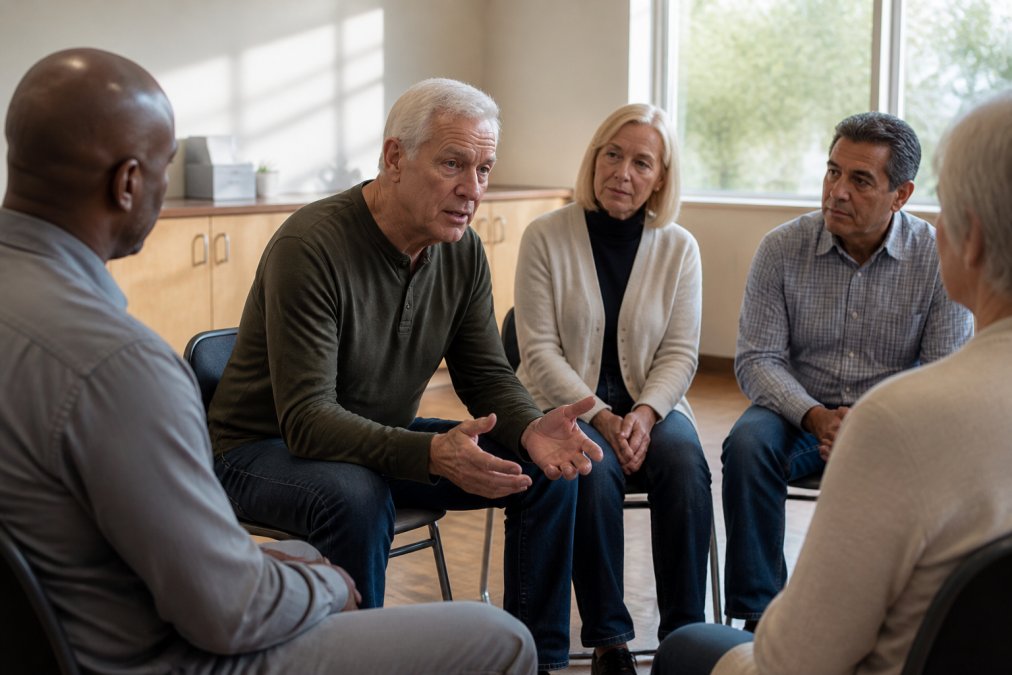
The clinical side of recovery gets attention: medication schedules, wound care, follow-up echocardiograms. The emotional side gets far less. Many patients leave the hospital grateful but unprepared for the anxiety, depression, and psychological adjustment that follow. According to the American Heart Association's resources on cardiac rehabilitation, emotional well-being is a core component of cardiovascular rehabilitation, yet many patients never receive structured mental health support after surgery.
Peer support fills this gap. Connecting with others who have navigated the same recovery milestones, returning to work, managing exercise fear, rebuilding a heart-healthy lifestyle, provides validation that no pamphlet can replicate. Support groups reduce social isolation, build health literacy, and give patients a framework for long-term recovery that extends beyond the clinical setting. Research consistently shows that people who feel supported recover better.
Types of Heart Surgery Support Groups: What's Available
Not every group is built the same way. Here is a practical breakdown of what exists and who each format serves best.
Hospital-Based and Cardiac Rehabilitation Programs
Hospital-based groups are the most structured entry point for most patients. Many cardiac centers operate formal cardiovascular rehabilitation programs combining supervised exercise, nutritional guidance, and group education sessions, run by certified cardiac rehabilitation specialists.
The advantage is clinical oversight and evidence-based protocols. The limitation is access: many programs have limited slots, require transportation, and may not be covered by all insurance plans. Rural patients often struggle to reach them consistently. These programs are also time-limited, running for a set number of weeks before patients transition to independent management, where many fall through the cracks.
Community and Nonprofit-Led Groups
Community groups run by nonprofits fill the long-term gap that hospital programs leave behind. Organizations like Mended Hearts, affiliated with the American Heart Association, operate chapters across the country connecting heart surgery survivors through in-person meetings, hospital visitation, and community outreach. Mended Hearts' chapter directory and patient support resources
These groups are typically free, peer-led, and open-ended with no graduation date. Members range from one month post-surgery to those managing chronic conditions years later. Facilitators are often survivors themselves, providing relevant coping strategies that clinical programs may not offer.
Support Groups for Younger Heart Surgery Patients
Heart surgery is not only a condition affecting older adults. Younger patients in their 20s, 30s, and 40s face distinct challenges: returning to physically demanding careers, navigating relationships after major health events, and managing anxiety about long-term prognosis differently than older cohorts.
Most general cardiac support groups skew older, leaving younger patients feeling out of place. Age-matched peer support addresses issues like fertility after heart surgery, career disruption, and identity adjustment at an age when peers are not facing similar challenges.
Online Heart Patient Communities: Benefits and How to Stay Safe
Online heart patient communities offer access at 3 a.m. when anxiety spikes, connection with patients who had the same procedure, and reach for people far from cardiac centers. For many survivors, these digital communities become their primary support network.
Peer-to-peer mentoring across time zones, shared recovery milestones, and access to patient education all contribute to better psychological adjustment and reduced isolation. A patient recovering from heart valve surgery in a rural area has the same access to community as someone near a major medical center.
Digital Safety and Privacy in Online Support Forums
Sharing deeply personal health information online carries real risks. Before joining any online heart patient community, evaluate:
- Does the platform have a clear privacy policy explaining how your data is used?
- Are posts visible only to verified members, or publicly indexed by search engines?
- Does the community have active moderation to remove predatory or misleading health advice?
- Is there a clear process for reporting inappropriate content or safety concerns?
- Does the platform sell user data to third parties, including health-related advertisers?
- Are facilitators or moderators identified and accountable?
Avoid communities requiring you to share personally identifying information publicly before accessing basic content. A well-run community lets you observe before participating. At The Zipper, privacy and safety are foundational. Members can engage at whatever level feels right without requiring public disclosure of personal health details.
Mental Health After Heart Surgery: What Support Groups Address
Mental health after heart surgery is one of the most under-discussed aspects of surgical recovery. Depression and anxiety are common following major cardiac procedures, including coronary artery bypass graft surgery, heart valve surgery, and heart failure procedures. Many patients feel blindsided by the emotional weight of recovery because no one prepared them for it.

Support groups address mental health by providing a space where these feelings are normalized rather than pathologized. Hearing another survivor say "I was terrified to exercise for six months after my bypass" is worth more to most patients than reading a clinical brochure.
The specific issues well-run groups address include post-surgical depression, fear of re-occurrence, identity disruption, caregiver relationship strain, and exercise anxiety. According to the National Institute of Mental Health's guidance on chronic illness and mental health, people managing chronic conditions face significantly elevated rates of depression and anxiety, and peer support is recognized as an effective component of comprehensive care.
Heart Surgery Recovery Timeline and How Peer Support Fits In
The recovery timeline after open-heart surgery typically unfolds across several distinct phases, and the role of peer support shifts meaningfully at each stage.
Recovery Phase |
Typical Timeframe |
Primary Challenge |
How Peer Support Helps |
|---|---|---|---|
Acute post-operative |
Weeks 1-4 |
Physical fragility, emotional shock |
Reassurance, "what to expect" guidance |
Early rehabilitation |
Weeks 4-12 |
Fatigue, activity restrictions, anxiety |
Motivation, shared milestones, coping strategies |
Active rehabilitation |
Months 3-6 |
Returning to work, exercise fear |
Practical advice, accountability, encouragement |
Long-term management |
6+ months |
Chronic condition management, lifestyle |
Ongoing community, relapse prevention support |
Most patients receive intensive clinical support during the acute phase, then experience a sharp drop-off around the 12-week mark, precisely when many find peer communities most valuable.
Transitioning from Hospital-Based to Community Support
The transition from hospital-based care to community-based support is one of the most vulnerable moments in long-term recovery. Patients attending a formal cardiac rehabilitation program for 12 weeks suddenly find themselves without that weekly structure, and many describe the shift as disorienting.
A common mistake is waiting until the hospital program ends to start looking for community support. The better approach is identifying a community group or online platform before the clinical program concludes, so there is no gap in support network continuity. The Zipper is designed specifically for this transition, providing peer-to-peer mentoring and practical recovery tools that bridge the gap between clinical discharge and long-term heart-healthy lifestyle management.
How to Find and Vet a Heart Surgery Support Group
Finding a good support group takes effort. Here is a step-by-step process for identifying and evaluating groups.
Step 1: Start with your care team. Ask your cardiologist, cardiac surgeon, or cardiac rehabilitation coordinator for referrals. Hospital social workers are often the most knowledgeable resource for local options.
Step 2: Check national organization directories. The American Heart Association maintains searchable directories of local and online support resources. American Heart Association's patient support resources
Step 3: Search condition-specific terms. Search for groups specific to your procedure type: coronary artery bypass graft support, heart valve surgery recovery, or vascular disease support.
Step 4: Observe before committing. Most reputable groups allow new members to attend once or twice before deciding to join. Use this time to assess the group's culture, facilitation quality, and membership fit.
Step 5: Verify facilitator credentials or experience. A good facilitator does not need to be a clinician, but they should have relevant experience as a survivor or someone trained in group facilitation.
Questions to Ask Before Joining Any Group
Before committing to any group, ask:
- Who facilitates the group, and what is their background?
- Is there a clinical advisor or medical professional affiliated with the group?
- How does the group handle medical questions that exceed peer support boundaries?
- What are the group's guidelines around confidentiality?
- How long has the group been running, and what is typical attendance?
- Is there a cost to participate, and what does it cover?
- How does the group handle conflict or inappropriate behavior?
A group that cannot answer these questions clearly warrants caution. Good groups have thought through these issues because they take their members' well-being seriously.
Resources for Caregivers and Family Members
Caregivers are the invisible patients of heart surgery recovery. They manage medications, attend appointments, absorb the patient's fear and frustration, often while maintaining their own work and family responsibilities.
Specific resources for family members include caregiver-specific support groups separate from patient groups, educational workshops on heart-healthy cooking and medication management, online forums dedicated to cardiac caregivers, and respite resources through local Area Agencies on Aging.
What most caregiver resources miss is permission to acknowledge that caregiving is hard and that frustration and exhaustion are normal. The best support communities for family members create space for that honesty. The Zipper's community is built for both survivors and their families, recognizing that recovery is not a solo effort.
Recovery from heart surgery is genuinely hard, and the emotional weight often outlasts the physical healing. The right peer community can make the difference between feeling stranded in that experience and finding a path through it. The Zipper was built by a survivor for survivors, bringing together compassionate peer support, practical recovery tools, and a community that understands what you're actually going through. Join The Zipper and rebuild your strength alongside people who get it.
Frequently Asked Questions
Q: How long does it take to recover from open heart surgery?
A: Full recovery from open heart surgery generally takes six weeks to three months for most patients, though returning to normal activity levels can take up to a year. The heart surgery recovery timeline varies based on the procedure type, your age, and overall health. Cardiovascular rehabilitation programs typically begin four to six weeks post-surgery. Peer support groups help patients set realistic recovery milestones and stay motivated through each phase of healing.
Q: Is depression common after heart surgery?
A: Yes. Anxiety and depression are among the most common psychological challenges after heart surgery, affecting a meaningful share of post-operative patients. Mental health after heart surgery is often overlooked compared to physical recovery, yet it directly affects outcomes. Feelings of fear, sadness, and social isolation are normal responses to a major cardiac event. Heart surgery support groups provide a space to process these emotions alongside people who genuinely understand the experience.
Q: How can I find a local support group for heart patients?
A: Start by asking your cardiologist or cardiac rehabilitation coordinator, as many hospitals run their own patient support programs. The American Heart Association maintains a directory of local resources. Online heart patient communities are a strong alternative when local options are limited, offering peer-to-peer mentoring and shared experiences at any hour. Founder-led platforms like The Zipper also connect survivors directly, so you hear from people who have lived through the same recovery.
Q: What are the benefits of joining a heart surgery support group?
A: Heart surgery support groups improve emotional well-being by reducing social isolation and providing coping strategies you won't find in a pamphlet. Members share practical advice on heart-healthy lifestyle changes, medication management, and exercise fears. Peer support has been linked to better adherence to rehabilitation programs and greater psychological adjustment after major surgery. Beyond information, the sense of belonging, knowing others truly understand your experience, is itself a meaningful part of long-term recovery.
Q: Is fatigue normal six months after open heart surgery?
A: Fatigue that persists months after surgery is common and does not necessarily signal a complication. The body undergoes significant repair after a coronary artery bypass graft or heart valve surgery, and energy levels rebuild gradually. If fatigue is severe or worsening, always check with your cardiologist. Support groups are a good place to hear how others managed persistent tiredness and to confirm that your experience is a recognized part of post-operative recovery, not a sign something is wrong.
This article was written using GrandRanker


