

Table of Contents
- How Home Cardiac Monitoring Works
- What Home Cardiac Monitoring Can and Cannot Detect
- How Accurate Is a Home Heart Monitor?
- How Long Do You Wear a Heart Monitor?
- When Heart Rate Monitoring Anxiety Outweighs Reassurance
- What Happens After an Abnormal Reading
- Costs, Insurance, and Eligibility
- Questions to Ask Your Cardiologist About Home Monitoring
- Conclusion
- Frequently Asked Questions
Last Updated: October 21, 2026
How Home Cardiac Monitoring Works
Home cardiac monitoring is the use of a prescribed device to record your heart's electrical activity outside a hospital or clinic. Most systems capture an ECG, log your heart rate, and send the data to a clinical team for review.
At The Zipper, we hear the same question from almost every heart surgery survivor: will this machine actually make me feel calmer, or will it just give me one more thing to worry about? That is the right question to ask. The answer depends on how the monitoring is set up and how you use it.
Here is the basic flow, step by step:
- Your cardiologist orders the monitor and sets the wear period.
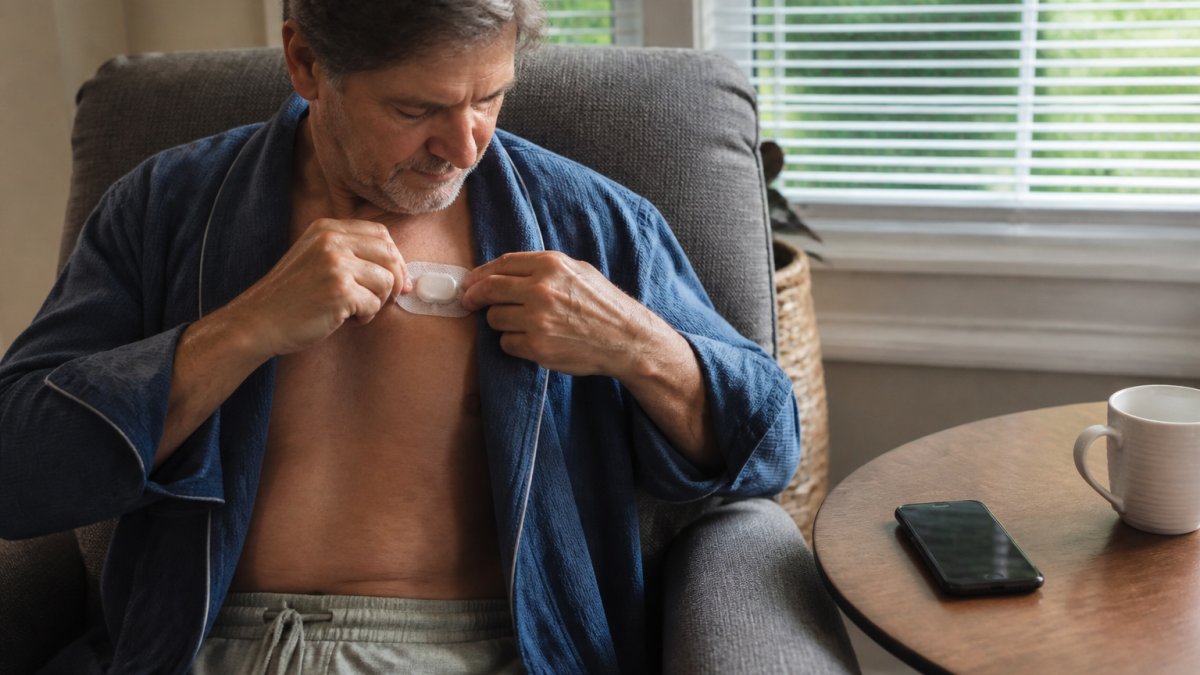
- You attach the device, usually with a patch, band, or small wearable.
- The monitor records your heart rhythm during daily activities and rest.
- Data uploads through a phone app or a base station.
- A clinical team reviews the readings and flags anything abnormal.
- You get a report, a call, or a follow-up visit.
The National Heart, Lung, and Blood Institute guide to heart tests explains that these recordings help doctors see how your heart behaves over hours or days, not just the few minutes you spend in an exam room.
That matters after surgery. A single office ECG is a snapshot. A home monitor is closer to a short film.
What Home Cardiac Monitoring Can and Cannot Detect
Home cardiac monitoring is good at catching rhythm problems. It cannot diagnose a heart attack, measure blocked arteries, or replace an in-person exam.
What it detects well:
- Arrhythmia, meaning an irregular heartbeat
- Atrial fibrillation, a common irregular rhythm
- Pauses and extra beats
- Heart rate trends during activity and sleep
- How often symptoms line up with rhythm changes
What it misses:
- Blocked arteries and structural problems
- Heart failure severity
- Blood pressure problems, unless the device includes a cuff
- Silent events that happen while the monitor is off
A common mistake is expecting the device to rule out every cardiac problem. It won't. Think of it as one tool in a larger plan that includes office visits, imaging, and your own symptom tracking.
How Accurate Is a Home Heart Monitor?
Home heart monitor accuracy is high for rhythm detection when the device is worn correctly and the signal is clean. Consumer wearables are a different story, and the gap matters.
Prescribed monitors use medical-grade sensors and are read by clinicians. A home ECG device that your doctor orders is built for diagnosis. A smartwatch that tracks heart rate is built for general wellness.
The U.S. Food and Drug Administration guidance on ECG software and devices notes that some consumer ECG features are cleared for specific uses, such as detecting signs of atrial fibrillation, but they are not full diagnostic tools.
Accuracy drops when:
- The patch loosens or gets wet
- You forget to charge or sync the device
- Movement creates noise in the recording
- You wear it for fewer hours than prescribed
So the honest answer is: a prescribed home heart monitor is accurate, but only as good as its wear time. A monitor sitting in a drawer records nothing.
False alarms, missed events, and alert fatigue
Accuracy is not the same as certainty. Even a well-worn prescribed monitor can produce a false alarm, a reading flagged as abnormal that turns out to be noise, a loose lead, or a harmless blip. It can also miss an event, especially a short or rare rhythm that happens between uploads or while the device is off.
This is where the peace-of-mind claim gets tested. A monitor that pings you with alerts several times a day can train you to dread the next notification. Clinicians sometimes call this alert fatigue: the more alarms you see, the less each one means, and the harder it becomes to tell a real change from background noise. A common pattern is a patient who feels calmer in week one and more anxious by week three, not because the heart changed but because the alerts did.
What helps:
- Ask how alerts are triaged. Some programs route every flagged reading to a nurse; others only escalate readings that meet a clinical threshold. Know which one you are in.
- Separate device alerts from clinical calls. A device notification is not a diagnosis. The clinical team decides what a reading means.
- Keep a symptom log. A flagged reading paired with "I was climbing stairs" reads very differently from the same reading at rest.
- Set a check-in rhythm. If the app lets you refresh constantly, decide in advance how often you will look, and stick to it.
What accuracy means for peace of mind
The realistic promise is not "nothing will go wrong." It is "if a rhythm problem shows up during the wear period, there is a good chance it gets captured and reviewed." That is a meaningful form of reassurance, but it is bounded by wear time, signal quality, review schedules, and how you respond to alerts. Understanding those bounds is what keeps the monitor from becoming one more thing to worry about.
How Long Do You Wear a Heart Monitor?
How long to wear a heart monitor depends on what your doctor is looking for. Common options run from 24 hours to 30 days, and some implanted devices work for years.
| Monitor Type | Typical Wear Time | Best For |
|---|---|---|
| Holter monitor | 24-48 hours | Frequent or daily symptoms |
| Event monitor | 2-4 weeks | Symptoms that come and go |
| Patch monitor | 7-14 days | Catching atrial fibrillation |
| Implanted loop recorder | Months to years | Rare, unexplained events |
The American Heart Association overview of cardiac monitoring points out that longer monitoring raises the odds of catching a rhythm that only shows up now and then.
For many heart surgery patients, a two-week patch is enough to see how the rhythm settles during normal daily activities. If your symptoms are rare, your cardiologist may lean toward a longer window.
When Heart Rate Monitoring Anxiety Outweighs Reassurance
Heart rate monitoring anxiety is real, and it is the part most guides skip. Constant checking can turn a tool built for reassurance into a source of stress.
Watch for these signs:
- You check the app dozens of times a day
- A single high reading ruins your whole morning
- You stop moving because you fear the number will spike
- You feel more anxious than you did before the monitor
If that sounds familiar, you are not being dramatic. Recovery is emotionally heavy, and a screen that reports on your heart all day can feed fear.
A practical fix is to set rules before you start. Check the app at set times. Let the clinical team do the interpreting. Write down symptoms instead of refreshing the reading.
The Zipper community exists partly for this reason. Talking with other survivors who felt the same fear can lower the noise in your head.
What Happens After an Abnormal Reading
An abnormal rhythm does not automatically mean an emergency. What happens next depends on the finding, your history, and how your monitoring program is set up.
Typical steps:
- The clinical team reviews the flagged reading
- A nurse or doctor calls you to ask about symptoms
- You may be asked to repeat the recording or come in
- Medication or follow-up testing may be adjusted
- Serious findings get escalated the same day
Response times vary widely. Some programs review data daily. Others batch it weekly. Ask which one you are in, because that answer shapes how much reassurance the monitor can actually give you.
A missed event is the flip side. If your monitor only uploads once a week, a scary episode on Tuesday may not reach anyone until the following Monday. Knowing the schedule helps you decide when to call instead of waiting.
Costs, Insurance, and Eligibility
Cost is where peace of mind gets tested. Home cardiac monitoring is often covered when it is prescribed and medically needed, but coverage rules vary by plan, and the out-of-pocket number can range from near zero to several hundred dollars depending on the device and how it is billed.
How coverage usually works
Prescribed cardiac monitoring is typically billed one of two ways, and the difference matters for your wallet:
- As a diagnostic test. Short-term monitors, Holter, event, and patch devices, are often billed as diagnostic testing ordered by your cardiologist. Coverage usually follows your plan's diagnostic-test rules, which may include prior authorization.
- As durable medical equipment (DME). Longer-term or implanted-device monitoring may be billed under DME or a related benefit. DME coverage often has its own deductible, coinsurance percentage, and supplier network.
Consumer devices, smartwatches and over-the-counter ECG features, are generally not covered by insurance because they are wellness products, not prescribed treatment. You pay the retail price, and the readings are not part of your medical record unless you choose to share them.
Questions worth asking before you start
- Is prior authorization required, and who files it?
- Is the monitor covered as a diagnostic test or as durable medical equipment?
- What is my copay or coinsurance percentage, and does my deductible apply?
- Who bills me, the clinic, the device company, or both?
- What happens if I need a longer wear period or a replacement device?
- Are there separate charges for data review or clinician interpretation?
The Centers for Medicare & Medicaid Services coverage resources publish general guidance on cardiac monitoring coverage, but your specific plan rules decide the final number. Call your insurer and get the answer in writing before the monitor is ordered.
Eligibility usually hinges on medical need
Insurers generally require documentation that monitoring is medically necessary. A history of arrhythmia, unexplained fainting or palpitations, a recent heart surgery, or a family history of certain rhythm disorders can all support a prescription. A device bought on your own without a doctor's order is a different purchase with different limits, and no clinical review behind it.
Comparing the cost picture across options
| Option | Typical coverage | What you may pay | Clinical review included? |
|---|---|---|---|
| Holter or event monitor (prescribed) | Often covered as diagnostic testing | Copay or coinsurance after deductible | Yes |
| Patch monitor (prescribed) | Often covered as diagnostic testing | Copay or coinsurance after deductible | Yes |
| Implanted loop recorder | Often covered under DME or surgical benefit | Deductible plus coinsurance; procedure costs may apply | Yes |
| Smartwatch or consumer ECG | Generally not covered | Full retail price | No, you interpret or share readings yourself |
The peace-of-mind calculation is not just the sticker price. A covered prescribed monitor with clinical review may cost you less out of pocket than a consumer device you buy outright, and it comes with a clinician who interprets the data. Ask the billing question early, get the estimate in writing, and you remove one more source of uncertainty from an already stressful recovery.
Questions to Ask Your Cardiologist About Home Monitoring
Questions to ask your cardiologist about home monitoring should cover the device, the review process, and what you should do with the data. Bring this list to your next visit.
- Which monitor are you prescribing, and why that one?
- How long do I wear it, and what happens if it falls off?
- Who reviews my readings, and how often?
- How fast will someone contact me after an abnormal rhythm?
- Should I look at the app daily, or leave it to the clinical team?
- What symptoms should make me call the office instead of waiting?
- Will this change my medications or rehab plan?
- What will we do if the results are normal but I still feel off?
That last question matters most. A normal report is reassuring, but it is not a verdict on how you feel. Your care team needs both the cardiac data and your symptom tracking to manage a heart condition well.
Conclusion
Deciding whether home cardiac monitoring is good for peace of mind comes down to setup, not the device alone. A prescribed monitor with a clear review schedule and honest limits can calm a lot of fear after heart surgery. A monitor you check every ten minutes can do the opposite.
Frequently Asked Questions
Will a heart monitor pick up anxiety?
A heart monitor records electrical activity and rate, not emotions, so it cannot label a reading as anxiety. What it can show is a fast heart rate during a stressful moment. That matters because heart rate monitoring anxiety is real: seeing a spike can make you more anxious, which raises your rate again. Your care team reviews the pattern in context, which is why symptom tracking alongside readings helps them tell a harmless rush apart from an abnormal rhythm worth a closer look.
Can a home heart monitor detect an irregular heartbeat?
Yes. Prescribed devices record an ECG and flag irregular rhythms such as atrial fibrillation for clinical review. Accuracy varies by device and by how well you wear it, so a home heart monitor is a screening and tracking tool, not a diagnosis. A flagged event still gets confirmed by your physician, often with a longer recording or an in-office ECG. If you feel palpitations, log the time so your care team can match the symptom to the strip.
When should I contact my care team about a heart monitor reading?
Follow the thresholds your cardiologist gives you, and call right away for chest pain, fainting, severe shortness of breath, or a reading that stays outside your set range. For less urgent flags, note the time, what you were doing, and any symptoms, then report it at your next check-in. Ask during setup what response time to expect, since after-hours coverage differs by monitoring program.
Can a smartwatch replace a prescribed heart monitor?
Not for diagnosis. Consumer wearables can spot a possible irregular rhythm and nudge you to seek care, but they record fewer leads and are not built for the continuous clinical review a prescribed monitor provides. Use a smartwatch as a prompt to ask questions, not as a substitute for a device your cardiologist ordered. If a wearable alert worries you, bring the reading to your care team rather than adjusting anything on your own.
Recovery after heart surgery asks a lot of you, and the emotional side is often harder than the physical one. If you want a place where other survivors understand the fear behind every reading, The Zipper is built for exactly that. Our founder-led community pairs peer support with practical recovery tools, including a nutrition tracker and guidance for the anxious days. Join The Zipper and rebuild strength of body and soul alongside people who have been where you are.


