

Table of Contents
- Why Red Meat Alternatives Matter After Heart Surgery
- How Protein Needs During Surgery Recovery Shape Your Food Choices
- Heart-Healthy Protein Sources That Support Healing
- Ranked Red Meat Alternatives for Post-Surgery Patients
- Foods to Eat After Heart Surgery: A Practical Guide
- Low-Sodium Meals After Heart Surgery: What to Watch For
- Recovery Nutrition vs. Long-Term Heart-Healthy Eating
- Comparing Protein Sources by Saturated Fat, Sodium, and Preparation
- Practical Serving Sizes and Weekly Meal Examples
- Individualized Guidance: Medications, Conditions, and Your Care Team
- Frequently Asked Questions
Last Updated: October 8, 2026
Why Red Meat Alternatives Matter After Heart Surgery
Swapping red meat for leaner proteins is one of the most practical steps heart surgery patients can take during recovery. This guide from The Zipper explains which alternatives to red meat for heart surgery patients work best, how much protein you need, and how to build meals that support healing without adding strain to your heart.
Here is the core problem. Red meat, especially processed and fatty cuts, tends to be high in saturated fat and sodium. Those two things work against recovery. They can raise cholesterol, push up blood pressure, and make it harder for your body to heal after a major operation.
So the question is not whether to cut back. It is what to eat instead.
Below, we break down the best red meat alternatives, ranked. We also cover serving sizes, weekly meal ideas, and how recovery nutrition differs from long-term heart-healthy eating.
The guidance here is general. Your care team knows your case, your medications, and your limits. Always follow their advice first.
How Protein Needs During Surgery Recovery Shape Your Food Choices
Protein is the building block your body uses to repair tissue after surgery. Wound healing, muscle repair, and rebuilding strength all depend on getting enough. But how much you need, and where it comes from, both matter.
How Much Protein You Actually Need
Many recovery plans aim for more protein than a typical diet includes. A common approach is to spread protein across all three meals rather than loading it into dinner.
Exact targets vary by person. Your weight, kidney function, and overall health all play a role. Ask your care team for a number that fits you.
A simple habit helps: include a protein source at every meal. That keeps your intake steady instead of spiking and crashing.
Why Protein Source Matters as Much as Protein Amount
Here is the part most guides miss. Two foods can have the same protein but very different effects on your heart.
A fatty steak and a skinless chicken breast both deliver protein. But the steak carries more saturated fat and sodium. For a recovering heart, that difference matters.
So when you choose protein, look at three things:
- Saturated fat
- Sodium
- How it is prepared
That last one is easy to overlook. Grilling, baking, or poaching keeps fat and salt low. Frying or curing adds both.
Heart-Healthy Protein Sources That Support Healing
The best heart-healthy protein sources after surgery are lean and low in sodium. They help you heal without working against your heart. Here are the main groups to build your meals around.
Poultry and Eggs
Skinless chicken and turkey are among the easiest swaps. They are lean, mild, and simple to cook.
Eggs are another strong option. They are quick, cheap, and protein-rich. Many people worry about cholesterol in eggs, but for most patients the bigger concern is saturated fat and sodium. Ask your care team if you have specific concerns.
Keep preparation simple. Bake, roast, or poach. Skip breading and heavy sauces.
Fish and Seafood
Fish is one of the best choices for heart health. Fatty fish like salmon, tuna, trout, mackerel, anchovies, and sardines are rich in omega-3 fatty acids.
Omega-3s can help lower triglycerides, a type of fat in your blood. That is good news for heart patients. The American Heart Association recommends eating fish regularly as part of a heart-healthy diet. You can read their guidance at American Heart Association fish and omega-3 recommendations.
Fresh, frozen, or canned all work. If you buy canned, choose options packed in water with no added salt.
Beans, Legumes, and Plant Proteins
Beans and legumes are budget-friendly and heart-smart. They give you protein plus fiber, with almost no saturated fat.
Good options include:
- Lentils
- Chickpeas
- Black beans
- Kidney beans
- Split peas
One caution: canned beans can be high in sodium. Rinse them well before eating. That washes away a good amount of the salt.
Tofu and other soy foods are also solid plant proteins. They are mild and take on whatever flavor you cook with.
Ranked Red Meat Alternatives for Post-Surgery Patients
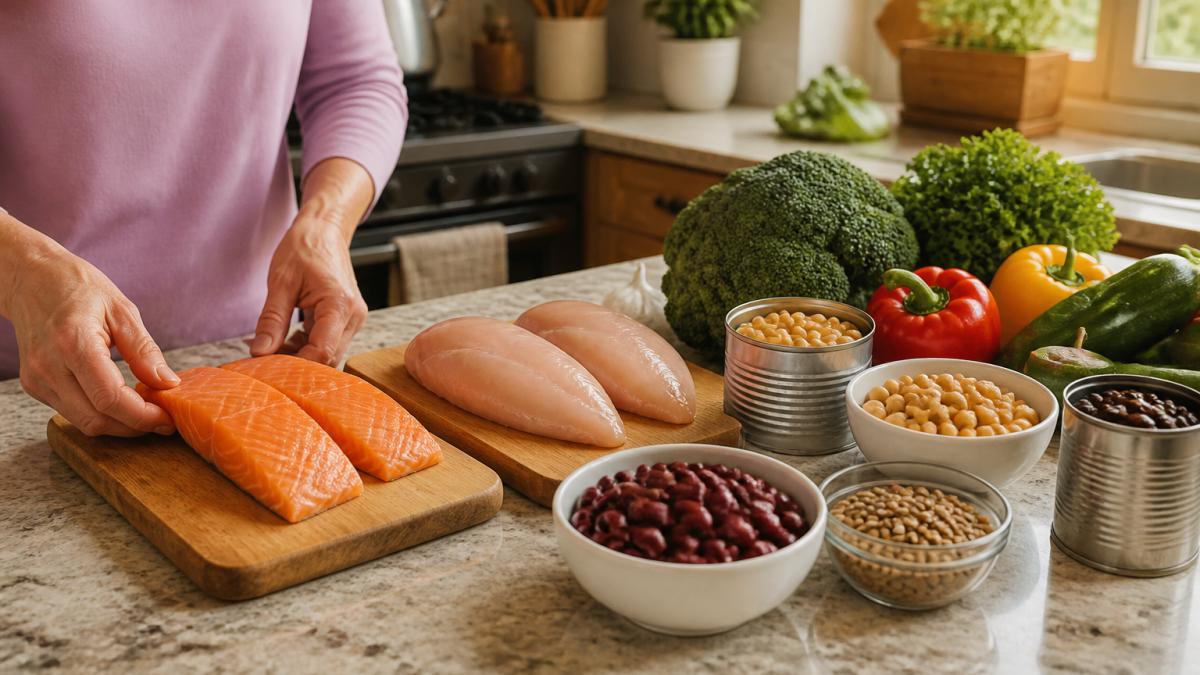
Here is our ranked list of the best red meat alternatives for recovery. We ranked these by heart-health benefit, ease of preparation, and how well they fit a low-sodium plan. Each entry includes a practical serving size and a note on how often it tends to fit a recovery week.
A quick word on serving sizes before the list. A palm-sized portion of protein, roughly the size of your hand without fingers, is a common anchor, and it lands near 3 to 4 ounces for most adults. That is the number to keep in mind as you read.
- Salmon and other fatty fish. Best overall. Rich in omega-3s, low in saturated fat, quick to cook. A 3-ounce cooked portion is a standard serving. Many recovery plans aim for fish two to three times per week. Fresh, frozen, or canned in water with no added salt all work. Bake, grill, or poach.
- Skinless chicken and turkey. Lean, mild, and easy to batch-cook for the week. A 3-ounce cooked portion is a standard serving. Roast, poach, or simmer. Skip breading and heavy sauces, which add sodium and saturated fat fast.
- Beans and lentils. Cheap, filling, high in fiber, and low in saturated fat. A half-cup of cooked beans or lentils counts as a serving and delivers protein plus fiber. Rinse canned beans well to wash away a good share of the added salt. Simmer into soups, stews, and chili.
- Tofu and soy foods. Versatile plant protein that soaks up any seasoning. A half-cup of firm tofu is a reasonable serving. Bake, stir-fry, or add to soups. Choose plain blocks over pre-marinated or pre-fried versions, which can carry extra sodium and oil.
- Eggs. Fast, affordable, and protein-rich. One large egg is a serving, and two eggs make a light meal. Boil, scramble, or poach. For most patients the bigger concern is what you cook the eggs in and alongside, not the eggs themselves.
- Nuts and seeds. Good for snacks and toppings. A small handful, about 1 ounce, is a serving. Watch portions, since they are calorie-dense. Choose unsalted or lightly salted varieties.
- Low-fat dairy. Greek yogurt and low-fat cottage cheese add protein with little saturated fat. A 1-cup serving of Greek yogurt or a half-cup of cottage cheese is a reasonable anchor. Choose plain over flavored, which often carries added sugar and sodium.
The pattern is clear. Fish, poultry, beans, and plants beat red meat on heart health. They also tend to be cheaper and easier to prepare.
A note on frequency. Most recovery plans rotate these sources across the week rather than leaning on any single one. A common pattern is fish two to three times, poultry two to three times, and plant proteins filling the remaining meals, with eggs, nuts, and dairy rounding out breakfasts and snacks.
Foods to Eat After Heart Surgery: A Practical Guide
Beyond protein, the foods to eat after heart surgery center on plants, whole grains, and healthy fats. These support healing and heart health at the same time.
Fruits, Vegetables, and Whole Grains
Fruits and vegetables give you vitamins, minerals, and fiber. Aim to fill half your plate with them at most meals.
Whole grains are the better choice over refined ones. Reach for:
- Brown rice
- Quinoa
- Oats
- Whole-wheat bread and pasta
- Barley
These keep you full and support steady blood sugar. They also add fiber, which helps with digestion, a common concern after surgery.
Nuts, Seeds, and Healthy Fats
Nuts and seeds are heart-healthy in small amounts. Try walnuts, almonds, chia, and flax.
For cooking, use plant-based oils like olive or canola instead of butter or lard. These oils carry less saturated fat.
Keep portions modest. Nuts are filling but calorie-dense, so a small handful goes a long way.
Low-Sodium Meals After Heart Surgery: What to Watch For
Sodium is the hidden trap in many recovery diets. Low-sodium meals after heart surgery mean watching salt in every form, not just the shaker.
Processed meats are a major source. Bacon, sausage, ham, hot dogs, and deli meats are loaded with sodium. Cured, salted, and smoked meats are just as bad. These belong in the "limit" column, not the "choose" column.
Watch for sodium in:
- Canned soups and beans
- Frozen dinners
- Sauces and dressings
- Restaurant and takeout food
A common mistake is assuming "healthy" labels mean low sodium. They often do not. Check the nutrition facts and compare numbers.
Recovery Nutrition vs. Long-Term Heart-Healthy Eating
Recovery nutrition and long-term heart-healthy eating are not the same thing. Knowing the difference helps you set the right goals at the right time.
In early recovery, the focus is healing. You need enough protein, enough calories, and enough fluids to rebuild. Your appetite may be low, so nutrient-dense foods matter.
Long term, the focus shifts to prevention. You are protecting your heart for the years ahead. The habits overlap, but the urgency and the specifics can differ.
So do not stress about perfection in week one. Get the basics right. Build the long-term patterns as you get stronger.
Comparing Protein Sources by Saturated Fat, Sodium, and Preparation
This comparison shows how common protein sources stack up. Use it to guide your choices, not to replace your care team's advice. The goal is not to memorize numbers, it is to see the pattern so you can swap in a better option without thinking hard about it.
A few anchors help the table make sense. A 3-ounce cooked portion of most fish and skinless poultry tends to land low on saturated fat and low on sodium when it is not brined, breaded, or sauced. A half-cup of cooked beans or lentils is similarly low on saturated fat, with sodium that depends almost entirely on whether the beans came from a can and whether you rinsed them. Processed meats are the outlier: a small serving can carry more sodium than an entire day's target for many heart patients.
| Protein Source | Saturated Fat | Sodium | Best Preparation |
|---|---|---|---|
| Salmon | Low | Low | Baked, grilled, poached |
| Skinless chicken | Low | Low | Roasted, poached, simmered |
| Beans and lentils | Very low | Low (rinse canned) | Simmered, stewed |
| Tofu | Low | Low | Stir-fried, baked |
| Eggs | Moderate | Low | Boiled, scrambled, poached |
| Canned tuna (in water) | Low | Moderate | Mixed, no added salt |
| Low-fat Greek yogurt | Low | Moderate | Plain, unsweetened |
| Processed meats | High | Very high | Limit or avoid |
| Fatty red meat | High | Moderate | Limit or avoid |
The takeaway is simple. Fish, poultry, beans, and plants win on all three counts. Processed and fatty red meats lose.
But the table only tells part of the story. Preparation can move a food up or down a row. A skinless chicken breast is low in sodium until it is brined, breaded, or covered in a bottled sauce. Canned tuna in water is moderate in sodium until you add salt or serve it on salted crackers. Beans are low in sodium until you skip the rinse. So when you read the table, read the preparation column as carefully as the fat and sodium columns.
A second thing the table cannot show is your personal limits. Your sodium target depends on your medications, your blood pressure, and your kidney function. Your saturated-fat target depends on your cholesterol numbers and your cardiologist's guidance. Two patients looking at the same table may need to make different choices.
Practical Serving Sizes and Weekly Meal Examples
Serving sizes matter as much as food choice. A common approach is a palm-sized portion of protein at each meal, roughly the size of your hand without fingers.
Here is a sample week to show how this looks in practice:
- Monday: Baked salmon, brown rice, steamed broccoli
- Tuesday: Skinless chicken, quinoa, roasted vegetables
- Wednesday: Lentil soup with whole-grain bread
- Thursday: Baked tofu stir-fry with mixed vegetables
- Friday: Canned tuna (in water) mixed with low-fat yogurt, salad
- Saturday: Bean chili with brown rice
- Sunday: Eggs with oats and fruit
This plan hits protein at every meal. It keeps sodium low and saturated fat minimal. Adjust portions to your care team's guidance.
Individualized Guidance: Medications, Conditions, and Your Care Team
No single diet fits every heart surgery patient. Your medications, other conditions, and recovery stage all shape what is right for you.
Some heart medications affect potassium levels. That can change how much of certain foods you should eat. Kidney conditions can change your protein needs. Diabetes affects how you handle carbohydrates.
This is why a one-size-fits-all plan falls short. A diet that works for one patient may not suit another.
So bring this guide to your care team. Ask them to adjust it for your case. They can tell you your protein target, your sodium limit, and any foods to avoid.
At The Zipper, we built our community around this reality. Recovery is physical and emotional, and no one should navigate it alone. Our recovery nutrition tracker helps you log meals and stay on plan without adding stress. It is simple enough to keep using, even on tough days.
If you are further along in recovery, you still belong here. Our community includes patients months and years past surgery, all rebuilding strength of body and soul together.
Frequently Asked Questions
What are the best alternatives to red meat after heart surgery?
The strongest options are skinless poultry, fish rich in omega-3 fatty acids like salmon and tuna, beans and lentils, eggs, and low-fat dairy. These red meat alternatives provide quality protein with less saturated fat and sodium. Fish such as salmon, trout, and sardines also supply omega-3s that support heart health. Beans and legumes add fiber without the saturated fat found in beef or pork. Your care team can help you prioritize based on your medications and recovery stage.
How much protein do you need while recovering from heart surgery?
Most adults recovering from heart surgery need more protein than usual to support wound healing and muscle preservation. General guidance suggests aiming for 1.2 to 1.5 grams of protein per kilogram of body weight daily, though your surgeon or dietitian may adjust this based on your kidney function, overall health, and surgery type. Spread protein across meals rather than eating it all at dinner. Foods to eat after heart surgery should include a protein source at each meal.
Are fish and poultry good choices after heart surgery?
Yes. Skinless chicken and turkey are lean protein sources with less saturated fat than red meat. Fish, especially oily fish like salmon, mackerel, trout, and sardines, provides omega-3 fatty acids that support heart health and may help lower triglycerides. Bake, grill, or poach these proteins instead of frying. Avoid breaded or processed versions, which often carry added sodium. Canned fish packed in water is a convenient, lower-sodium option.
Can beans and lentils provide enough protein during recovery?
Beans and lentils are excellent heart-healthy protein sources. One cup of cooked lentils provides about 18 grams of protein, and one cup of black beans offers roughly 15 grams. They also deliver fiber, which supports digestion and heart health. Combine beans with whole grains like brown rice or quinoa to get a complete amino acid profile. Rinse canned beans to reduce sodium by up to 40 percent, or cook dried beans for maximum control over salt.
Recovering from heart surgery is hard enough without guessing what to eat. The right red meat alternatives can support healing, protect your heart, and fit a low-sodium plan. The Zipper gives you a compassionate community, a recovery nutrition tracker, and trusted tools to guide you. Join The Zipper and rebuild your strength with people who understand exactly what you are going through.


