

Last Updated: October 29, 2026
Quick Summary
The best protein sources for post-surgery healing are lean meat and poultry, fish and shellfish, eggs, Greek yogurt and cottage cheese, milk and fortified drinks, beans, lentils and soy, nuts and nut butters, and protein shakes when whole foods aren't enough. Spread protein across all meals and snacks, aiming for roughly 20 to 30 grams per meal when you can tolerate it. Clear your daily target with your surgeon or dietitian first.
- Most adults healing from surgery need more protein than before, but the exact amount depends on weight, procedure, kidney function, and other health conditions.
- Clinicians often suggest 1.2 to 2.0 grams of protein per kilogram per day during the healing window, then scaling back as recovery progresses.
- Fish and shellfish are tender and rich in omega-3 fatty acids, which support heart health and may help calm inflammation during recovery.
- Soy foods such as tofu and soy beverage are complete proteins, while beans and lentils become complete when paired with grains.
- Use protein shakes as a bridge when appetite is low or chewing is difficult, not as a replacement for real meals.
Table of Contents
- Why Protein Sources Matter for Post-Surgery Healing
- How Much Protein Do You Need After Surgery?
- 1. Lean Meat and Poultry: Chicken, Turkey, and Lean Beef
- 2. Fish and Shellfish: Salmon, Tuna, and Shrimp
- 3. Eggs: Scrambled, Hard-Boiled, and Easy to Digest
- 4. Greek Yogurt and Cottage Cheese: High-Protein Dairy
- 5. Milk and Fortified Drinks: Sipping Protein When Appetite Is Low
- 6. Beans, Lentils, and Soy: Plant-Based Protein Sources
- 7. Nuts, Seeds, and Nut Butters: Protein-Rich Snacks for Recovery
- 8. Protein Shakes and Supplements: When Whole Foods Aren't Enough
- Easy High-Protein Meals After Surgery: A Sample Day
- What to Do Next
- Frequently Asked Questions
Why Protein Sources Matter for Post-Surgery Healing
Your body starts rebuilding the moment surgery ends. Protein is the raw material it uses to do that work. After open-heart surgery, your body needs more protein than usual to repair tissue, close wounds, and rebuild muscle lost during recovery. Choosing the right protein sources for post-surgery healing is one of the most practical things you can control.
What should I actually eat? The answer starts with protein.
Protein is the nutrient your body uses to build and repair tissue, including skin, muscle, and blood vessels. After surgery, demand for it rises while appetite often falls. That gap is the problem. The American Heart Association's nutrition guidance stresses that healing diets should support recovery without overloading the heart, which makes lean, well-chosen protein a priority.
Below, we rank eight protein sources by how easy they are to eat, digest, and tolerate in the weeks after surgery. But first, here's what most guides get wrong: they list foods without saying how much protein you need or how to eat them when you have no appetite.
How Much Protein Do You Need After Surgery?
Most adults recovering from surgery need more protein than they did before, but the exact amount depends on your weight, your procedure, your kidney function, and your other health conditions. There is no single target that fits everyone, and any guide that hands you one number without asking about your health is guessing.
Here is the framework clinicians commonly use. The standard daily protein recommendation for healthy adults is about 0.8 grams of protein per kilogram of body weight (roughly 0.36 grams per pound) (Dietary protein intake and human health). During the healing window after surgery, many clinicians suggest aiming higher, often in the range of 1.2 to 2.0 grams per kilogram per day, then scaling back as recovery progresses. For a 150-pound (68 kg) adult, that translates to roughly 82 to 136 grams of protein per day during peak healing, compared with about 54 grams at the standard recommendation. These are general ranges, not prescriptions. Your surgeon or dietitian sets your actual target.
Why the wide range? Protein needs vary by:
- Procedure type. Major open surgery, including open-heart surgery, creates a larger healing burden than a minor outpatient procedure.
- Body size. Larger bodies generally need more total protein, which is why the target is calculated per kilogram rather than as a flat number.
- Health status. Kidney disease is the big one. If your kidneys are impaired, a high-protein diet can be dangerous, and your clinician may set a lower target. Always disclose kidney issues before increasing protein.
- Appetite and tolerance. If you cannot eat enough, your care team may adjust the target or add supplements.
A few practical rules help most people:
- Spread protein across all meals and snacks, not one big serving at dinner. Aim for roughly 20 to 30 grams of protein per meal when you can tolerate it.
- Aim for a protein food at every meal, even small ones.
- Keep sipping and snacking even when full meals feel like too much.
- Revisit your target at follow-up visits as your appetite returns.
How long to eat extra protein after surgery varies. Many people keep it up for several weeks to a few months, then return to a normal balanced diet. Your clinician sets the timeline.
Ask your surgeon or dietitian directly: "How much protein should I eat each day, and for how long?" That conversation is worth more than any number on this page.
1. Lean Meat and Poultry: Chicken, Turkey, and Lean Beef
Chicken, turkey, and lean beef deliver complete protein with the amino acids your body needs to repair tissue. They're also rich in iron and zinc, which support wound healing.
The catch after heart surgery is texture and fat. Fried or fatty cuts sit heavy and add saturated fat your heart doesn't need right now. Stick to skinless poultry, white meat, and lean cuts of beef, and cook them soft.
Easy ways to eat them:
- Ground turkey or chicken, cooked moist and broken into small pieces
- Shredded chicken in soup or broth
- Thin-sliced lean beef in a soft sandwich or stew
- Slow-cooked poultry that falls apart with a fork
A common mistake is dry, overcooked meat. It's hard to chew and easy to give up on. Keep it moist and cut it small.
If red meat doesn't appeal to you or your clinician has asked you to limit it, there are plenty of ways to get protein without it. Our guide to red meat alternatives for heart surgery patients covers plant and non-red-meat options that fit a healing diet.
2. Fish and Shellfish: Salmon, Tuna, and Shrimp
Fish and shellfish are among the best protein sources for post-surgery healing because they're tender, quick to cook, and rich in omega-3 fatty acids. Omega-3s support heart health and may help calm inflammation during recovery.
Salmon, tuna, and shrimp are all easy to prepare soft. Canned tuna and canned salmon are especially handy when you're tired and don't want to cook. Flaky fish like salmon breaks apart easily and goes down well when chewing is a chore.
Try these:
- Canned salmon mixed with a little Greek yogurt for a soft spread
- Flaked tuna in a light sandwich or on crackers
- Shrimp cooked soft and chopped into rice or pasta
- Baked salmon flaked into a warm bowl of grains
Watch out: canned fish can be high in sodium, which matters after heart surgery. Look for low-sodium or no-salt-added cans and rinse where you can. Choosing fish fits into a broader anti-inflammatory eating pattern, which our anti-inflammatory diet for cardiac recovery guide explains in more detail.
3. Eggs: Scrambled, Hard-Boiled, and Easy to Digest
Eggs are one of the simplest complete proteins you can eat, and they're gentle on a recovering stomach. Scrambled eggs are soft, warm, and quick, which makes them ideal in the first weeks when appetite is low.
Hard-boiled eggs work as a grab-and-go snack. Peel them ahead of time and keep them in the fridge so a protein hit is always ready.
A few ways to use eggs:
- Soft scrambled eggs with a little cheese
- Hard-boiled eggs sliced into a salad
- Egg mixed into soft rice or mashed potato
- A plain omelet with soft vegetables
Eggs are also cheap and versatile, which helps when cooking feels like too much effort. One honest limitation: some people get tired of eggs fast. Rotate them with other soft proteins so you don't burn out on one food.
4. Greek Yogurt and Cottage Cheese: High-Protein Dairy
Greek yogurt and cottage cheese pack a lot of protein into a small, soft serving. Both are easy to swallow and need zero cooking, which makes them a lifeline on low-energy days.
Greek yogurt has more protein than regular yogurt because the whey is strained out. Cottage cheese is a favorite for recovery because it's soft, mild, and filling. A common mistake is buying flavored versions loaded with added sugar. Plain is better, and you can sweeten it yourself with fruit.
Quick ways to eat them:
- Plain Greek yogurt with soft fruit or a drizzle of honey
- Cottage cheese with sliced peaches or pears
- Greek yogurt blended into a smoothie
- Cottage cheese spread on soft toast
These dairy options also work as high-protein snacks for recovery between meals. Keep a tub in the fridge and you always have a protein option within reach.
5. Milk and Fortified Drinks: Sipping Protein When Appetite Is Low
When solid food feels like too much, sipping protein is the workaround. Milk and fortified drinks let you take in protein without chewing, which matters in the days when appetite is at its lowest.
Regular milk provides protein along with calcium. Fortified drinks, including high-protein nutrition shakes, are designed for exactly this situation: they deliver protein and calories in a form you can sip slowly.
Practical tips:
- Sip a small glass of milk with meals to add protein.
- Keep a fortified drink by the bed for low-appetite mornings.
- Choose drinks with protein listed clearly on the label.
- Sip slowly rather than gulping to avoid feeling too full.
Watch out: not all fortified drinks are equal. Some are high in sugar or sodium. Read the label and ask your dietitian which options fit your heart-healthy plan.
6. Beans, Lentils, and Soy: Plant-Based Protein Sources
Plant-based protein sources like beans, lentils, and soy are gentle, fiber-rich options that support healing without saturated fat. They're also budget-friendly and easy to cook soft, which helps when texture matters.
Soy foods such as tofu and soy beverage are complete proteins, meaning they contain all the amino acids your body needs. Beans and lentils are not complete on their own, but pairing them with grains, like beans and rice, gives you a complete protein. These are called complementary proteins.
Easy ways to eat them:
- Soft cooked lentils in soup
- Mashed beans spread on toast
- Tofu scrambled like eggs
- Soy beverage in a smoothie or with cereal
Lentils and beans also add fiber, which helps with a common post-surgery problem: constipation. Start with small portions if your gut is sensitive, and build up slowly.
7. Nuts, Seeds, and Nut Butters: Protein-Rich Snacks for Recovery
Nuts, seeds, and nut butters are compact protein sources that work as easy snacks. They need no cooking and store well, so a handful or a spoonful is always within reach.
Nut butters are especially useful after surgery because they're soft and spreadable. Smooth peanut butter or almond butter on soft toast or stirred into yogurt adds protein without effort.
Good options include:
- Smooth nut butter on soft bread or apple slices
- A small handful of soft nuts like walnuts
- Ground flax or chia stirred into yogurt
- Sunflower seed butter if you avoid peanuts
A common mistake is overdoing it. Nuts are calorie-dense, and a little goes a long way. Keep portions small and pair them with other foods. If chewing is hard early on, smooth nut butters are easier than whole nuts.
8. Protein Shakes and Supplements: When Whole Foods Aren't Enough
Protein shakes and supplements fill the gap when whole foods aren't enough. They are not a replacement for real meals, but they help when appetite is low, when chewing is difficult, or when you simply cannot eat enough protein from food alone. The key question is not whether supplements are good or bad, it is when they are actually useful and when food alone is sufficient.
When whole foods are likely enough: If you can eat three meals plus snacks, tolerate a variety of textures, and hit your protein target from foods like eggs, poultry, fish, dairy, and legumes, you probably do not need a supplement. Whole foods also bring fiber, vitamins, minerals, and other compounds that isolated protein powders do not. Most practitioners find that food-first is the right default for people with a reasonable appetite.
When supplements may be useful: A protein shake can be a practical bridge if you are in the first days after surgery when appetite is at its lowest, if chewing is painful or exhausting, if you are losing weight unintentionally, or if your clinician has set a high target you cannot reach through meals. In those situations, a shake is a tool, not a shortcut.
Whole foods vs. supplements: a practical comparison
- Nutrient package. Whole foods deliver protein plus fiber, healthy fats, vitamins, and minerals. Supplements deliver protein and whatever is added to the product, sometimes vitamins, sometimes sugar and sodium.
- Satiety and tolerance. A shake is easy to sip but may not feel filling. Whole foods may be harder to eat when appetite is low but support better overall nutrition when tolerated.
- Control over additives. Many protein powders and ready-to-drink shakes contain added sugar, sodium, or artificial sweeteners. Read the label and compare products.
- Cost. Per gram of protein, whole foods like eggs, milk, beans, and canned fish are often cheaper than packaged supplements. Supplements cost more per serving but offer convenience when energy is limited.
- Regulation. The FDA's guidance on dietary supplements is clear that supplements are not reviewed for safety and effectiveness the way drugs are. Treat them as a support, not a shortcut.
Before you buy supplements:
- Check the label for added sugar and sodium.
- Ask your dietitian which type fits your plan.
- Use shakes to add to meals, not skip them.
- Choose products with third-party testing when possible.
A protein shake is a drink made by mixing protein powder with milk, water, or a soy beverage. Whey protein is a common choice, but whether it fits your heart recovery plan is worth checking with your clinician. Our article on whether whey protein powder is good for heart recovery walks through the details.
Here is how whole foods and supplements compare on the factors that matter most during recovery.
| Factor | Whole foods | Supplements |
|---|---|---|
| Nutrient package | Protein plus fiber, healthy fats, vitamins, minerals | Protein plus whatever is added to the product |
| Satiety and tolerance | Harder to eat with low appetite, better overall nutrition | Easy to sip but may not feel filling |
| Control over additives | No added sugar or sodium from packaging | Many contain added sugar, sodium, or sweeteners |
| Cost | Often cheaper per gram of protein | Cost more per serving but offer convenience |
| Regulation | Not applicable | Not reviewed for safety and effectiveness like drugs |
Easy High-Protein Meals After Surgery: A Sample Day
A full day of high-protein meals can still be simple and soft. The goal is to spread protein across the day, keep portions small, and lean on foods that need little chewing or cooking.
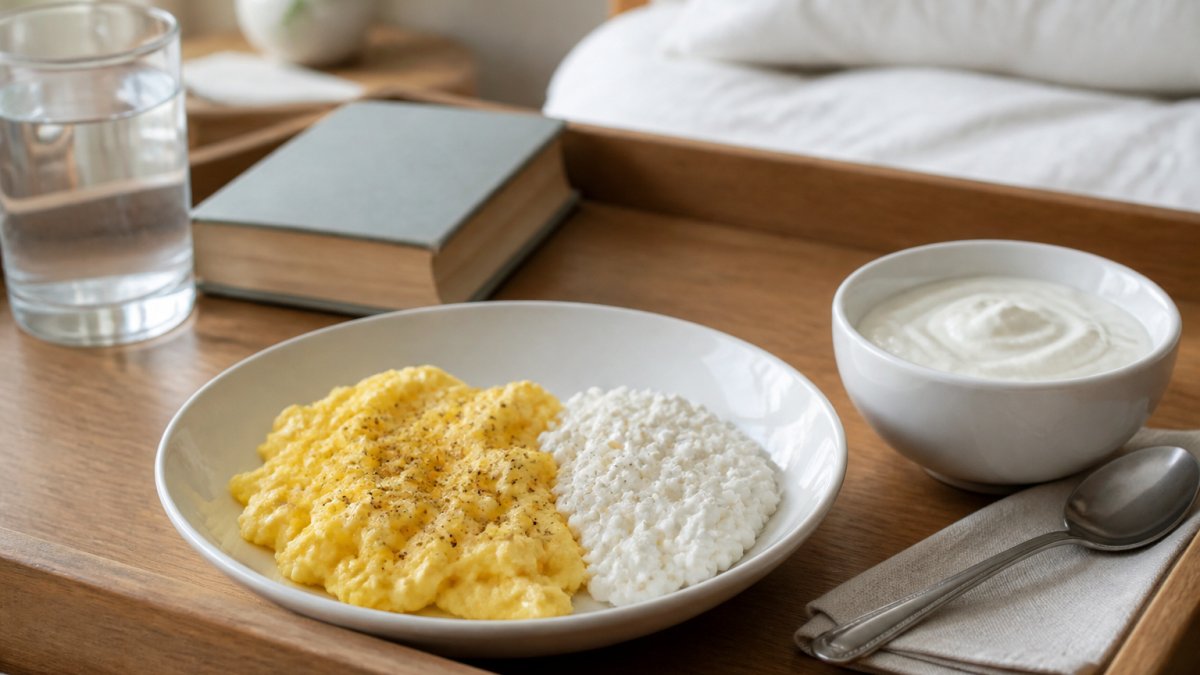
Here's a sample day built from the eight sources above:
- Breakfast: Soft scrambled eggs with a spoon of cottage cheese
- Mid-morning: Plain Greek yogurt with soft fruit
- Lunch: Shredded chicken in warm broth with soft rice
- Afternoon snack: Smooth nut butter on soft toast
- Dinner: Flaked salmon with mashed lentils
- Evening: A small fortified protein drink if appetite was low
Adjust portions to your target and your tolerance. Some days you'll eat more, some less. The point is to keep protein coming in small, steady amounts rather than waiting for one big meal.
For the bigger picture on eating well through recovery, our guide to the best diet after surgery covers the full plate, and our look at nutrition's role in post heart surgery recovery explains why it matters so much.
What to Do Next
Recovery is exhausting, and figuring out what to eat on top of everything else can feel like one more task you don't have the energy for. You don't have to sort it out alone. The Zipper is a founder-led community and resource hub for heart surgery survivors and their families, with practical tools like a recovery nutrition tracker. It offers peer support, evidence-based information, and resources for the emotional and physical aspects of healing. Join The Zipper and take the next step in rebuilding your strength, one meal and one day at a time.
Frequently Asked Questions
How long should you increase protein after surgery?
Ask your care team for a specific target and duration.
Are 2 eggs enough protein after surgery?
Two large eggs provide about 12 grams of protein. Scrambled eggs are one option to consider when appetite is low.
What are the best protein sources for wound healing?
Lean poultry, fish, eggs, Greek yogurt, cottage cheese, beans, lentils, and soy foods are protein sources. If you have questions about your diet after surgery, ask your care team.
What are signs you may not be getting enough protein?
If you have concerns about your diet after surgery, talk to your doctor or a dietitian. They can assess your needs and discuss options with you.


