

Table of Contents
- Why Heart Surgery Recovery Communities Matter
- Support Groups for Heart Surgery Recovery: What They Offer
- Emotional Recovery After Open Heart Surgery: Breaking the Isolation
- Cardiac Rehabilitation Benefits and How Peer Support Multiplies Them
- Physical Recovery Boost: Movement, Nutrition, and Accountability
- Virtual Support Communities: Access From Your Living Room
- Caregiver Involvement: A Lifeline for the Whole Family
- Transitioning From Clinical Care to Community Support
- How to Choose the Right Heart Surgery Recovery Community
- Frequently Asked Questions
Last Updated: September 22, 2026
Why Heart Surgery Recovery Communities Matter
Recovery from heart surgery is not a solo event, and the benefits of heart surgery recovery communities start the moment you stop facing it alone. At The Zipper, we built a founder-led peer network around one belief: healing happens faster when someone who has been through it walks beside you. A heart surgery recovery community is a group of patients, survivors, and caregivers who share experiences, practical guidance, and emotional support before, during, and after an operation.
The clinical side of recovery gets most of the attention. The human side gets far less, and that gap is where people struggle most. Many patients find that the weeks after discharge are the hardest, not because of incisions or medications, but because the fear, isolation, and uncertainty have nowhere to go.
This guide covers what these communities offer, how peer support multiplies the benefits of cardiac rehabilitation, and how to choose a group that fits your recovery stage.
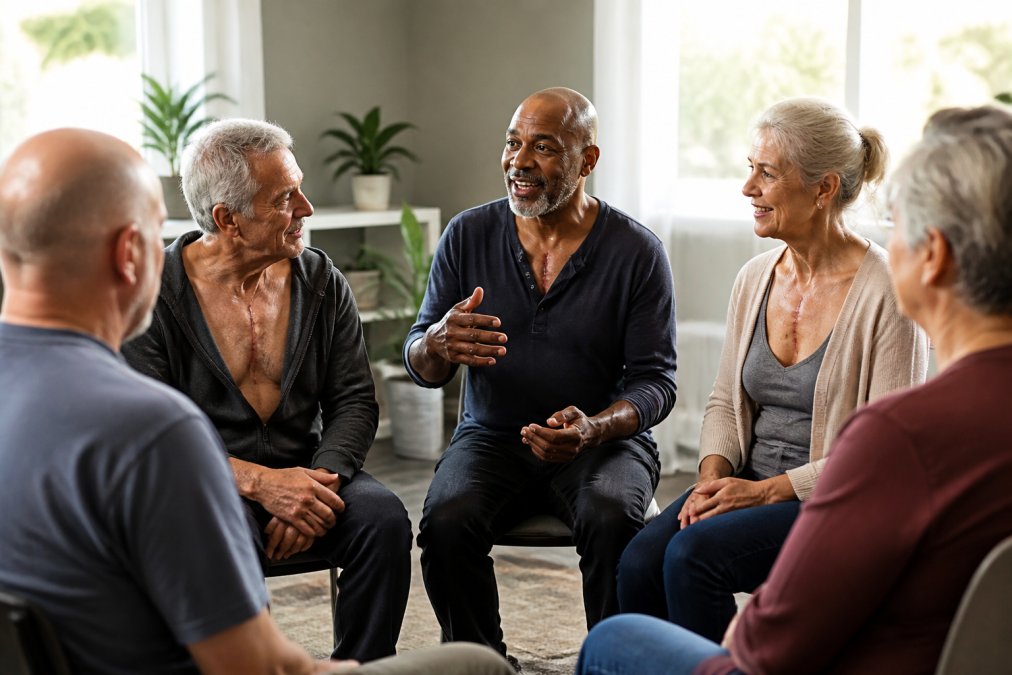
Support Groups for Heart Surgery Recovery: What They Offer
Support groups for heart surgery recovery offer three things clinical care rarely provides: shared experience, practical day-to-day guidance, and steady emotional backup. A cardiologist can explain ejection fraction. A fellow patient can explain what it feels like to shower with a sternal precaution, or how to sleep comfortably in week two.
What members typically get from a good group:
- Firsthand accounts of what each recovery phase actually feels like
- Tips for daily tasks like dressing, sleeping, and short walks
- A place to ask "is this normal?" without waiting for an appointment
- Encouragement during setbacks, plateaus, and anxious nights
- Practical tools, including nutrition tracking and recovery checklists
The format matters less than the fit. Some groups meet in person at a hospital or community center. Others operate entirely online. What separates a useful group from a forgettable one is whether members actually respond when someone posts at 2 a.m. worried about a racing heart.
Emotional Recovery After Open Heart Surgery: Breaking the Isolation
Emotional recovery after open heart surgery is often harder than the physical part, and it is the part most people are least prepared for. Fear of dying, fear of exercising, and a nagging sense that your body betrayed you are common. So is the strange grief that follows a major operation.
Then there is the loneliness. Family members mean well, but many do not understand why you are still anxious months later. That misunderstanding can sting more than the surgery itself.
Peer support helps because it removes the need to explain. When someone else says "I felt the same way at three months out," the relief is immediate. Anxiety reduction in these groups comes from recognition, not from advice.
Cardiac Rehabilitation Benefits and How Peer Support Multiplies Them
Cardiac rehabilitation benefits are well documented: better functional recovery, stronger risk factor modification, and lower rehospitalization risk when patients complete a structured program. Cardiac rehab typically combines supervised exercise, education on cholesterol management and weight loss, and stress management coaching.
Peer support does not replace that structure. It multiplies it. Here is how the two work together:
| Rehab Component | What Clinical Care Provides | What Peer Support Adds |
|---|---|---|
| Exercise | Supervised sessions and safe limits | Accountability partners and real-world pacing tips |
| Nutrition | Dietary guidance and targets | Meal ideas and tracker habits that stick |
| Stress management | Counseling and coping techniques | People who have lived the same fear |
| Risk factor modification | Medication and monitoring plans | Encouragement through plateaus |
Many patients find that the accountability piece is what keeps them showing up. A rehab session is easy to skip. A group chat asking where you were is harder to ignore.
Physical Recovery Boost: Movement, Nutrition, and Accountability
Physical recovery improves when movement, nutrition, and accountability run on a schedule rather than on motivation. Walking programs work best when someone checks in on you. Nutrition plans work best when tracking is simple enough to keep doing.
That is why The Zipper includes a recovery nutrition tracker alongside its peer network. The tracker is built for people who are already tired of forms and appointments. Log what you ate, see the pattern, adjust. No complicated setup.
Three habits that consistently help:
- Walk daily, even in small amounts, and log it somewhere visible
- Track sodium, fluids, and protein without obsessing over every gram
- Pair with a buddy who asks about your week, not just your numbers
The stainless steel water bottle from The Zipper holds 17 ounces and keeps drinks hot or cold for hours, which makes hydration tracking easier to remember during walks. Small tools matter more than grand plans in the first ninety days.
Virtual Support Communities: Access From Your Living Room
Virtual support communities remove the two biggest barriers to joining: transportation and timing. If you cannot drive yet, or if your energy dips by mid-afternoon, an online group still works. You log in from your couch. But the same openness that makes online groups convenient also makes them uneven in quality, so the real skill is knowing how to find and vet one.
Most clinical cardiac rehab programs are built around in-person sessions, which means the online peer layer is something you assemble yourself. That is the gap this section fills.
Where these communities actually live
Online heart surgery support tends to cluster in four places, each with a different feel:
- Hospital-affiliated virtual groups. Many cardiac rehab programs now run a video or message-board component for patients who cannot attend in person. These are usually moderated by a nurse, dietitian, or rehab specialist, which means clinical accuracy is higher but conversation volume is often lower.
- Condition-specific forums and message boards. Long-running patient forums organized by procedure (bypass, valve replacement, transplant) tend to have the deepest archives. You can often search years of posts for your exact situation before you ever introduce yourself.
- Social media groups. Fast-moving and easy to join, but moderation varies wildly. Some are tightly managed; others let misinformation and product pitches through.
- Founder-led peer networks. Smaller, curated communities built by survivors themselves. The trade-off is intimacy versus reach, you get closer relationships but a narrower pool of experiences.
How to vet a virtual community before you commit
A common pattern among patients who get burned is joining the first active group they find and then leaving after a bad interaction. A short vetting pass prevents that.
- Check who moderates and how often. Look at the last two weeks of posts. Are questions answered within a day? Are moderators visible, or does the group run itself?
- Read the privacy policy in plain language. You want to know whether your posts are public, searchable, sold, or shared with advertisers. If you cannot find a stated policy, treat everything you write as public.
- Look for a clear scope. Groups that mix every heart condition, every recovery stage, and every age range can still be useful, but a group focused on your procedure and stage will usually give you more relevant answers.
- Scan for clinical guardrails. Good groups remind members that peer advice does not replace medical advice and route urgent symptoms (chest pain, shortness of breath, fainting) to emergency care rather than to the comment thread.
- Test the tone with a low-stakes post. Ask one small question before you share anything personal. The response tells you more than any description of the group will.
The lurk-first path
Not everyone wants to talk. Many members read for weeks before their first comment, and that is a legitimate way to use a community. Reading other people's timelines, what week three felt like, how they handled a setback, when they returned to driving, builds a mental map of recovery that no discharge packet provides.
What virtual communities cannot do
Online peer support is a complement, not a substitute. It cannot read your echocardiogram, adjust your medications, or clear you for exercise. It also cannot replace hands-on supervision during the early weeks when your sternal precautions and activity limits matter most. The strongest recovery setups pair a clinical rehab program with a peer community, one for the medicine, one for the lived experience.
American Heart Association cardiac rehabilitation resources
Caregiver Involvement: A Lifeline for the Whole Family
Caregiver involvement changes recovery outcomes for the whole household, not just the patient. Spouses, adult children, and close friends carry real weight: medication schedules, appointment logistics, meal planning, and emotional steadiness. They need support too, and they rarely ask for it.
A good community gives caregivers their own space to ask questions they cannot ask the patient. How much should I push? When should I call the doctor? How do I stop hovering?
The Zipper was founded by Steve Rucinski, a heart surgery survivor, and that founder experience shapes how the platform treats families. Caregivers are not spectators here. They are part of the recovery team.
Transitioning From Clinical Care to Community Support
Transitioning from clinical care to community support is where many patients fall through the cracks. Cardiology visits taper off. Rehab ends. Suddenly you are on your own with a healed chest and a lot of unanswered questions. That transition is the most vulnerable stretch of the entire recovery journey, because the structure disappears right when the fear about long-term prognosis tends to peak.
Most cardiac rehab programs run for a set number of weeks and then stop. The discharge is often framed as a graduation, but for many patients it feels more like a cliff. The habits that kept you steady, scheduled exercise, regular check-ins, someone watching your numbers, do not automatically carry over.
Why the cliff happens
Three things change at once when formal rehab ends:
- Monitoring drops off. The supervised sessions that caught problems early are gone, so small changes in symptoms or stamina can go unnoticed.
- Accountability disappears. A rehab appointment is hard to skip because someone is expecting you. A solo walk is easy to postpone.
- Motivation gets tested. The early urgency fades, and the long-term habits that protect your heart have to stand on their own.
Understanding the mechanism matters, because the fix is not "try harder." It is replacing the structure that clinical care provided with a structure you build yourself.
A concrete handoff plan
A workable handoff starts before the last appointment, not after it.
- Ask your care team what ongoing monitoring you still need. Get it in writing: how often to check blood pressure or weight, which symptoms warrant a call, and when your next cardiology visit is scheduled.
- Join a peer community at least two weeks before formal care ends. Overlapping the two means you are not starting from zero on the day rehab stops.
- Set a recurring weekly check-in with one person. A single standing call or message thread with a peer or caregiver does more for consistency than a dozen good intentions.
- Keep a simple log of symptoms, activity, and mood. Bring it to your next appointment. Patterns you would miss day to day become visible over weeks.
- Know your re-entry points. Identify in advance who to contact if you feel a setback coming, your cardiologist's office, your rehab team, or a peer who has been through the same thing.
Rebuilding the community layer
Once formal care ends, the community becomes the primary structure rather than a supplement. That shift is easier if you treat it as a schedule rather than a mood. A weekly group session, a daily walk logged somewhere visible, and one accountability partner cover most of what rehab used to provide.
When to loop clinical care back in
Community support is not a reason to delay medical attention. New or worsening chest pain, shortness of breath at rest, fainting, rapid weight gain, or swelling in the legs are reasons to call your care team or seek emergency care, not to post in a group and wait for replies. The community helps you stay consistent between visits; it does not replace the visits themselves.
If you are six months out and still unsure how to structure your weeks, you are not too late. Groups built around long-term recovery are designed for exactly that stage, and the handoff plan above works whenever you start it.
How to Choose the Right Heart Surgery Recovery Community
Choosing the right heart surgery recovery community comes down to four questions: who is in it, how it is moderated, what tools it offers, and whether it respects your privacy. Get those right and the rest usually follows.
Use this checklist before you commit:
- Does the group include people at your recovery stage, not just new patients?
- Are moderators active and are guidelines clear?
- Is there a stated privacy policy for what you share?
- Are caregivers welcome in a separate or shared space?
- Does it offer practical tools like nutrition tracking or recovery checklists?
- Can you participate quietly at first if you prefer?
- Is the cost transparent, with no surprise renewals?
If you are six months out and still afraid to exercise, you are not too late. Groups built around long-term recovery, like The Zipper, are designed for exactly that stage. You can also use the tools without joining group chats if that is your preference.
Frequently Asked Questions
How do support groups complement formal cardiac rehabilitation?
Cardiac rehabilitation provides structured exercise and clinical monitoring, but support groups fill the emotional and social gaps that formal programs often miss. Peer communities offer practical advice on daily challenges like medication schedules, fear of exercising again, and managing family dynamics. While cardiac rehab benefits include improved cardiovascular fitness and risk factor modification, support groups reinforce those gains by keeping you accountable and motivated. Many patients attend both: rehab for physical recovery and a community for emotional recovery after open heart surgery.
What are the emotional benefits of connecting with other heart surgery survivors?
Connecting with peers who have walked the same path reduces anxiety and isolation. Hearing someone say 'I felt that too' normalizes your fears about mortality, rehospitalization, and lifestyle changes. This peer support improves patient confidence and reduces depression risk, which is common after bypass surgery. Survivors often report that sharing their recovery journey with others gives them a sense of purpose and hope that clinical visits alone cannot provide.
Is it normal to feel isolated after heart surgery?
Yes, isolation is common after heart surgery. Physical restrictions, fatigue, and fear of overexertion often keep patients at home while family and friends return to their routines. This isolation can worsen anxiety and slow emotional recovery after open heart surgery. Joining a support group for heart surgery recovery helps you realize you are not alone. Many communities offer virtual options, so you can connect from home without added stress.
How can I find a reputable heart surgery recovery community?
Start by asking your cardiac rehab team or hospital social worker for recommendations. Look for communities led by survivors or healthcare professionals that offer evidence-based information and privacy protections. The Zipper, founded by heart surgery survivor Steve Rucinski, combines peer support with practical tools like a recovery nutrition tracker. Check whether the community has clear guidelines, active moderation, and a mix of emotional support and practical resources. Avoid groups that promise cures or push unproven treatments.
Recovery asks more of you than any pamphlet can prepare you for, and the hardest stretch often comes after the clinical appointments end. The Zipper exists for that stretch: a founder-led peer community, a recovery nutrition tracker, and caregiver resources that treat healing as both physical and emotional. Join The Zipper and rebuild strength of body and soul alongside people who have been exactly where you are.


