

Last Updated: November 13, 2026
Quick Summary
Improve lung capacity after heart surgery with daily breathing exercises, an incentive spirometer, supported coughing, and short walks that build up gradually. Start with five slow breaths five times a day, use the spirometer for ten slow breaths every hour while awake, and splint your incision with a firm pillow when you cough.
- Diaphragmatic breathing means five breaths, four times a day, using your belly not your shoulders.
- Aim for ten slow spirometer breaths every hour while awake, following your care team's target.
- Splint every deep breath and cough by hugging a firm pillow tight against your incision.
- Start with short hallway walks and add a minute or two each day at a talking pace.
- Track walking distance, spirometer readings, and breathless moments in a notebook to see progress.
Table of Contents
- Why Your Lungs Need Help After Heart Surgery
- Breathing Exercises After Heart Surgery to Rebuild Lung Capacity
- Using an Incentive Spirometer After Heart Surgery
- Coughing Techniques That Clear Mucus Without Hurting Your Incision
- Walking After Heart Surgery: The Simplest Way to Build Lung Function
- Shortness of Breath After Open-Heart Surgery: What Is Normal
- Adapting Exercises for Sternotomy Pain and Movement Limits
- Measuring Your Progress at Home
- Join The Zipper and Breathe Easier Together
- Frequently Asked Questions
Why Your Lungs Need Help After Heart Surgery
Your lungs often work at a fraction of their normal capacity right after heart surgery. The cause is not the heart itself. It is the combination of anesthesia, the breathing tube, pain that keeps you from taking deep breaths, and long hours lying flat.
This guide from The Zipper explains how to improve lung capacity after heart surgery in clear, practical steps. We built it for people who are scared to cough, tired of feeling winded, and unsure what "normal" looks like.
Here is the part most guides skip: your lungs are one of the few systems that respond to training almost immediately. Small, consistent effort beats heroic effort. The American Lung Association notes that breathing exercises help clear mucus and keep the lungs expanded after surgery (American Lung Association on breathing exercises).
So the goal is not to push hard. It is to move often, breathe deliberately, and protect your incision while you do it.
Breathing Exercises After Heart Surgery to Rebuild Lung Capacity
Breathing exercises after heart surgery can help restore lung volume. They work because deep breaths reopen small air sacs that collapse when you breathe shallowly. Shallow breathing is common after surgery and can raise the risk of complications.
Start with five slow breaths, five times a day. Build from there.
Diaphragmatic Breathing
Diaphragmatic breathing uses your belly, not your shoulders. Place one hand on your belly and one on your chest. Breathe in through your nose so the belly hand rises while the chest hand stays mostly still.
Do this for five breaths, four times a day. It sounds too simple to matter. It matters.
Breath Stacking and Pursed-Lip Breathing
Breath stacking means taking several small sips of air without exhaling, then letting it all out. It helps you reach a deeper breath when a full inhale feels impossible.
Pursed-lip breathing is slower. Breathe in through the nose, then out through lips shaped like you are blowing out a candle. This keeps airways open longer and eases breathlessness.
Using an Incentive Spirometer After Heart Surgery
An incentive spirometer is a handheld device that measures how much air you can pull in (pubmed.ncbi.nlm.nih.gov). An incentive spirometer after heart surgery gives you a visible target, which can help you see progress. You can see progress even when you feel stuck.
How to use it:
- Sit fully upright and hold the device level.
- Seal your lips around the mouthpiece.
- Breathe out normally first.
- Breathe in slowly and steadily to lift the piston.
- Hold your breath for a few seconds.
- Rest, then repeat ten times per session.
Aim for ten slow breaths every hour while you are awake. Your care team sets your target, so follow their number, not the device's maximum.
Coughing Techniques That Clear Mucus Without Hurting Your Incision
A supported cough is the safest way to clear mucus after heart surgery. You hug a firm pillow against your chest, then cough into it. The pillow absorbs pressure and protects your sternotomy.
The steps:
- Sit up and lean slightly forward.
- Hug a folded pillow tight against your incision.
- Take two or three slow breaths.
- Take one more breath and cough from your belly.
For more ways to make coughing less painful, see our guide on 7 ways to hug a pillow when coughing after surgery. If you are deciding whether a dedicated pillow is worth buying, read is a sternal support pillow worth it for recovery.
Watch out: suppressing a cough to avoid pain lets mucus sit in your lungs, which raises infection risk. Cough with support instead of not coughing at all.
Walking After Heart Surgery: The Simplest Way to Build Lung Function
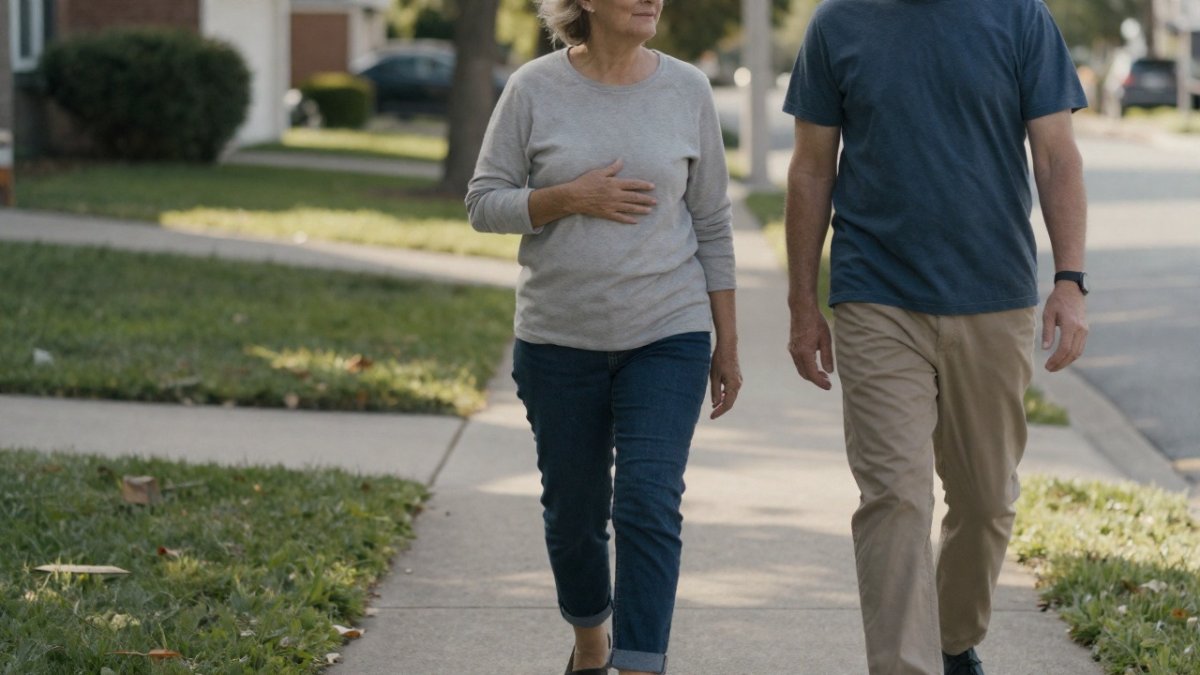
Walking after heart surgery is one of the simplest ways to support recovery. It exercises your heart, legs, and breathing at the same time. Early mobilisation, meaning getting up and moving soon after surgery, is standard practice in cardiac recovery.
Start with short walks down the hallway. Add a minute or two each day. Use a pace where you can still talk in full sentences.
Once walking feels easy, our article on low-impact exercises for heart patients covers what to add next.
Shortness of Breath After Open-Heart Surgery: What Is Normal
Shortness of breath after open-heart surgery is common in the first weeks, especially with activity. Anesthesia, the breathing tube, incision pain, and fluid shifts can all contribute. Your body is healing a major wound, and your lungs are part of that wound.
A common pattern is a slow, uneven improvement. You may feel winded climbing stairs on Monday and manage the same stairs more easily by Friday, then have a harder day after a poor night's sleep. That zigzag is normal. What matters is the direction over two to three weeks, not any single afternoon.
Normal, expected breathlessness:
- Getting winded climbing a flight of stairs or walking uphill
- Needing to pause mid-conversation after activity
- Feeling breathless after a shower or dressing
- A dry, tickly cough that fades over days
- Breathlessness that eases within a few minutes of sitting and resting
Call your surgical team the same day for:
- Breathlessness that gets worse instead of better over several days
- Breathlessness at rest, or that wakes you from sleep
- Chest pain with shortness of breath
- Fever, chills, or a cough that brings up colored or foul-smelling mucus
- Dizziness, fainting, or a rapid heartbeat that does not settle with rest
- Swelling in the legs or ankles that is new or worsening, or rapid weight gain over a day or two
- A spirometer reading that drops and stays down for more than a day
Call 911 for sudden severe breathlessness, chest pain that feels like pressure, blue lips or fingertips, or fainting.
Watch out: breathlessness that improves when you sit upright but worsens when you lie flat can point to fluid buildup, and that is a reason to call rather than wait for your next appointment.
The American Heart Association's guidance on cardiac recovery is a reasonable reference for what recovery looks like week by week, but your surgical team's instructions override any general timeline. If you have lung disease, a smoking history, or spent extra time on the ventilator, expect a slower curve and ask your team what milestones apply to you specifically.
Adapting Exercises for Sternotomy Pain and Movement Limits
Sternotomy pain changes how you breathe, and that is the trap. When your chest hurts, you take smaller breaths. Smaller breaths lead to collapsed air sacs and more mucus. The fix is not to push through pain. It is to change how you do the exercise so the breath stays deep and the incision stays protected.
Sternal precautions are the rules your surgeon gives you for the first several weeks, typically no lifting more than a few pounds, no pushing or pulling with your arms, and no reaching behind your back. Ask for your specific limits in writing, because they vary by surgeon and by how the chest was closed.
Adapt instead of stopping:
- Splint every deep breath and cough. Hug a firm pillow against your incision, elbows in, and cough into the pillow. The pillow absorbs pressure so the cough reaches your belly instead of your breastbone.
- Keep your elbows close to your body when you move, sit, or stand. Reaching out wide pulls on the sternum.
- Use a recliner or wedge pillow to stay upright while resting. Lying flat makes deep breaths harder and mucus harder to clear.
- Do shoulder rolls and gentle arm raises within your precautions to keep your chest moving without straining the incision.
- Split activities into short bursts. Two five-minute walks beat one ten-minute push, and pacing keeps your breathing steady instead of ragged.
- Breathe out as you exert. Exhale on the effort of standing, walking, or lifting a light object, and inhale on the easy part.
A practical supported-cough sequence: sit up and lean slightly forward, hug the pillow tight, take two or three slow breaths, take one more breath, then cough from your belly into the pillow. Rest between efforts. If a cough feels sharp at the incision, splint harder rather than coughing weaker.
Watch out: if a movement causes sharp chest pain, a popping sensation, or pain that does not settle with rest, stop and ask your team before trying again. Those can be signs of a sternal problem that needs to be checked.
If you have lung disease, a smoking history, fluid retention, or a prolonged ventilator course, your team may adjust the pace and add specific breathing targets. Follow their plan rather than a general one-size timeline.
Measuring Your Progress at Home
Progress after heart surgery is easier to see when you track it. You do not need equipment. You need a notebook and two minutes a day.
Track these:
| What to Track | How to Measure | What Good Looks Like |
|---|---|---|
| Walking distance | Steps or minutes per walk | Slowly rising week to week |
| Spirometer reading | Number on the device after each session | Steady or improving |
| Breathless moments | Count per day | Fewer over time |
| Cough quality | Strong, productive, or weak | Stronger and easier |
| Resting breathing | Breaths per minute at rest | Calm and even |
Our guide on how to track physical progress during cardiac recovery walks through a simple tracking method you can start today.
Keep water nearby during all of this. A 17-ounce insulated bottle like our stainless steel water bottle stays cold for hours and is easy to keep within reach during breathing sessions.

Join The Zipper and Breathe Easier Together
Recovery from heart surgery is lonely in a way few people warn you about. The fear of coughing. The frustration of a short walk that used to be nothing. The family members who mean well but do not quite get it.
That is exactly why The Zipper exists. We are a founder-led community built by a heart surgery survivor, for people going through the same thing. You get peer support, practical recovery tools, and a nutrition tracker that helps you rebuild strength without adding stress.
You can also find out how to join a heart surgery recovery community and what to expect once you do.
Your lungs will come back. It takes daily, unglamorous work: slow breaths, supported coughs, short walks, and honest tracking. At The Zipper, we give you the community and the tools to keep going on the days it feels slow. Get started with The Zipper and rebuild your strength one breath at a time.
Frequently Asked Questions
How long should I use an incentive spirometer after heart surgery?
Most recovery teams ask patients to use the incentive spirometer every hour or two while awake during the first days and weeks after surgery, then taper as lung capacity improves. Follow the specific schedule your care team gave you, since it depends on your surgery type and complications. The device works best when you take slow, steady breaths rather than fast, forceful ones. If you are still using it weeks later because you cannot reach your target, tell your doctor rather than pushing through alone.
Is it normal to have a cough after heart surgery?
Yes. A cough in the first weeks after open-heart surgery is common, often from mucus buildup, irritation from the breathing tube, or the lungs re-expanding. A supported cough, where you hug a pillow against your incision, helps clear mucus without straining your sternum. Call your doctor if the cough brings up yellow or green mucus, comes with fever, or feels worse instead of better over time. Those can signal a lung infection that needs treatment.
Can walking really help improve lung capacity after heart surgery?
Walking is a gentle way to support recovery after heart surgery. It keeps you moving and encourages deeper breathing as you build up. Start with short walks several times a day, such as down the hallway or to the mailbox, and add a minute or two as you feel stronger. Stop and rest if you feel winded. Your care team can give you a distance or time target that fits your recovery.
When should I call my doctor about breathing problems after heart surgery?
Call your doctor right away if you have shortness of breath that gets worse, trouble breathing at rest, a fever above 100.4°F, or a cough producing yellow, green, or bloody mucus. Also seek help for chest pain that feels different from your usual incision soreness, a rapid heartbeat, or dizziness. These can point to pneumonia, fluid around the heart, or other postoperative complications that need prompt treatment. Do not wait to see if symptoms pass on their own.


