

Table of Contents
- Why Joining a Heart Surgery Recovery Community Changes Everything
- Support Groups for Heart Surgery Recovery: Types and How to Find Them
- Emotional Challenges After Open Heart Surgery and How Peer Support Helps
- Your Heart Surgery Recovery Timeline: What to Expect Week by Week
- How to Evaluate a Heart Surgery Recovery Community Before You Join
- What to Expect in Your First Weeks as a Community Member
- Frequently Asked Questions
Last Updated: September 13, 2026
Why Joining a Heart Surgery Recovery Community Changes Everything
Recovery from open heart surgery is measured in months, not days, and the emotional weight of that stretch catches most patients off guard (Heart surgery and recovery - Overview). A heart surgery recovery community gives you something a discharge packet cannot: people who have already walked the same hallway. This guide from The Zipper covers why peer connection matters, how to find the right group, and what to expect once you join.
The clinical side of recovery is well mapped. The emotional side is not. Many patients describe the weeks after surgery as strangely isolating, surrounded by family yet unable to explain the fear that lingers long after the incision heals.
That gap is exactly what peer communities fill. Below, we break down the types of groups available, the emotional challenges they address, and how to judge whether a community is safe before you share anything personal.
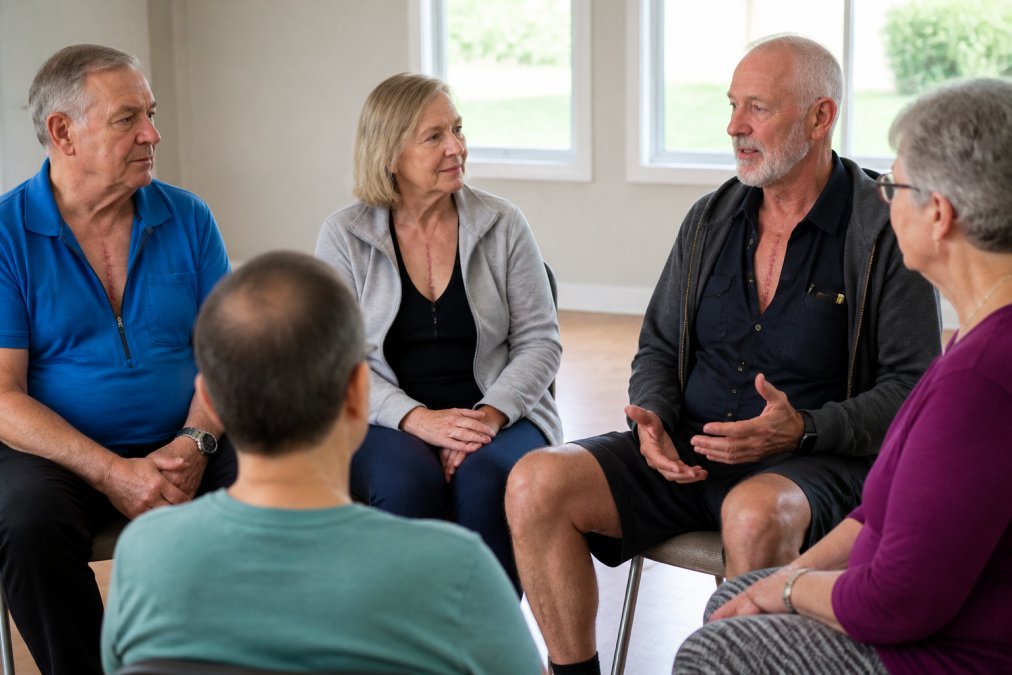
Support Groups for Heart Surgery Recovery: Types and How to Find Them
Support groups for heart surgery recovery fall into two broad categories: hospital-affiliated programs and independent peer networks. Each serves a different need, and many patients use both.
Hospital-Based and In-Person Groups
Most cardiac rehabilitation programs run or host a support group, often meeting weekly or monthly on the hospital campus. Ask your cardiologist, your cardiac rehab team, or the hospital's patient services desk for a current schedule. These groups tend to be moderated by nurses, social workers, or rehab specialists, which makes them a comfortable starting point if you are unsure about peer-led spaces.
The trade-off is scheduling. In-person groups meet at fixed times, and getting there in the first weeks after surgery can be physically difficult.
Online Communities and Peer-Led Platforms
Online groups remove the travel problem entirely. Forums, moderated message boards, and peer-led platforms let you participate from your couch at 2 a.m. when anxiety tends to peak. The American Heart Association's patient support resources point patients toward both formats, and many survivors use an online group as their daily touchpoint and an in-person group as their monthly anchor.
Community Type |
Best For |
Typical Format |
Moderation |
|---|---|---|---|
Hospital-based |
Newly discharged patients |
Weekly in-person meetings |
Clinical staff |
Cardiac rehab groups |
Patients in active rehab |
Scheduled sessions |
Rehab team |
Online forums |
Daily check-ins, night anxiety |
Always-on text posts |
Volunteer moderators |
Peer-led platforms |
Long-term emotional support |
Mixed tools and discussion |
Founder or community team |
Emotional Challenges After Open Heart Surgery and How Peer Support Helps
The emotional challenges after open heart surgery rarely follow the physical timeline. Patients often report that their body feels stronger while their mind feels more fragile, a mismatch that confuses family members who expect steady improvement. Fear of dying, fear of exercising again, irritability, and disrupted sleep are all commonly described by survivors.
Peer support helps because it normalizes those feelings. Hearing another patient say "I felt the same way at month three" does something a pamphlet cannot. It reframes your experience as a predictable part of recovery rather than a personal failure.
This is where a community built by survivors differs from a general wellness forum. The Zipper was founded by Steve Rucinski, a heart surgery survivor, specifically so that patients and families could compare notes with people who understand the sternotomy cough, the pillow, and the strange grief that follows major surgery.
Your Heart Surgery Recovery Timeline: What to Expect Week by Week
The heart surgery recovery timeline varies by procedure, age, and overall health, but most patients move through recognizable phases. Treat this as a general map, not a schedule.
- Weeks 1-2: Hospital discharge, wound care, extreme fatigue, limited lifting. Emotional fragility is common.
- Weeks 3-6: Increasing walking distance, first cardiac rehab sessions, sleep still disrupted for many.
- Weeks 6-12: Gradual return to light activity, driving often resumes, mood swings may continue.
- Months 3-6: Most patients report steadier energy, but anxiety about exercise and recurrence often peaks here.
- Months 6-12: Many return to most normal activities, though some fear persists well past the one-year mark.
A common mistake is assuming that because you feel physically better at month four, you should feel emotionally better too. Many survivors say the opposite is true. Community members who are further along can tell you what that stretch actually feels like.
How to Evaluate a Heart Surgery Recovery Community Before You Join
Evaluating a community before you join protects your privacy and your energy. Use these criteria as a checklist:
- Is there a clear moderation policy, and is it actually enforced?
- Are medical questions directed to clinicians rather than answered by peers?
- Can you lurk without posting until you feel ready?
- Is the tone supportive, or does it lean toward fear and worst-case stories?
- Are members at different recovery stages, or is everyone in week one?
- Is there a stated privacy policy covering what you share?
If a group cannot answer those questions plainly, keep looking.
Privacy, Moderation, and Safety Standards
Privacy is the most common hesitation. People worry about sharing their deepest fears with strangers online. A well-run community addresses this directly: clear rules about what stays inside the group, active moderation of harmful advice, and no pressure to disclose anything you are not ready to share.
For patients managing a chronic condition, the Office for Civil Rights guidance on health information privacy is a useful reference for understanding how health information is generally protected, though peer communities are not covered entities in the same way clinics are. Ask any group you join how they handle member data.
What to Expect in Your First Weeks as a Community Member
Your first weeks in a community are usually about listening, not talking. Most members read for a while before posting. That is normal and encouraged. Expect to recognize your own experience in someone else's post, and expect that recognition to be unexpectedly emotional.
Practical participation looks like this: read a thread a day, reply to one person who sounds like you did two weeks ago, and use whatever tools the community offers. The Zipper includes a recovery nutrition tracker alongside its peer network, which many members use as a low-pressure way to engage before they feel ready to post.
Not everyone wants to be a "community person." You can use resources and tools without joining group discussions. A good platform lets you choose your level of involvement.
Frequently Asked Questions
What are the benefits of joining a heart surgery support group?
Peer support reduces the isolation that follows open-heart surgery. Talking with people who have had the same procedure helps you normalize fears about recovery, exercise, and chest pain. Many members report better emotional resilience and more consistent follow-through with rehab goals when they have a community checking in on them. Groups also share practical tips about sleeping positions, scar care, and returning to daily activities that you will not always get from a discharge pamphlet.
Are there online support groups for open-heart surgery patients?
Yes. Online communities let you connect from home during the weeks when driving or sitting for long periods is uncomfortable. Look for groups with active moderation, clear privacy policies, and a mix of recovery stages. The Zipper, founded by heart surgery survivor Steve Rucinski, offers a peer-led community plus tools like a recovery nutrition tracker. You can also ask your hospital's cardiac rehab team for vetted online options they recommend.
Can family members join heart surgery support groups?
Many communities welcome caregivers and family members, either in the same group or in a separate caregiver track. Family involvement helps because spouses and adult children often carry their own anxiety about the recovery. Check whether a group has dedicated caregiver discussions or resources. If your family does not understand why you are still anxious months after surgery, bringing them into a caregiver space can bridge that gap without putting you in the position of constantly explaining yourself.
I am six months past surgery and still afraid to exercise. Is it too late to join a community?
No. Recovery communities serve people at every stage, from the first week home to years after surgery. Members who are further along often provide the most reassurance because they have already navigated the fear of exercising again. Joining at six months gives you access to people who remember that exact hurdle. You can also use community tools and resources without posting publicly if you prefer to observe first.


