

Last Updated: October 31, 2026
Quick Summary
Natural remedies can support heart surgery recovery but cannot substitute for prescribed postoperative medication. Antiplatelet drugs and anticoagulants prevent the blood clots that cause heart attack and stroke, so never stop or skip them without instruction. Add herbs, supplements, or exercise only with your cardiologist's approval.
- Avoid introducing new herbs or supplements during days 1-7 of recovery.
- Garlic and fish oil affect clotting and can add to bleeding risk with antiplatelets.
- St. John's wort speeds up liver enzymes and can lower cardiac drug levels.
- Restart supplements one at a time at a low dose after clinician clearance.
- Bring every prescription, over-the-counter drug, and supplement bottle to follow-up visits.
Table of Contents
- Natural Remedies vs Medication: What Actually Works in Heart Surgery Recovery
- The Heart Surgery Recovery Timeline: When Each Approach Fits
- Medications After Heart Surgery: What You Cannot Skip
- Herbs and Supplements After Heart Surgery: Benefits and Bleeding Risks
- Herb-Medication Interactions That Put Recovery at Risk
- Exercise After Heart Surgery: Where Natural and Medical Advice Meet
- When Surgery or Medical Intervention Is the Only Real Answer
- Recovery Milestones and Measurable Outcomes to Track
- Join The Zipper: A Community That Understands Heart Surgery Recovery
- Frequently Asked Questions
Natural Remedies vs Medication: What Actually Works in Heart Surgery Recovery
Heart surgery recovery is a medical process first and a lifestyle project second, and that order matters. At The Zipper, we hear from survivors every week who want to know whether garlic, fish oil, or hawthorn can replace the pills their surgeon prescribed. The short answer: no supplement replaces an antiplatelet drug, but some supportive habits genuinely help you heal. This guide separates what works from what only sounds good, so you can make decisions with your cardiologist instead of guessing. Below, we break down the real comparison across the full heart surgery recovery timeline.
Natural remedies are non-pharmaceutical approaches, including herbs, supplements, dietary changes, and mind-body practices like yoga, used to support health alongside or instead of conventional treatment. The distinction between "supporting" and "replacing" is the entire ballgame here.
Here is the throughline for everything that follows: natural measures can support heart surgery recovery, but they cannot substitute for prescribed postoperative medication. Confuse those two roles and you put yourself at real risk.
The Heart Surgery Recovery Timeline: When Each Approach Fits
Recovery after cardiac surgery moves through recognizable phases, and each phase changes what is safe to add. In the first days after bypass surgery or angioplasty, the surgical team controls nearly everything: anesthesia wears off, incisions close, and staff watch for bleeding and blood clots. This is not the time to introduce new herbs.
Walking, breathing exercises, and sleep matter more than any supplement. Many patients start asking about natural remedies here, which is reasonable, but only with medical supervision.
Beyond six weeks, the focus shifts to lifestyle changes: cholesterol management, blood pressure, and a gradual return to activity. This is where complementary approaches like diet, yoga, or tai chi earn a place, always alongside prescription medication rather than instead of it.
| Recovery Phase | What Matters Most | Natural Remedies Fit? |
|---|---|---|
| Days 1-7 | Wound healing, clot prevention | No, avoid new supplements |
| Weeks 2-6 | Walking, rest, medication adherence | Only with cardiologist approval |
| Week 6 and beyond | Lifestyle changes, activity | Supportive role, still supervised |
Medications After Heart Surgery: What You Cannot Skip
Nothing on the natural-remedies shelf does what postoperative medication does. Antiplatelet drugs and anticoagulants prevent the blood clots that cause heart attack and stroke, and stopping them without instruction is one of the most dangerous mistakes a recovering patient can make. For a plain-language walkthrough of each prescription, see our guide to understanding medications after heart surgery.
Medication-by-Medication Recovery Guidance
A common mistake is treating all heart medications as one blob. They are not. Each class has its own purpose, timing, food rules, and interaction profile. The table below is a starting point for the conversation with your surgical team, not a substitute for it.
| Drug class | Common examples | Why it is prescribed after surgery | What to watch for |
|---|---|---|---|
| Antiplatelet | aspirin, clopidogrel | Keeps platelets from clumping inside stents and grafts | Bruising, nosebleeds, black stools; never stop without instruction |
| Anticoagulant | warfarin, apixaban, rivaroxaban | Slows clotting through a different mechanism than antiplatelets | Bleeding that will not stop; warfarin needs regular INR checks and consistent vitamin K intake |
| Beta-blocker | metoprolol, carvedilol | Slows heart rate and lowers blood pressure so the heart works less | Fatigue, dizziness on standing; do not stop abruptly |
| ACE inhibitor / ARB | lisinopril, losartan | Lowers blood pressure and reduces strain on the healing heart | Dry cough (ACE inhibitors), potassium and kidney monitoring |
| Statin | atorvastatin, rosuvastatin | Lowers cholesterol and stabilizes plaque | Muscle aches; report unusual pain rather than stopping on your own |
| Diuretic | furosemide | Removes excess fluid after surgery | Rapid weight loss, dizziness, low potassium |
| Pain reliever | acetaminophen, short-course opioids | Manages incision and chest-tube discomfort | Constipation (opioids); avoid NSAIDs unless cleared because they raise bleeding risk |
Why the Schedule Matters as Much as the Pill
Each drug has its own timing. Warfarin is usually taken at the same time each evening so INR results stay comparable. Diuretics are often taken in the morning so you are not up all night. Statins are commonly taken in the evening. Antiplatelets are typically taken with food to reduce stomach upset. Build a simple schedule and stick to it; our article on how to manage medication schedules after surgery walks through practical systems for juggling multiple prescriptions without missing doses.
What to Bring to Every Follow-Up
Bring an updated list of every prescription, over-the-counter drug, and supplement you take, including dose and timing. Bring the actual bottles if you can. Ask three questions at each visit: Is this dose still right for me? Can any of these be stopped or simplified? Are there interactions between what I am taking now and anything new? Most practitioners find that patients who ask these three questions catch problems earlier than patients who wait for symptoms.
Herbs and Supplements After Heart Surgery: Benefits and Bleeding Risks
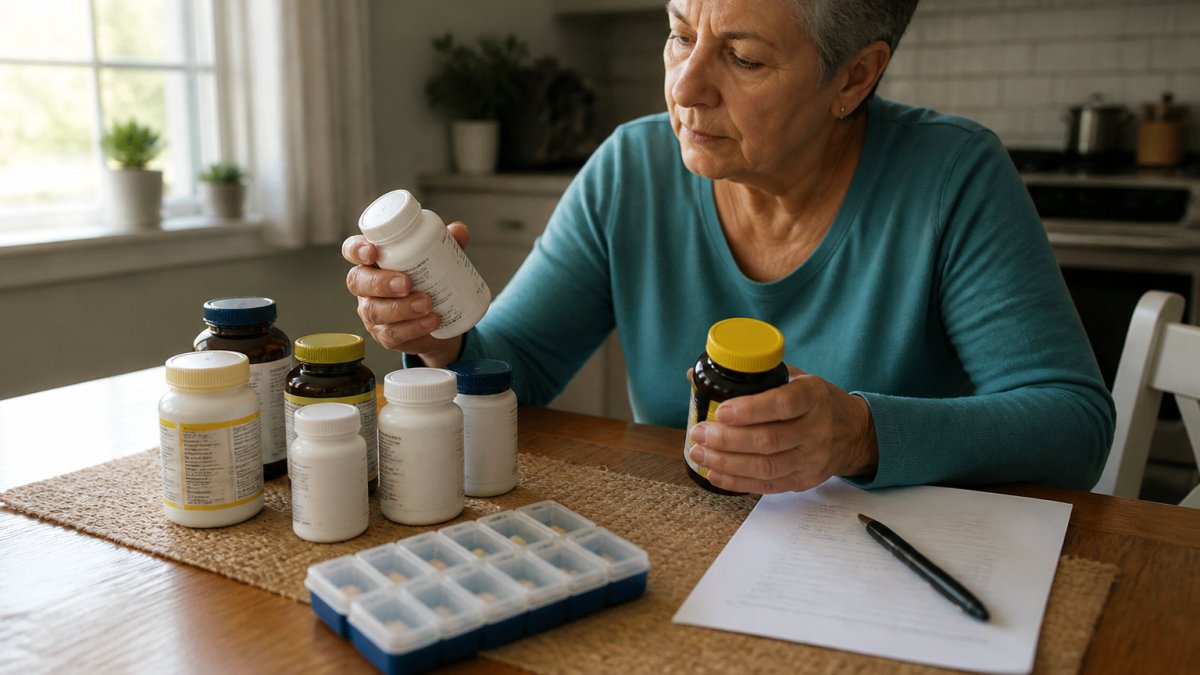
Herbs and supplements after heart surgery carry real bleeding risk, and that risk climbs when they meet antiplatelet medication. Garlic and fish oil both affect clotting. Hawthorn and arjuna are traditional heart herbs with limited evidence in surgical recovery. None of them belongs in your routine until your cardiologist signs off.
Garlic, Fish Oil, Hawthorn, and Arjuna
Some herbs and supplements, such as garlic and fish oil, are discussed in relation to clotting and platelet function, while hawthorn and arjuna have long histories in traditional practice but limited evidence for postoperative use. If you are weighing vitamin C and zinc for wound healing instead, our vitamin C vs zinc wound healing guide covers the evidence and the bleeding considerations.
Herb-Medication Interactions That Put Recovery at Risk
Interactions between herbs and heart medication are the part most guides gloss over. A supplement that seems harmless on its own can amplify or blunt a prescription drug, and the result is either a bleeding event or a clot. That is why drug interactions deserve a direct conversation with your cardiologist, not a forum search.
Named Pairs to Know
You do not need to memorize a pharmacology textbook. You do need to recognize the combinations that come up most often after cardiac surgery:
- Garlic and antiplatelets or anticoagulants. Garlic has mild antiplatelet activity. Stacked on aspirin or clopidogrel, it can add to bleeding risk. Culinary amounts in food are generally considered low risk; concentrated capsules are a different conversation.
- Fish oil and antiplatelets or anticoagulants. High-dose fish oil affects platelet function. Occasional servings of fatty fish are not the issue; gram-level capsules taken daily alongside a blood thinner are.
- Ginkgo, ginger, turmeric, and ginseng with blood thinners. Each has been associated with altered bleeding in some patients. The pattern is additive, not one dramatic culprit.
- St. John's wort with warfarin and many cardiac drugs. It speeds up liver enzymes that clear these drugs, which can lower drug levels and reduce protection.
- Vitamin K-rich supplements with warfarin. Warfarin works by interfering with vitamin K. Sudden changes in vitamin K intake, including green powders and multivitamins, can swing INR.
- Hawthorn and arjuna with blood pressure and heart-failure drugs. These traditional heart herbs can add to blood pressure lowering and, in some reports, interact with digoxin.
- Potassium-containing salt substitutes with ACE inhibitors, ARBs, or diuretics. Not an herb, but a common kitchen swap that can push potassium dangerously high.
Disclosure: What to Tell Your Surgical Team, and When
Tell your surgical team about every supplement before surgery, not after. Surgeons often ask patients to review and stop certain herbs and supplements before an operation because of bleeding and anesthesia risks, and the exact timing depends on the product and the procedure. After surgery, the same disclosure rule applies in reverse: bring every bottle to your first follow-up visit and ask whether it is safe to restart.
Watch out: starting a "heart health" supplement blend without telling your surgical team is exactly how patients end up with unexplained bruising or worse. Bring every bottle to your follow-up visit.
When and How to Resume Supplements
There is no single rule for resuming supplements after heart surgery. A reasonable, clinician-guided approach looks like this:
- Wait for clearance. Do not restart any herb or supplement until your surgeon or cardiologist says it is safe, typically after wound healing is underway and bleeding risk has been reassessed.
- Restart one at a time. Add a single product, at a low dose, and note any change in bruising, bleeding, heart rate, blood pressure, or how you feel over the next week or two.
- Check the interaction list first. Ask your pharmacist to screen the specific product against your current prescriptions. Pharmacists do this routinely and it is often faster than waiting for an appointment.
- Keep the dose stable. Do not escalate because "more is better." Many interactions are dose-dependent.
- Re-check after any medication change. A new prescription can turn a previously fine supplement into a problem.
Evidence Quality: Not All Remedies Are Equal
It helps to sort remedies by how much is actually known about them. Some options, like fish oil and plant-based diets, have research behind them for heart health generally, though not specifically for surgical recovery. Others rest mostly on traditional use and limited studies. Treating all of these as equivalent is how patients end up either over-trusting a weak remedy or dismissing a useful one.
If you are coming from a supplement-first mindset, expect this adjustment to feel restrictive. It is. The National Center for Complementary and Integrative Health explains why "natural" does not mean risk-free, especially alongside prescription drugs.
Exercise After Heart Surgery: Where Natural and Medical Advice Meet
Exercise is the one "natural" intervention with near-universal medical backing, and it is where the two worlds agree. Walking early, then building gradually, supports blood flow, mood, and strength. Yoga and tai chi can help with balance and stress once your care team clears them. For a full breakdown of safe activity, read our guide on whether you can exercise after heart surgery.
The American Heart Association's cardiac rehabilitation guidance supports structured rehab as a core part of recovery. The rule: start slow, follow your surgical team's limits, and never push through chest pain.
When Surgery or Medical Intervention Is the Only Real Answer
Some problems do not respond to lifestyle changes at all. A blocked graft, a failing valve, or a heart blockage that limits blood flow needs medical or surgical intervention, full stop. Natural remedies cannot open a blocked artery or repair a valve.
This is the honest limit of the comparison. Home remedies can support heart health over years. They cannot rescue a heart in crisis. If you notice new chest pain, shortness of breath, or rapid weight gain, call your care team rather than reaching for a supplement.
Recovery Milestones and Measurable Outcomes to Track
Track outcomes, not vibes. Useful milestones include walking distance without breathlessness, incision healing, resting heart rate, blood pressure readings, and how consistently you take every dose. Logging these gives your cardiologist real data and gives you a sense of progress on hard days.
The Centers for Disease Control and Prevention's heart disease resources notes that managing risk factors like cholesterol and blood pressure is a long game. Measurable habits beat hopeful ones.
Join The Zipper: A Community That Understands Heart Surgery Recovery
The hardest part of heart surgery recovery is often the isolation, not the information. The Zipper is a founder-led community built by Steve Rucinski, a heart surgery survivor, for people who are living this. You get peer support, practical tools like our recovery nutrition tracker, and guidance for the emotional side of healing, not just the physical. If you are weighing supplements and medications and feel alone in the decisions, you do not have to sort it out by yourself. Join a heart surgery recovery community and find people who understand exactly what this feels like.
Frequently Asked Questions
Can natural remedies replace medication after heart surgery?
No. Prescribed medications such as antiplatelet drugs and blood thinners protect against blood clots and are part of the standard heart surgery recovery protocol. Natural remedies and home remedies can support heart health through diet, gentle movement, and rest, but they cannot replace prescription medication. Stopping or reducing a prescribed drug without your cardiologist's approval raises the risk of blood clots, stroke, and other complications. Ask your surgical team before changing anything.
Are herbs and supplements safe to take after heart surgery?
Some carry real risk. Some herbs and supplements can interact with antiplatelet medication, and the interaction risk can grow when several are combined. Herbs and supplements after heart surgery should be cleared with your cardiologist first, ideally with a full list of what you take. Bring the actual bottles to appointments so the surgical team can check doses and herb-medication interactions.
When can I exercise after heart surgery?
Most patients start gentle walking within days of surgery while still in the hospital, and cardiac rehabilitation typically begins within a few weeks. Exercise after heart surgery should follow your surgical team's instructions, not a general online plan. Watch for warning signs such as chest pain, unusual shortness of breath, dizziness, or a racing heartbeat, and stop and call your cardiologist if they appear.
How long do people take medication after heart surgery?
It depends on the procedure. After bypass surgery, antiplatelet medication is often continued long term, while some drugs are tapered within weeks or months. Your heart surgery recovery timeline for medication is set by your cardiologist based on your procedure, cholesterol levels, and overall cardiovascular risk. Never adjust a dose on your own; ask for a written schedule and a review date at each follow-up.
Sorting natural remedies from necessary medication is one of the most confusing parts of healing, and you should not have to do it alone. The Zipper gives you a compassionate peer network, a recovery nutrition tracker, and resources that address both body and soul. Get started with The Zipper and rebuild your strength with people who have been where you are.


