

Last Updated: November 3, 2026
Quick Summary
Recovery from heart surgery for elderly patients is a staged process measured in weeks and months, not days, and it rarely follows a straight line. Most older adults who follow their surgical team's activity limits and attend cardiac rehabilitation regain the ability to manage daily life independently, though the timeline usually stretches longer than it does for a patient in their forties.
- Weeks one and two focus on survival and safety, weeks three through six bring back independence.
- Most patients can be left alone for an hour or two within two to three weeks after discharge.
- Lifting restrictions usually cap patients at five to ten pounds for the first six to eight weeks.
- Full recovery often takes three to six months and sometimes longer for patients over seventy.
- Call 911 for chest pain that does not resolve with rest or a fever above 100.4°F.
Table of Contents
- What Recovery From Heart Surgery Looks Like for Older Adults
- Open Heart Surgery Recovery Week by Week
- How Long After Open Heart Surgery Can You Be Left Alone
- Caring for Your Spouse After Open Heart Surgery
- Foods to Avoid After Coronary Bypass Surgery
- Chest Incision and Wound Care at Home
- Lifting Restrictions and Protecting the Chest Incision
- Walking, Physical Activity, and Gradual Return to Daily Routines
- Pain, Fatigue, Weakness, and Swelling: What Is Normal
- Cardiac Rehabilitation and Follow-Up Appointments
- Cognitive and Emotional Recovery for Older Adults
- Warning Signs and When to Call a Doctor
- Planning Age-Specific Recovery Around Frailty and Health Conditions
- Join The Zipper Community for Recovery Support
- Frequently Asked Questions
What Recovery From Heart Surgery Looks Like for Older Adults
Recovery from heart surgery for elderly patients is a staged process measured in weeks and months, not days, and it rarely follows a straight line. Families often ask the same question: what should we actually expect?
The American Heart Association's guidance on cardiac rehabilitation frames recovery as three overlapping phases: the hospital stay, the first weeks at home, and the gradual rebuild of endurance. Each phase has its own risks, and the transition between them is where most setbacks happen.
Here is what we want you to hold onto: the goal of the first month is not to feel normal. It is to heal the sternum and avoid infection. Everything else can wait.
Open Heart Surgery Recovery Week by Week
Open heart surgery recovery week by week follows a predictable arc: weeks one and two are about survival and safety, weeks three through six bring back independence, and weeks seven through twelve rebuild stamina. Knowing which phase you are in helps you judge whether a new ache is normal healing or a reason to call.
Below is the map we wish every family received at discharge.
| Phase | Typical Timeframe | Main Focus | What to Expect |
|---|---|---|---|
| Hospital and discharge | Days 1-7 | Monitoring, first walks, wound check | Tubes removed, short corridor walks, discharge teaching |
| Early home recovery | Weeks 1-2 | Rest, incision care, medication routine | Fatigue, soreness, needing help with most tasks |
| Regaining independence | Weeks 3-6 | Light activity, short outings, weaning off narcotics | Better sleep, longer walks, driving discussed with surgeon |
| Building endurance | Weeks 7-12 | Cardiac rehab, stamina, return to work planning | Steady energy gains, fewer naps, more confidence |
Weeks 1-2: Hospital Discharge and the First Days Home
The first days home are the most fragile. Expect exhaustion after a shower, a poor appetite, and a sleep schedule that refuses to cooperate. Discharge instructions usually run several pages, and the medication list alone can feel overwhelming.
Keep a written log of pain medication times, walking distances, and temperature readings. Nurses ask for these details at follow-up calls, and memory is unreliable when you are tired and sore.
Weeks 3-6: Regaining Independence
Independence returns in small increments. Around week three or four, many patients can dress themselves, make a simple breakfast, and walk several minutes without stopping. The chest still aches, but the sharp early pain fades into a dull soreness.
This is also when boredom sets in, and boredom is dangerous. Patients who feel better start lifting grocery bags or pushing a full laundry basket. That is how sternal wires get stressed.
Weeks 7-12 and Beyond: Building Endurance
By week seven, most older adults notice real change: stairs are less daunting, and a trip to the mailbox does not require a nap afterward.
Full recovery, meaning you feel like yourself again, often takes three to six months and sometimes longer for patients over seventy or those who had complications. That range is normal. It is not a sign of failure.
How Long After Open Heart Surgery Can You Be Left Alone
Most patients can be left alone for short periods, often an hour or two, within the first two to three weeks after discharge, once they can walk safely, manage their own medications, and reach a phone. The surgeon's team makes the final call, and it depends on the procedure, complications, and how steady the patient is on their feet.
Here is a practical checklist families can use before leaving a recovering patient alone:
- The patient can stand, walk to the bathroom, and sit down without assistance
- Medications are pre-sorted into a daily organizer with clear labels
- A phone or medical alert device is within arm's reach at all times
A common mistake is leaving someone alone too early because they seem fine in conversation. Conversation is not the same as physical capability. Test it with a supervised walk first.
Caring for Your Spouse After Open Heart Surgery
Caring for your spouse after open heart surgery is a job with no training manual, and it lands on people who are often older and managing their own health conditions.
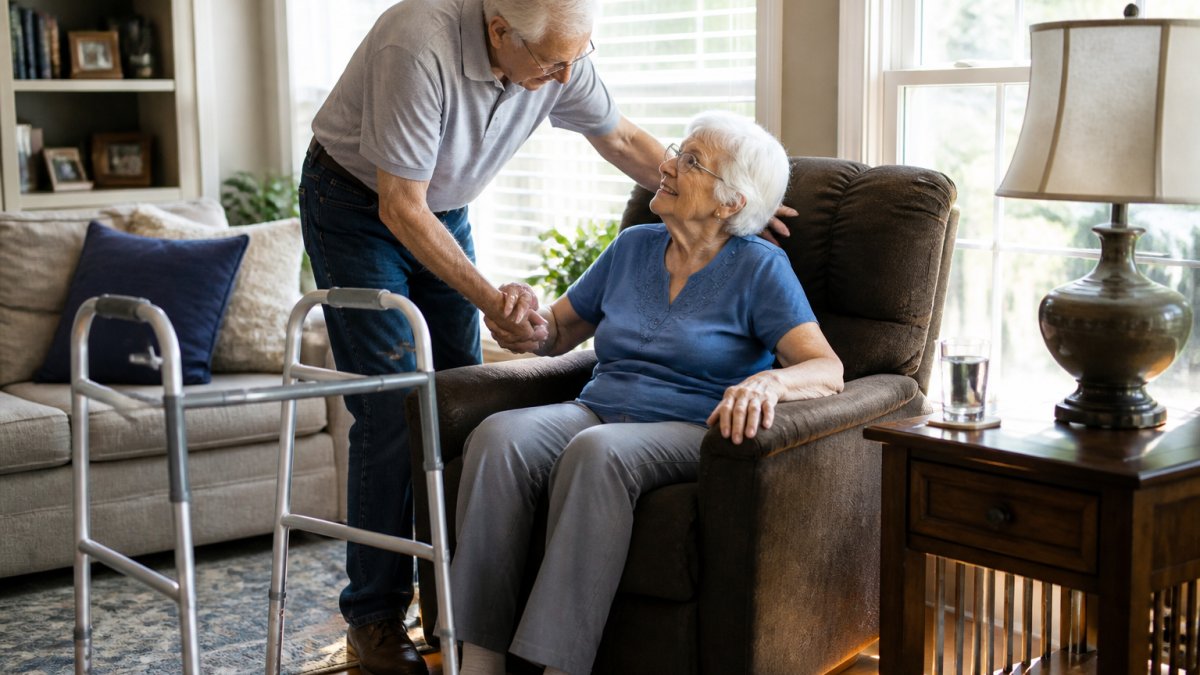
The thing nobody tells you about caregiving is that your own exhaustion matters.
Guidance on supporting a spouse through heart surgery can help with the day-to-day realities, from managing visitors to handling the emotional swings that come with recovery.
Home Safety Changes That Prevent Falls and Setbacks
Falls are the most preventable setback in home recovery, and older adults are at higher risk because of muscle loss from the surgery itself. A few changes make a real difference:
- Remove throw rugs and clear walking paths between the bedroom, bathroom, and kitchen
- Install grab bars in the shower and beside the toilet
- Set up a bedside table with medications, water, phone, and a light
Watch out: soft sofas and deep armchairs are harder to rise from than they look, and patients who struggle to stand up often try to push off with their arms. That motion strains the sternum directly.
Foods to Avoid After Coronary Bypass Surgery
Foods to avoid after coronary bypass surgery are the ones that push blood pressure up, harden arteries further, or interact badly with blood thinners. That means heavily salted processed foods, fried items, fatty cuts of meat, and excessive alcohol.
Specific items worth limiting:
- Deli meats, canned soups, and frozen dinners, which carry heavy sodium loads
- Fried foods and anything cooked in reused oil
- Butter, cream sauces, and full-fat dairy in large amounts
Small frequent meals work better than three large ones during early recovery, when appetite is low and a full stomach feels uncomfortable. A practical tool helps here. A recovery nutrition tracker can help you notice patterns in what you eat and how you feel, because those patterns are easier to see when you write them down.
Chest Incision and Wound Care at Home
Chest incision care at home comes down to three rules: keep it clean, keep it dry, and keep it covered as instructed. Most surgeons allow a gentle shower within days of discharge, but soap should run over the incision and rinse off rather than being scrubbed in.
Check the site daily for redness, warmth, drainage, or separation. A thin clear or slightly pink drainage early on is common. Pus, spreading redness, or a fever is not.
If you had a vein harvested from your leg or arm, that site needs the same attention and often swells more than the chest incision. Elevating the limb and wearing compression stockings as directed helps.
Lifting Restrictions and Protecting the Chest Incision
Lifting restrictions after open heart surgery usually cap patients at five to ten pounds for the first six to eight weeks, though your surgeon sets the exact number. That limit covers groceries, laundry baskets, grandchildren, and pet food bags. It exists because the sternum is wired together and needs time to fuse.
A common mistake is measuring the restriction by how something feels. A guide to sternal precautions for daily activities shows how to protect the chest incision during everyday tasks. Patients who feel no pain lifting a ten-pound bag assume it is safe.
Walking, Physical Activity, and Gradual Return to Daily Routines
Walking is the safest exercise in early recovery and the one most strongly encouraged. Start with short, frequent walks several times a day rather than one long outing.
Physical activity should build in this order:
- Walking on flat indoor surfaces
- Walking outdoors on level ground
- Stairs with a railing, one step at a time
- Light household tasks without lifting
- Supervised cardiac rehabilitation exercise
- Return to prior activity levels, cleared by your care team
Return to work depends on the job. Desk work may resume in six to eight weeks for some patients; physically demanding work often requires twelve weeks or more and a formal clearance.
Pain, Fatigue, Weakness, and Swelling: What Is Normal
Pain, fatigue, weakness, and swelling are all expected after heart surgery, and their presence does not mean something has gone wrong. What matters is the trend and the pattern. Pain should improve week over week, not worsen. Fatigue should lift gradually, not deepen. Swelling should respond to elevation and movement, not climb despite them. For older adults, the normal range is wider and the margin for error is narrower, so it helps to know what is driving each symptom and which changes deserve a phone call.
Pain: What to Expect and How to Stay Ahead of It
Early pain is mostly incisional: the sternum, the chest tubes, and the leg or arm harvest site.
Older adults face a specific trade-off with opioids. Constipation, drowsiness, confusion, and falls are more likely with age, and those risks can slow recovery more than the pain itself.
Watch out: pain that suddenly worsens after a period of improvement, or pain accompanied by a popping or grinding sensation in the chest, can signal a sternal problem and should be reported the same day.
Fatigue and Weakness: Why They Linger
Fatigue after heart surgery is not laziness and it is not a sign of failure. It comes from several places at once: the metabolic cost of healing a large incision, the aftereffects of anesthesia and cardiopulmonary bypass, disrupted sleep, low appetite, and deconditioning from weeks of reduced activity.
A common pattern is a good morning followed by an afternoon crash. Plan the day around that rhythm: errands and walking in the morning, rest in the afternoon.
Persistent exhaustion that deepens instead of lifting, or fatigue paired with shortness of breath, a racing heart, or new swelling, is not normal recovery and deserves a call. For a deeper look at why you are still so tired after heart surgery, see our full explanation of recovery fatigue.
Swelling: Chest, Legs, and the Harvest Site
Swelling in the legs and ankles is common, particularly if a vein was harvested from the leg. It usually improves with elevation, movement, and compression stockings as directed.
Watch out: sudden swelling in one leg, swelling that is hot or painful to touch, or swelling accompanied by shortness of breath or chest discomfort needs immediate attention, because those patterns can indicate a blood clot or a heart that is struggling.
A Simple Daily Check for Families
A short daily routine catches most problems early. Each morning, check the incision for redness, warmth, drainage, or separation; weigh yourself at the same time on the same scale; look at the legs and ankles for new or worsening swelling; and ask the patient how they feel compared with yesterday. Write it down. Trends are easier to see on paper than in memory, and the care team will ask for exactly this information at follow-up.
Cardiac Rehabilitation and Follow-Up Appointments
Cardiac rehabilitation is a supervised program of exercise, education, and counseling that typically starts a few weeks after surgery and runs for several months. For older adults, it is the difference between recovering cautiously at home and recovering with professional guidance and monitoring. It is also the setting where frailty, balance problems, and chronic conditions get addressed in a structured way that a home walking plan cannot replicate.
What Cardiac Rehab Actually Involves
Most programs combine three elements: monitored exercise, risk-factor education, and counseling. Exercise usually includes a warm-up, walking or stationary cycling at a prescribed intensity, light resistance work, and a cool-down, all with heart rate, blood pressure, and symptoms watched. Education covers medications, nutrition, stress, and sleep. Counseling addresses anxiety and depression, which are common after surgery and often underreported by older adults.
Programs vary in format. Some are center-based with three sessions a week for twelve weeks; others are hybrid, with some sessions at home and remote monitoring. Ask the surgical team which format fits the patient's mobility, transportation, and caregiver situation.
Why It Matters More for Older Adults
Frailty and deconditioning are the main reasons older adults lose independence after surgery. A structured program rebuilds strength and balance under supervision, which lowers the risk of falls at home.
A common pattern is that patients who attend cardiac rehab return to daily activities with more confidence and fewer setbacks than those who recover alone. The program also gives spouses and caregivers a place to ask questions and a schedule that structures the week.
Preparing for Follow-Up Appointments
Follow-up visits usually include a wound check, a medication review, and sometimes imaging or lab work. They are short, and it is easy to leave without asking the questions that matter most. Write questions down before each visit and bring the daily log of pain, weight, swelling, and activity. Ask specifically about:
- Which medications can be adjusted if drowsiness, constipation, or dizziness is a problem
- When driving, stairs, and lifting limits can be relaxed
- How chronic conditions such as diabetes, kidney disease, and high blood pressure should be managed during recovery
Bring the caregiver to appointments when possible. Two sets of ears catch more, and the caregiver is often the one who notices changes the patient dismisses.
Coordinating Chronic Conditions
Diabetes affects wound healing and infection risk, kidney disease affects medication dosing, and both change the recovery plan. Ask the care team how these conditions should be monitored during recovery and who is responsible for adjusting medications.
Cost is a real concern for many families. If you are weighing whether a program is worth it, our breakdown of affordable cardiac rehabilitation programs covers what to expect before you enroll.
Cognitive and Emotional Recovery for Older Adults
Cognitive and emotional recovery is the part of healing that gets the least attention and causes the most distress. This is often called post-operative cognitive dysfunction, and it usually improves with time (Postoperative Cognitive Dysfunction).
Depression and anxiety are common too. Patients describe fear of dying, fear of exercising, and a strange grief over their former body. Spouses describe their own fear, often unspoken.
This is where peer support earns its place. Talking to someone who has had the same surgery and felt the same fear does something a pamphlet cannot. It normalizes the experience.
Warning Signs and When to Call a Doctor
Call your doctor or 911 immediately for chest pain that does not resolve with rest, shortness of breath at rest, a fever above 100.4°F, rapid weight gain, or a wound that is draining pus or opening. These are the signs that separate a normal recovery from an emergency.
Other reasons to call sooner than your next appointment:
- Heart rate that stays unusually fast or irregular
- Swelling that worsens suddenly in one leg
- Fainting or near-fainting
Trust your instincts. Care teams would rather field a worried phone call than treat a complication that was ignored for three days.
Planning Age-Specific Recovery Around Frailty and Health Conditions
Age-specific recovery planning matters because an eighty-year-old with diabetes and mild frailty faces a different recovery than a sixty-five-year-old who was cycling before surgery. Frailty, in particular, predicts how quickly strength returns and how much support a patient needs at home.
Older patients often fall into a few rough planning profiles:
- Independent and active: likely to need help mainly with lifting and driving, may return to most activities within eight to twelve weeks
- Independent but deconditioned: needs structured cardiac rehab and a gradual walking plan, often needs a caregiver present for the first month
- Frail or managing multiple conditions: benefits from a discharge plan that includes home health services, medication coordination, and caregiver support from day one
Coordinate chronic conditions with your care team. Diabetes affects wound healing, kidney disease affects medication dosing, and both change the recovery plan. Ask specifically how your other conditions should be managed during this period.
Join The Zipper Community for Recovery Support
If you are navigating recovery from heart surgery for elderly patients, you do not have to do it alone. The Zipper was founded by Steve Rucinski, a heart surgery survivor.
You can use our recovery nutrition tracker, read our resources, and simply listen to others without ever posting a word. When you are ready, visit The Zipper website for current pricing and support options.
Frequently Asked Questions
What is the hardest part of open-heart surgery recovery for older adults?
For many older adults, the hardest part is the gap between how they feel and what they can safely do. Fatigue and weakness can last weeks after the chest incision looks healed, and lifting restrictions mean relying on others for everyday tasks. Age-related frailty, reduced endurance, and managing other chronic conditions add to the challenge. Emotional recovery, including anxiety and fear of overdoing it, often surprises patients more than the physical limitations.
How long does it take older adults to recover from heart surgery?
Most patients need four to six weeks before returning to lighter daily activities, and four to eight weeks before driving or resuming more demanding routines. Full recovery, including restored stamina and endurance, often takes two to three months, and some older adults need up to twelve weeks before feeling close to normal. Age, frailty, the type of surgery, and pre-surgery fitness all affect the pace of healing.
How long after open-heart surgery can a patient be left alone?
Many older adults can be left alone for short periods after the first week or two home, once they can walk safely, manage medications, and reach a phone. Some need a caregiver present for several weeks, especially if they live alone or have balance problems. Ask the surgeon or discharge team before staying alone, and arrange check-in calls or visits during the first weeks to catch problems early.
What foods should older adults avoid after heart bypass surgery?
Limit foods high in sodium, such as canned soups, deli meats, and frozen dinners, because salt promotes fluid retention and swelling. Cut back on saturated fat from fatty cuts of meat and full-fat dairy, and avoid trans fats found in some packaged baked goods. Highly processed snacks and sugary drinks add calories without nutrition. Small, frequent meals with vegetables, lean protein, and whole grains support healing and steady energy.
When should an older adult call a doctor during heart surgery recovery?
Call the surgeon or cardiologist for a fever above 100.4 F, redness, warmth, or drainage at the chest or leg incision, sudden weight gain of two to three pounds in a day, or worsening shortness of breath. Chest pain that does not ease with rest, fainting, a racing pulse, or swelling that spreads up the leg also need prompt attention. When in doubt, call; the care team would rather answer a question than treat a complication.
Can family caregivers help without adding stress to recovery?
Yes. Caregivers help most by handling meals, medications, transportation, and household tasks so the patient can focus on walking and rest. Keep a shared list of medications and follow-up appointments, set up a phone tree so one person coordinates updates, and watch for signs of depression or withdrawal. The Zipper community connects caregivers with others who understand the emotional weight of caring for a spouse or parent after heart surgery.
The hardest part of recovery is rarely the surgery itself. It is the long middle, when the crisis is over and the patience runs thin. We built The Zipper for that middle, with peer support from survivors, a nutrition tracker that keeps recovery practical, and resources that address the emotional side of healing alongside the physical. Get started with The Zipper and rebuild strength of body and soul with people who understand exactly where you are.


