

Last Updated: November 4, 2026
Quick Summary
For many people recovering from heart surgery, supervised physical therapy offers advantages in the early months, though the right choice depends on individual circumstances. Physical therapy is a structured rehabilitation program delivered by a licensed clinician who assesses your starting point, builds an individualized treatment plan, and adjusts it as you progress. Home exercises are the movements you do on your own between or after those sessions.
- In the first six weeks after heart surgery, supervised therapy or a formally cleared home program is the safer default.
- From roughly six to twelve weeks, many patients move into a blended phase of supervised sessions and home exercise.
- Stop exercising and call your care team for chest pain, unusual shortness of breath, dizziness, or new swelling.
- If walking tolerance flattens for two or three weeks despite consistent effort, have a therapist reassess the plan.
- Home exercises are not enough if your balance is unsteady, your fall risk is elevated, or progress has stalled.
Table of Contents
- Supervised Physical Therapy vs. Home Exercises: The Core Difference
- Cardiac Rehabilitation vs Physical Therapy: How They Work Together
- What Supervision Adds: Assessment, Individualized Treatment, and Safety
- Home Exercise Program Safety for Heart Patients
- The Physical Therapy Recovery Timeline After Heart Surgery
- How to Track Recovery Progress at Home
- When Home Exercises Are Enough, and When They Are Not
- Red Flags: When to Stop Exercising and Call Your Care Team
- Building Your Blended Recovery Plan with The Zipper
- Frequently Asked Questions
Supervised Physical Therapy vs. Home Exercises: The Core Difference
Is physical therapy better than home exercises for recovery? For many people recovering from heart surgery, supervised physical therapy offers advantages in the early months, though the right choice depends on individual circumstances. Physical therapy is a structured rehabilitation program delivered by a licensed clinician who assesses your starting point, builds an individualized treatment plan, and adjusts it as you progress. Home exercises are the movements you do on your own between or after those sessions.
The difference is not the exercises themselves. Many of the same movements show up in both settings. What changes is the supervision, the assessment, and the safety net.
This guide from The Zipper breaks down where each approach helps, where each falls short, and how to blend them into a recovery plan that fits your life. Below, we'll show you exactly how to decide which route fits your stage of healing.
Cardiac Rehabilitation vs Physical Therapy: How They Work Together
Cardiac rehabilitation and physical therapy are not competing options. They are two parts of the same recovery picture, and most heart surgery patients benefit from both.
Cardiac rehabilitation is a supervised program that combines exercise training, education on heart-healthy living, and counseling to reduce stress. It is designed specifically for people with heart conditions and typically runs for several weeks to a few months.
Physical therapy focuses on movement: rebuilding strength, range of motion, balance, and functional movement so you can return to daily activities. After heart surgery, physical therapy often addresses the whole body, not just the heart.
The two overlap more than people expect. Both involve therapist supervision, both use therapeutic exercise, and both track functional outcomes. If you are comparing costs and formats before committing, 5 Affordable Cardiac Rehabilitation Programs: What to Expect walks through what these programs involve.
What Supervision Adds: Assessment, Individualized Treatment, and Safety
Supervision is where clinic-based therapy earns its keep, but the value is not vague encouragement. It comes from specific, measurable steps a licensed physical therapist takes that a printout cannot replicate.
A structured baseline assessment. A physical therapist can assess range of motion, strength, balance, and endurance to establish a starting point. Those numbers become your starting point, and they are rechecked at intervals so progress is documented rather than guessed. After heart surgery, the assessment also screens for sternal precautions, incision healing, and tolerance to exertion before any resistance work begins.
An individualized treatment plan tied to functional goals. The plan is built around what you actually need to do, such as climbing stairs at home, lifting a grandchild, or returning to work. A therapist sets the starting load, the number of repetitions, and the progression rule, then adjusts based on how you respond. That is different from a general handout, which cannot know whether your shoulder range of motion is 90 degrees or 140 degrees after surgery.
Real-time exercise modifications. If a movement causes pain, substitutes a compensating muscle, or your form slips, the therapist changes it on the spot. This matters after heart surgery because the same exercise can be appropriate at one stage and premature at another. A therapist can regress a movement to a seated version, reduce range, or change the tempo without stopping the session.
A common mistake is treating a home exercise program as a replacement for assessment. In practice, this means starting exercises that are too advanced for your current stage, or skipping ones that feel easy but matter for functional movement. The American Heart Association's cardiac rehabilitation guidance emphasizes that recovery plans should be tailored to the individual, not copied from a general handout.
Home Exercise Program Safety for Heart Patients
Home exercise program safety for heart patients starts with one rule: get your program approved by your care team before you do it alone. A home exercise program is a set of movements your therapist or cardiologist has cleared for you to perform independently, with written instructions on frequency, duration, and stopping points.
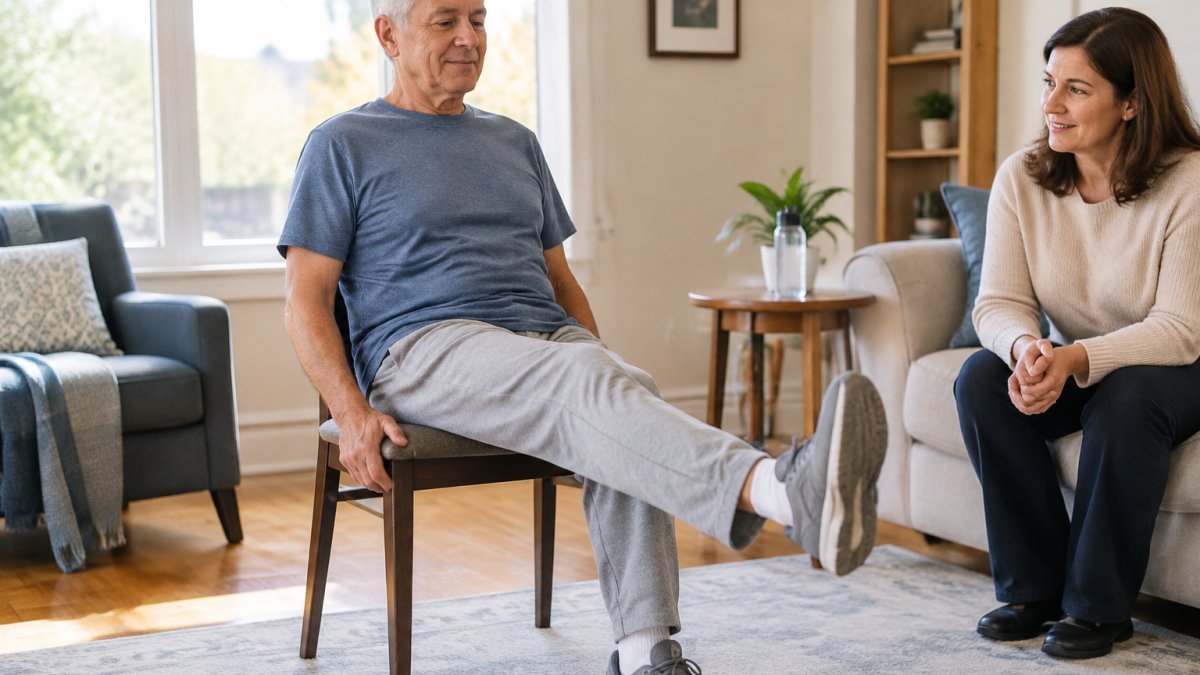
Safety basics that apply to nearly every home program after heart surgery:
- Warm up and cool down every session, even short ones.
- Keep a chair or counter within arm's reach for balance support.
- Stop any movement that causes chest pain, unusual shortness of breath, or dizziness.
- Log each session so your therapist can review it at your next visit.
Home exercise offers convenience, with no commute and the ability to spread movement across the day. Its limitation is that no one is watching your form, which can make consistency harder to maintain. For concrete low-impact options suited to heart patients, see What Are the Best Low-Impact Exercises for Heart Patients?.
The Physical Therapy Recovery Timeline After Heart Surgery
Most heart surgery patients follow a rough physical therapy recovery timeline that unfolds in stages, though your pace depends on your procedure, your age, and your overall health.
- Weeks 1-2: Gentle walking and breathing exercises. Sternal precautions limit upper-body movement.
- Weeks 3-6: Supervised outpatient therapy begins in many cases. Light resistance and range of motion work.
- Weeks 6-12: Gradual strengthening and endurance building. Many patients complete cardiac rehab during this window.
- Months 3-6: Functional movement and balance work. Return to more demanding daily activities.
The timeline is a map, not a schedule. Progress monitoring matters more than hitting a date. If you want the broader stage-by-stage picture so you can see where therapy fits, 9 Stages of Heart Surgery Recovery You Should Expect lays it out.
How to Track Recovery Progress at Home
Tracking recovery progress at home works best when you measure a few simple things consistently rather than everything occasionally. Pick three or four markers and record them after each session.
Use this simple log:
| What to Track | How to Measure | What It Tells You |
|---|---|---|
| Walking tolerance | Minutes walked before fatigue | Endurance trend |
| Stairs | Flights without stopping | Functional strength |
| Shoulder range of motion | Reach height, noted simply | Upper-body healing |
| Perceived exertion | 1-10 scale after activity | Safe effort level |
| Symptom notes | Any chest pain or dizziness | When to call your team |
Review the log weekly. If walking tolerance climbs steadily, your program is working. If it flattens for two or three weeks, or symptoms appear, that is your signal to check in with your therapist and adjust the plan. Progress monitoring is not busywork; it is how you and your care team decide when to change a home program.
When Home Exercises Are Enough, and When They Are Not
A useful question to ask is whether, for your diagnosis, severity, and recovery stage, self-directed exercise is reasonable or whether it needs supervision. Use the framework below to judge your own situation, and confirm any decision with your care team.
By recovery stage. In the first six weeks after heart surgery, sternal precautions limit upper-body movement and the risk of doing too much is real, so supervised therapy or a formally cleared home program with scheduled check-ins is the safer default. From roughly six to twelve weeks, many patients move into a blended phase: supervised sessions for progression and a home program for consistency. After about three months, if functional milestones are being met and symptoms are stable, independent exercise often maintains what therapy built, with periodic reassessment.
By diagnosis and severity. Uncomplicated recovery after a first, routine procedure with no complications is the situation where home exercise is most reasonable once cleared. Complex situations shift the balance toward supervision: multiple conditions alongside the heart recovery, unsteady balance or a history of falls, a slow or complicated surgical recovery, or a physically demanding job or sport you need to return to. In those cases, assessment and hands-on treatment are harder to replace.
By symptom response. If your symptoms stay stable or improve with activity, that supports continuing. If you develop chest pain, unusual shortness of breath, dizziness, a racing or irregular heartbeat, or new swelling, that is a signal to stop and check in rather than push through.
By progress trend. If walking tolerance, stair tolerance, or another functional marker climbs steadily over two to three weeks, your program is working. If it flattens despite consistent effort, or regresses, that is the point to have a therapist reassess the plan rather than add more repetitions.
By confidence and fear. Fear of exercising again is common after heart surgery, and it is not a character flaw. A therapist can supervise the movements that scare you until they feel ordinary, which is a legitimate reason to choose supervision even when your physical status would allow independent exercise.
Home exercises are not enough when any of these apply: you are in the first six weeks after surgery, you have complex conditions alongside your heart recovery, your balance is unsteady or your fall risk is elevated, progress has stalled despite consistent effort, or you feel anxious about exercising and need reassurance.
For patients who are homebound or have limited care access, in-home therapy can bridge the gap between clinic visits and independence. The practical test is simple: if you cannot state your baseline numbers, your progression rule, and your stopping points, you are not yet ready to go it alone.
Red Flags: When to Stop Exercising and Call Your Care Team
Stop exercising and call your care team immediately if you experience chest pain or pressure, unusual shortness of breath, dizziness or fainting, a racing or irregular heartbeat, or new swelling in your legs or ankles. These are not signals to push through.
Watch out: ignoring a clicking or shifting sensation in your breastbone is a specific mistake. That feeling can point to sternal nonunion, a serious complication where the breastbone fails to heal, and continuing to exercise through it can make things worse. Sternal Nonunion: Prevention After Heart Surgery explains the warning signs in detail.
Other reasons to pause and check in: a fever, a wound that looks infected, or a sudden drop in what you can do compared with last week. When in doubt, call. No therapist will fault you for asking.
Building Your Blended Recovery Plan with The Zipper
The strongest recovery plan is rarely all-clinic or all-home. It is blended: supervised physical therapy for assessment, hands-on treatment, and safety early on, then a structured home exercise program for consistency and convenience as you regain confidence. Cardiac rehabilitation sits alongside both, adding education and monitored exercise.
At The Zipper, our founder, Steve Rucinski, is a heart surgery survivor, and the platform pairs peer connection with tools like our recovery nutrition tracker so you are not rebuilding alone. You get a compassionate network, trusted recovery information, and guidance for the emotional side of healing, which matters as much as the physical work.
For readers ready to plan the whole arc of recovery, The Cardiac Surgery Playbook: Heart Surgery Guide is our comprehensive guide to understanding, preparing for, and recovering from heart surgery, out October 15.
Frequently Asked Questions
Can home exercises be as effective as supervised physical therapy?
For some people in later recovery stages, a structured home exercise program can be effective, especially when it was designed by a therapist and is followed consistently. But home exercises work best when they are part of a plan that includes professional assessment. A physical therapist can spot movement problems, adjust intensity, and catch safety issues that are hard to see on your own. For heart surgery patients, that supervision matters most in the early weeks and months.
How many days a week should I do physical therapy at home?
The right frequency depends on your surgery, your current strength, and what your care team recommends. Many cardiac rehabilitation programs combine supervised sessions two or three times a week with home exercise on other days. Ask your therapist for a written schedule and follow it closely. Doing too much too soon can cause setbacks, while doing too little slows progress. Track your sessions so you can review them at your next appointment.
What safety precautions should I take when exercising at home after heart surgery?
Warm up and cool down, keep water nearby, and exercise in a clear space with a sturdy chair or counter within reach. Stop if you feel chest pain, dizziness, shortness of breath, or an irregular heartbeat, and call your care team. Avoid heavy lifting and extreme temperatures until cleared. A home exercise program safety plan should also include knowing your target heart rate range and having someone check in on you during early sessions.
How do I know if I am ready to transition from clinical PT to a home-based program?
Your physical therapist or cardiac rehab team is best positioned to decide. Signs you may be ready include steady progress with functional movement, no new symptoms during exercise, and confidence in performing your exercises correctly. A gradual transition, with fewer clinic visits and more home sessions, is common. Keep tracking your recovery progress at home so you and your care team can spot problems early and adjust the plan if needed.
Your recovery deserves a plan that adapts as you do, and you do not have to assemble it by yourself. The Zipper offers a founder-led community of heart surgery survivors, practical recovery tools including our nutrition tracker, and guidance for both the physical and emotional sides of healing. Get started with The Zipper and build a recovery plan that fits your stage, your body, and your life.


