

Table of Contents
- Your Heart Surgery Recovery Timeline: What to Expect Week by Week
- Home Safety Tips After Cardiac Surgery When You Live Alone
- Managing Post-Op Anxiety and Depression Without a Live-In Caregiver
- When to Call a Doctor After Heart Surgery: Warning Signs You Should Never Ignore
- Emergency Communication Protocols for Solo Living
- Medication Management and Pain Control on Your Own
- Incision Care, Wound Healing, and Infection Signs
- Eating Well and Staying Hydrated During Solo Heart Surgery Recovery
- Post-Operative Cognitive Dysfunction (POCD): When Your Brain Feels Foggy
- Conclusion: Rebuilding Strength of Body and Soul
- Frequently Asked Questions
Last Updated: September 18, 2026
Your Heart Surgery Recovery Timeline: What to Expect Week by Week
Recovering from heart surgery alone is hard, but it follows a pattern you can plan around. The first two weeks are the toughest. Most people need help with meals, rides, and heavy chores during that stretch.
Hospital stays after open-heart surgery often run about a week, though your team decides based on your case. This guide from The Zipper walks you through what each week looks like when no one is living with you.
Here is the short version:
- Weeks 1-2: Rest, wound care, short walks indoors
- Weeks 3-4: Longer walks, lighter tasks, first follow-up visits
- Weeks 5-8: Cardiac rehabilitation often starts, driving may resume with clearance
- Months 2-3: Strength returns slowly, lifting limits still apply
Your sternotomy incision needs time to heal. Pushing too fast sets you back.
Home Safety Tips After Cardiac Surgery When You Live Alone
Make your home safe before you leave the hospital, not after. Small changes prevent falls and protect your healing chest, and when you live alone, a fall that would be a nuisance for someone with a caregiver can become an emergency.
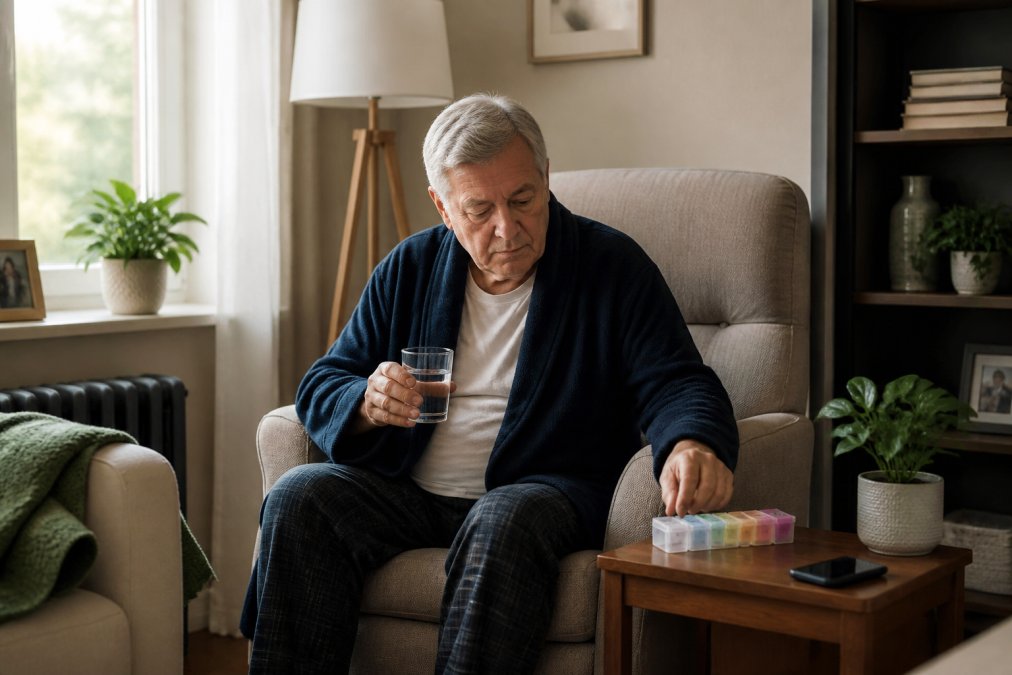
A heart surgery patient in their 60s sitting in a comfortable armchair in a tidy living room, a small side table with a pill organizer, a water bottle, and a phone within reach, soft natural light coming through a window, calm and safe atmosphere
Start with the sternal precautions your surgical team gave you. Most open-heart patients are told not to push, pull, or lift more than about 5 to 10 pounds for the first 6 to 8 weeks, and not to reach both arms overhead or behind the back. Every home modification below exists to keep you inside those limits.
Clear the path first. Remove throw rugs, tape down or reroute cords, and widen walking lanes between the bedroom, bathroom, and kitchen. Most falls after cardiac surgery happen on the way to the bathroom at night, often because of blood pressure drops from medications.
Move everything to waist height. Dishes, medications, phone chargers, remote controls, and snacks should sit between your hips and shoulders so you never reach up or bend down. A rolling cart or a small side table next to your recovery chair solves most of this in one move.
Bathroom changes that matter most:
- A shower chair or transfer bench so you can sit while washing
- A handheld showerhead to avoid twisting
- A raised toilet seat or toilet safety frame
- Non-slip mats inside and outside the tub
- A nightlight with motion sensing
Kitchen setup before surgery day:
- Stock shelf-stable and freezer-friendly meals at counter height
- Put a lightweight kettle and mugs on the counter, not in upper cabinets
- Move a sturdy stool near the counter if you need to sit between tasks
- Keep a trash bag and paper towels within arm's reach
Bedroom and nighttime:
- Keep a phone charger and a glass of water on the nightstand
- Use a bedside lamp you can reach without sitting up
- Leave a clear path to the bathroom with a nightlight on
- Sleep with the bedroom door unlocked
Pre-Arranged Logistics for Solo Patients
This is the part most recovery guides skip: what to actually set up when there is no one living with you. Build this list in the two weeks before surgery, because you will not have the energy to build it after.
Rides. You cannot drive for at least 2 to 4 weeks after open-heart surgery, and often longer if you are on certain pain medications. Line up rides for your discharge day, your first follow-up visit (usually 1 to 2 weeks out), and any lab or imaging appointments in between. Many hospitals will not discharge a patient who has no ride home, so confirm this before surgery day.
Groceries and meals. Set up a grocery delivery account (most major chains and Instacart, Amazon Fresh, and Walmart+ offer this) and place a first order to arrive the day after discharge. Freeze single portions of soup, chili, and casseroles ahead of time. Meal delivery services built for cardiac or low-sodium diets exist, but check sodium content, many standard meal kits run high.
Prescriptions. Ask your pharmacy about automatic refills and mail delivery before surgery. Have someone able to pick up a same-day prescription if a new medication is added at discharge.
One main check-in contact. Choose one person, a friend, sibling, neighbor, or adult child, who agrees to a daily text or call at a set time. Give them your surgeon's office number, your cardiologist's number, and a spare key or door code. If they do not hear from you by a certain hour, they call, then text, then call a neighbor.
A neighbor with a key. Even if you barely know them, ask. A neighbor can reach you in two minutes when an ambulance cannot. Offer to return the favor when you are back on your feet.
Home services on standby. Line up a house cleaner for weeks 3 through 8, a lawn service if you have a yard, and a pet walker if you have a dog. Lifting a 40-pound bag of dog food or pushing a vacuum both violate sternal precautions.
A note on hospital discharge rules. Medicare and most private insurers require a discharge plan, and hospitals screen for whether a patient has a safe place to go. If you tell your discharge planner you live alone, they can often arrange home health visits, a visiting nurse, or a short skilled nursing stay, but only if you ask. Say the words: "I live alone."
Managing Post-Op Anxiety and Depression Without a Live-In Caregiver
Feeling anxious or low after heart surgery is common, and it does not mean something is wrong with you. The American Heart Association's guidance on recovery and emotional health notes that mood changes often follow major cardiac surgery.
Living alone can make those feelings louder. Silence and too much time to think feed worry.
What helps:
- A daily call with one person you trust
- Short walks outside when cleared
- Writing down fears instead of looping on them
- Peer support from people who had the same surgery
The Zipper exists for exactly this reason. It is a founder-led community built by Steve Rucinski, a heart surgery survivor, so the people you talk to have been where you are.
When to Call a Doctor After Heart Surgery: Warning Signs You Should Never Ignore
Call your care team right away if you notice chest pain, shortness of breath, a fever, or changes in your incision. These are not things to wait out alone.
Emergency signs include:
- Chest pain or pressure that does not ease
- Trouble breathing at rest
- Fever or chills
- Redness, swelling, or drainage from the incision
- Sudden weight gain or swollen legs
- Fainting or a racing heartbeat
Keep your hospital's discharge number and your surgeon's office on speed dial. Do not drive yourself if symptoms feel serious. Call 911.
Emergency Communication Protocols for Solo Living
Set up a system now so you never have to think in a crisis. This is the part most recovery guides skip.
Do these three things:
- Program emergency contacts into your phone with clear labels
- Wear a medical alert bracelet listing your surgery and medications
- Agree on a daily check-in time with one person
Consider a medical alert system with a wearable button. If you fall or feel faint, help comes without you dialing.
Medication Management and Pain Control on Your Own
Stay ahead of pain instead of chasing it. After heart surgery, pain that gets ahead of you is harder to bring back down, and uncontrolled pain raises blood pressure and heart rate, the opposite of what your healing chest needs.
Most patients leave the hospital on a staggered schedule: a pain medication every 4 to 6 hours, a stool softener once or twice daily, a beta blocker, a statin, sometimes a blood thinner, and often a diuretic. That is easily six to ten doses a day. Managing that alone is a real job.
Build a system before you need it.
- A weekly pill organizer with AM, noon, PM, and bedtime compartments
- A written medication log (paper works better than an app when you are foggy)
- Phone alarms labeled with the drug name, not just "pill"
- A single pharmacy for everything, so they can catch interactions
Refill the organizer on the same day each week, Sunday evening is a common choice, and count what is left against what should be left. If the numbers do not match, you missed a dose.
Pain control rules that matter:
- Take pain medication on schedule for the first 1 to 2 weeks, even on good days. Skipping a dose because you feel fine is how you end up chasing pain at 2 a.m.
- Never stop a heart medication, beta blockers, statins, blood thinners, or blood pressure drugs, without asking your cardiologist. Stopping a beta blocker abruptly can trigger dangerous heart rhythms.
- Avoid NSAIDs (ibuprofen, naproxen, aspirin for pain) unless your cardiologist approves them. They can interfere with blood thinners and, in some patients, raise cardiovascular risk.
- Do not add over-the-counter supplements, cold medicines, or antacids without checking. Decongestants can raise blood pressure, and some supplements interact with warfarin.
- Keep a wallet card listing every drug, dose, and time. Emergency responders and every new clinician will ask.
Constipation is not a side issue. Opioid pain medications slow the gut, and straining after a sternotomy is genuinely painful and, in rare cases, risky. Most surgeons prescribe a stool softener and sometimes a laxative. Take them. Drink water. Eat fiber. Do not wait until day four to address it.
When to call about medications:
- Pain that suddenly gets worse or no longer responds to your usual dose
- A new rash, swelling, or trouble breathing after a new medication
- Bleeding that will not stop, unusual bruising, or blood in stool or urine (especially on blood thinners)
- Dizziness on standing that does not improve
- A missed dose of a heart medication, call the pharmacy or your cardiologist for guidance rather than doubling up
When Brain Fog Makes Medication Tracking Hard
Post-operative cognitive dysfunction (POCD), the temporary memory and focus problems that can follow major surgery and anesthesia, is a real obstacle to managing medications alone. You may forget whether you took your morning beta blocker, lose a word mid-sentence, or read a label twice without it sticking.
A few strategies that work when your brain is not cooperating:
- Flip the bottle upside down after each dose, then right-side up at the start of the next cycle. Physical position is easier to trust than memory.
- Use a pill organizer with removable daily pods. If today's pod is empty and in the kitchen, you took it.
- Set alarms with the drug name spoken aloud, not just a chime.
- Write the time on a sticky note each time you take a dose, and stick it to the counter. At the end of the day, you have a paper trail.
- Simplify decisions. Ask your cardiologist whether any doses can be consolidated or whether a combination pill is appropriate. Fewer decisions means fewer errors.
- Tell someone. Give your check-in contact permission to ask, "Did you take your morning pills?" every day for the first two weeks.
POCD usually eases over weeks, but call your care team if the fog is getting worse instead of better, if you cannot follow a medication label, or if you feel confused about where you are.
Incision Care, Wound Healing, and Infection Signs
Keep your incision clean and dry, and check it daily with a mirror or phone camera. Wound healing usually progresses over several weeks, but infection can show up anytime.
Watch for:
- Increasing redness or warmth
- Yellow or green drainage
- A foul smell
- Opening at the edges
- Fever
Do not soak in a bath or hot tub until cleared. Shower gently and pat dry.
Eating Well and Staying Hydrated During Solo Heart Surgery Recovery
Good nutrition speeds wound healing, and hydration keeps your blood pressure steady. Cook once, freeze portions, and reheat when you are tired.
A cardiac diet leans on:
- Lean protein like chicken, fish, and beans
- Vegetables and fruit
- Whole grains
- Low-sodium options
Keep a filled water bottle within reach all day. The Zipper's stainless steel water bottle holds 17 ounces and keeps drinks cold for hours, which makes it easier to sip without getting up. A travel mug with a handle works well for warm drinks on cooler mornings.


Post-Operative Cognitive Dysfunction (POCD): When Your Brain Feels Foggy
Foggy thinking after heart surgery is real and has a name. Post-operative cognitive dysfunction (POCD) is a temporary decline in memory, focus, or processing speed that can follow major surgery and anesthesia.
It can feel frightening when you are alone. You may forget a dose or lose a word mid-sentence.
What helps:
- Keep notes and lists everywhere
- Simplify decisions for the first few weeks
- Sleep as much as your body asks
- Tell your doctor if fog does not improve
POCD usually eases with time, but your care team should know if it lingers.
Conclusion: Rebuilding Strength of Body and Soul
Recovering from heart surgery alone tests you in ways no pamphlet prepares you for. The logistics, the fear, the quiet hours, all of it lands on you.
You do not have to carry it by yourself. The Zipper connects you with a community of survivors, a recovery nutrition tracker, and practical tools built from lived experience. Join The Zipper and rebuild strength of body and soul, one steady day at a time.
Frequently Asked Questions
How long does it take to recover from heart surgery alone?
Full recovery from open-heart surgery typically takes 6 to 12 weeks, with the first 4 to 6 weeks being the most restrictive. You will likely need to avoid lifting more than 5 to 10 pounds and limit pushing or pulling motions. Driving is usually off-limits for 4 to 6 weeks. By week 12, many people return to most daily activities, but fatigue and stamina can take 6 months or longer to fully return. Your heart surgery recovery timeline depends on your procedure type, age, and overall health.
What are the essential safety precautions for living alone after heart surgery?
Set up a recovery station before surgery with medications, phone, water, and snacks within arm's reach. Remove tripping hazards like loose rugs and cords. Install grab bars in the bathroom and a shower chair. Arrange grocery delivery and a backup plan for emergencies. Keep a list of emergency contacts and your surgeon's number by every phone. A medical alert system can provide extra security if you fall or feel unwell. These home safety tips after cardiac surgery reduce your risk of accidents while you heal.
How can I manage post-op anxiety and depression when I am recovering alone?
Up to 30% of heart surgery patients experience depression or anxiety after surgery. Living alone can make these feelings worse. Try to keep a daily routine, get outside for short walks when cleared, and stay connected with friends or family through phone calls or video chats. Joining a peer support community like The Zipper can help you talk to others who understand. If sadness or worry lasts more than two weeks or interferes with sleep or eating, tell your doctor. Managing post-op anxiety and depression is a medical issue, not a personal failing.
When should I call a doctor after heart surgery?
Call your doctor if you notice any signs of infection at your incision site, such as redness, warmth, swelling, or pus. Also call if you have a fever over 100.4°F, chills, increasing pain, shortness of breath, or a heart rate that feels too fast or irregular. Weight gain of more than 2 to 3 pounds in a day or 5 pounds in a week can signal fluid retention. Never hesitate to call when to call a doctor after heart surgery is on your mind; it is better to check in early than to wait.


