

Table of Contents
- Why a Recovery Tracker App Matters After Heart Surgery
- What to Look for in a Heart Surgery Recovery Tracker App
- Can I Exercise After Heart Surgery? What Tracker Apps Should Monitor
- Cardiac Rehabilitation App vs. Generic Fitness Tracker: Key Differences
- Heart Health Monitoring Apps: Features That Support Long-Term Recovery
- How The Zipper Supports Your Recovery Beyond the App
- Making Your Recovery Tracker App Work for You
- Frequently Asked Questions
Last Updated: September 14, 2026
Why a Recovery Tracker App Matters After Heart Surgery
A heart surgery recovery tracker app gives you what the hospital discharge packet cannot: a daily, objective record of how your body is healing. Survivors tell us the same thing, the first weeks home are hardest not because of pain, but because you cannot tell whether what you're feeling is normal.
A cardiac rehabilitation app closes part of that gap, turning vague sensations into numbers you can show your care team.
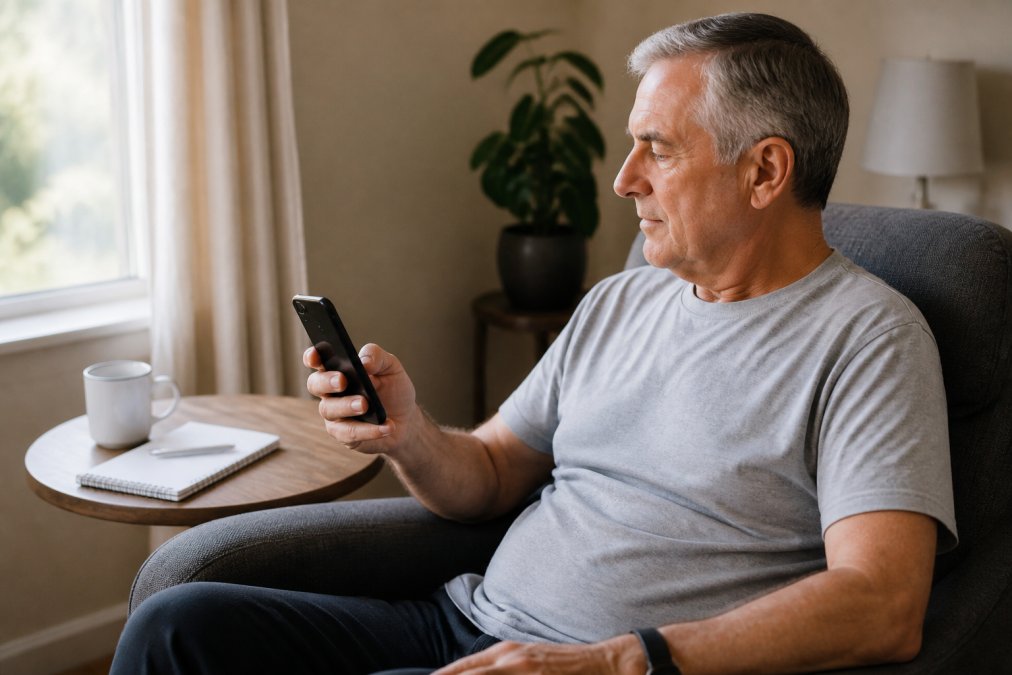
Most guides get this wrong: they treat these apps as fitness products. A recovery tracker app can be a clinical communication tool, resting heart rate, step counts, sleep quality, and symptom logs can feed into your conversations with your cardiologist at follow-up visits.
What to Look for in a Heart Surgery Recovery Tracker App
Clinical validation and data privacy come first. Everything else is secondary.
A recovery tracker app worth your time should offer:
- Symptom logging tied to dates and times, not just checkboxes
- Medication adherence reminders you can snooze or confirm
- Vital signs tracking for blood pressure, heart rate, and weight
- Exportable reports you can bring to appointments
- Clear data policies written in plain language
Clinical Validation and Data Privacy
Clinical validation means the app's tracking methods have been reviewed against established cardiac recovery protocols, not just built by a developer with a fitness background.
Privacy matters just as much. Any app handling health data in the United States should explain how it complies with HIPAA privacy rules. If the privacy policy is vague, that is your answer.
Can I Exercise After Heart Surgery? What Tracker Apps Should Monitor
Yes, most patients can and should move after heart surgery, but only inside limits your care team sets. A cardiac rehabilitation app is useful not because it tells you what to do, but because it records whether you stayed inside the envelope your surgeon and cardiologist defined.
"Walk more" means nothing with a fresh sternal incision, a beta-blocker slowing your heart rate, and a target range that changes weekly. A tracker app earns its place by capturing the numbers your care team already uses to make decisions.
The metrics that actually matter during activity
- Resting heart rate, taken first thing in the morning before getting out of bed. This is your baseline. A sustained rise of several beats per minute over your norm is worth a phone call, not a workout.
- Heart rate during movement, compared to your care team's target range. Many programs use a percentage of heart rate reserve or a "talk test" ceiling rather than a fixed number, because beta-blockers and other rate-controlling medications flatten the usual formulas.
- Activity duration, not intensity, in the early weeks. Most cardiac rehab protocols build time before they build effort.
- Perceived exertion, logged right after you stop, using a simple 0-to-10 scale. Your subjective read on how hard it felt is data, not noise.
- Symptom flags, chest discomfort, shortness of breath that does not resolve with rest, dizziness, palpitations, unusual fatigue, or swelling in the legs or ankles, noted immediately with a timestamp.
Sternal precautions and the movements apps should remind you about
After open-heart surgery, the breastbone typically needs several weeks to heal, and most surgeons restrict lifting, pushing, and pulling during that window (heart.org). A well-designed recovery tracker app can prompt you on those restrictions rather than assume you remember them. Look for one that lets you set a lifting limit, log upper-body activity separately from walking, and flag when you cross a line you set with your care team.
Red flags that should trigger a call, not a log entry
A tracker is not a triage tool. If you experience chest pain, fainting, severe shortness of breath, a rapid or irregular heartbeat that does not settle, or new swelling, contact your care team or emergency services. The app's job is to give that conversation a timeline, when it started, what you were doing, what your heart rate was, not to replace the call.
Where remote monitoring fits in
Remote patient monitoring is now routine in many cardiology practices: some programs send patients home with a connected blood pressure cuff, scale, and pulse oximeter, and review the data between visits. If your program offers this, a phone-based tracker app is a complement, not a substitute. If not, an app that exports a clean weekly summary is the next best thing, it turns a fifteen-minute follow-up into a focused conversation instead of a memory test.
The American Heart Association's guidance on cardiac rehabilitation is clear that structured rehab improves outcomes after a cardiac event. An app does not replace that structure. It documents whether you are following it, and it gives your care team a dated record to adjust the plan against.
Cardiac Rehabilitation App vs. Generic Fitness Tracker: Key Differences
A cardiac rehabilitation app is built around clinical recovery milestones. A generic fitness tracker is built around calories and competition. Those are different jobs.
| Feature | Cardiac Rehab App | Generic Fitness Tracker |
|---|---|---|
| Symptom logging | Structured, dated entries | Rarely available |
| Medication reminders | Built in | Not included |
| Heart rate alerts | Tied to clinical thresholds | Tied to workout zones |
| Data sharing | Exportable for care team | Limited or none |
| Emotional support | Often community-based | Not included |
What most reviews miss is the emotional layer.
Heart Health Monitoring Apps: Features That Support Long-Term Recovery
EHR integration: the feature almost no app advertises well
When you evaluate an app, ask three questions:
Caregiver access: recovery is a household event
Psychological recovery: the layer most apps skip
Look for apps that include:
The features that hold up over months, not weeks
How The Zipper Supports Your Recovery Beyond the App
What The Zipper offers alongside your recovery tracker app:
Making Your Recovery Tracker App Work for You
Set it up so it asks for very little:
Frequently Asked Questions
Is there a good app for surgery recovery?
Yes, several apps support surgery recovery, but the best one for you depends on your needs. Look for features like medication reminders, activity tracking, symptom logging, and secure communication with your care team. A cardiac rehabilitation app built specifically for heart surgery patients will include protocols tailored to your recovery timeline, unlike generic fitness trackers. The Zipper community also offers peer support and practical tools like a nutrition tracker to complement any app you choose.
Which cardiac rehab app is the best?
The best cardiac rehab app is one that matches your recovery stage and comfort level with technology. Key features to prioritize include remote patient monitoring, integration with wearables for vital signs tracking, and a user-friendly interface. Some apps focus on exercise guidance, while others emphasize medication adherence or emotional support. If you value community alongside tools, The Zipper provides a founder-led network of heart surgery survivors, which can be a valuable addition to any app-based program.
Is there a free app for monitoring heart health?
Some heart health monitoring apps offer free tiers with basic features like heart rate tracking or step counting. However, apps with clinical-grade tools, such as ECG monitoring or remote patient monitoring for cardiac rehab, often require a subscription. Free versions may lack personalized guidance or data privacy protections. Always check what data the app collects and how it is shared. The Zipper's community resources are free to access, and our recovery nutrition tracker is available.
Can you use your phone as a heart monitor?
Your smartphone can act as a heart monitor when paired with certain apps and external sensors. Many apps use your phone's camera to detect heart rate, but for clinical accuracy after heart surgery, you need a FDA-cleared device or a wearable like a chest strap or smartwatch. These tools can track resting heart rate, heart rate variability, and activity levels, then sync with a recovery tracker app. Always confirm with your cardiologist before relying on phone-based monitoring for medical decisions.
How do digital recovery tools improve cardiac rehabilitation outcomes?
Digital recovery tools improve outcomes by helping you stay consistent with medications, track activity safely, and spot early warning signs of post-surgical complications. Apps that log symptoms and vital signs give your care team objective health metrics between visits. Remote patient monitoring can reduce hospital readmissions by catching issues sooner. Tools that include psychological support, like The Zipper's community, also address the emotional side of recovery, which is linked to better adherence and long-term cardiac wellness.
Recovery after heart surgery is a long road, and the data on your phone only tells part of the story. The rest comes from people who understand what you are going through. The Zipper was built for exactly that, with a peer community of survivors, a recovery nutrition tracker, and resources that address both the physical and emotional sides of healing. Join The Zipper and rebuild your strength of body and soul alongside people who have walked the same path.


